 Bug FAQ
Blackberry Leafminer Moth
Coptotriche aenea · Order: Lepidoptera · Family: Tischeriidae
Source: Wikipedia
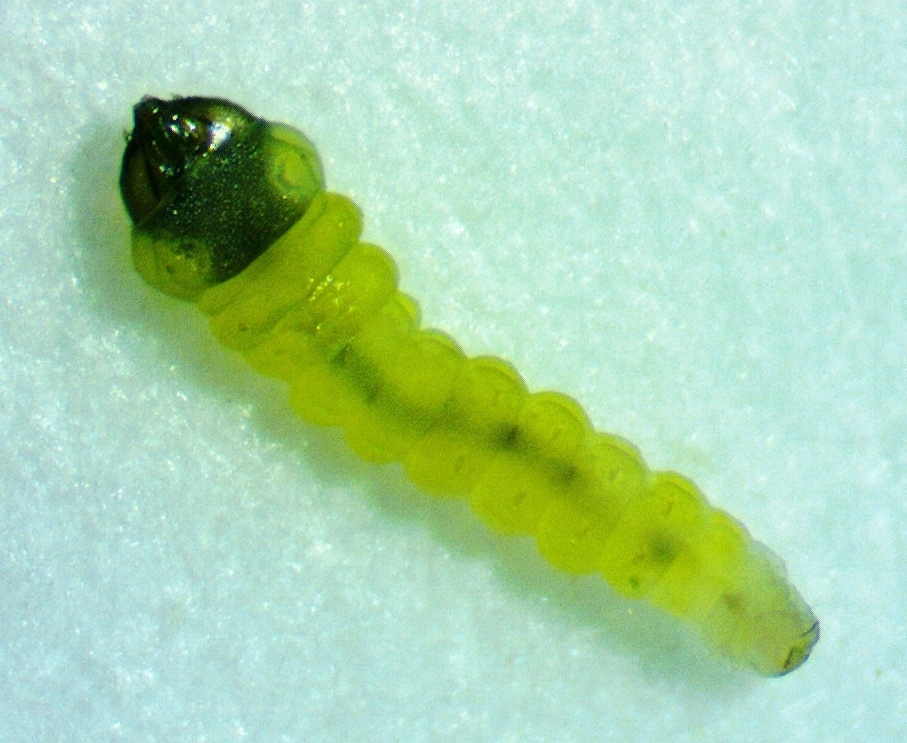
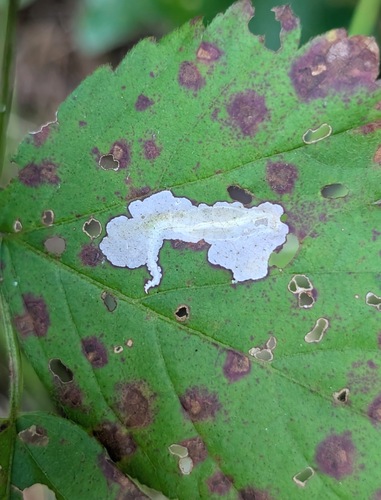
The blackberry leafminer moth lives in many parts of North America, from Canadian provinces to U.S. states such as Florida and Texas. The caterpillars mine the leaves of several Rubus species, including blackberries and raspberries, which can harm those plants.
Source: Wikipedia
Where it lives
It is found across North America, including places like Nova Scotia, Ontario, Florida and Texas.
Source: Wikipedia
What it eats
The larvae feed on the leaves of Rubus plants, mining them as they grow.
Source: Wikipedia
Where it comes from
Its range includes many North American regions such as Nova Scotia, Ontario, Arkansas and Pennsylvania.
Source: Wikipedia
Where it is found in the US
Recorded in 25 of 51 states and DC. Most records: Maryland, North Carolina, Massachusetts, Pennsylvania, New Jersey, Texas, Arkansas, Louisiana.
Darker = more records. Counts are museum and citizen-science records, not population size.
Source: GBIF
Status: native in North America; native in Canada. Source: iNaturalist
Months it is reported in the US
Source: GBIF
More photos
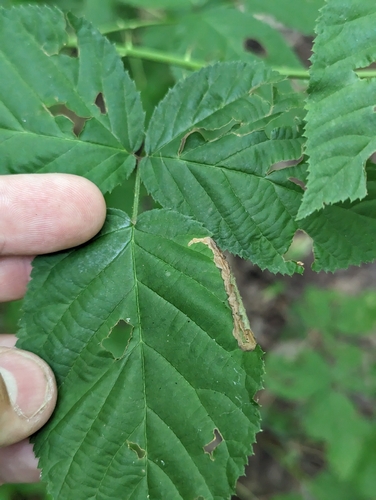
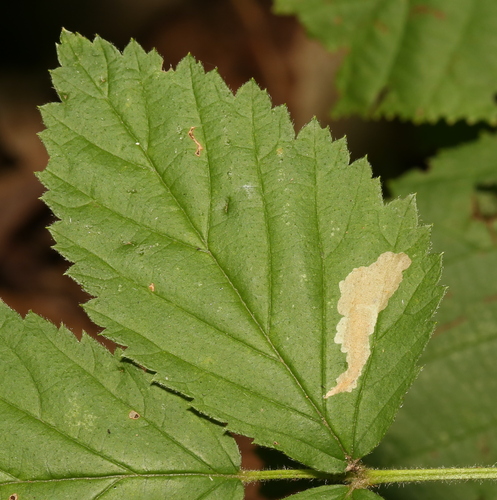
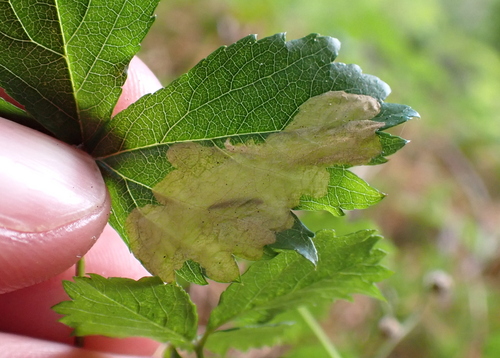
Questions people ask
What plants does the blackberry leafminer moth affect?
Its larvae mine the leaves of Rubus species such as blackberries and raspberries.
Source: Wikipedia
Where is the blackberry leafminer moth found?
It occurs in many parts of North America, from Canadian provinces to many U.S. states.
Source: Wikipedia
Same family (Tischeriidae)
Sources
- Wikipedia: https://en.wikipedia.org/wiki/Coptotriche_aenea
Look it up elsewhere: GBIF · iNaturalist · BugGuide · Wikipedia
Text written 2026-10-27 from the sources above and checked sentence by sentence against them. Data fetched 2026-10-27.