 Bug FAQ
The Golden Sweeper
Coptotriche citrinipennella · Order: Lepidoptera · Family: Tischeriidae
Source: Wikipedia
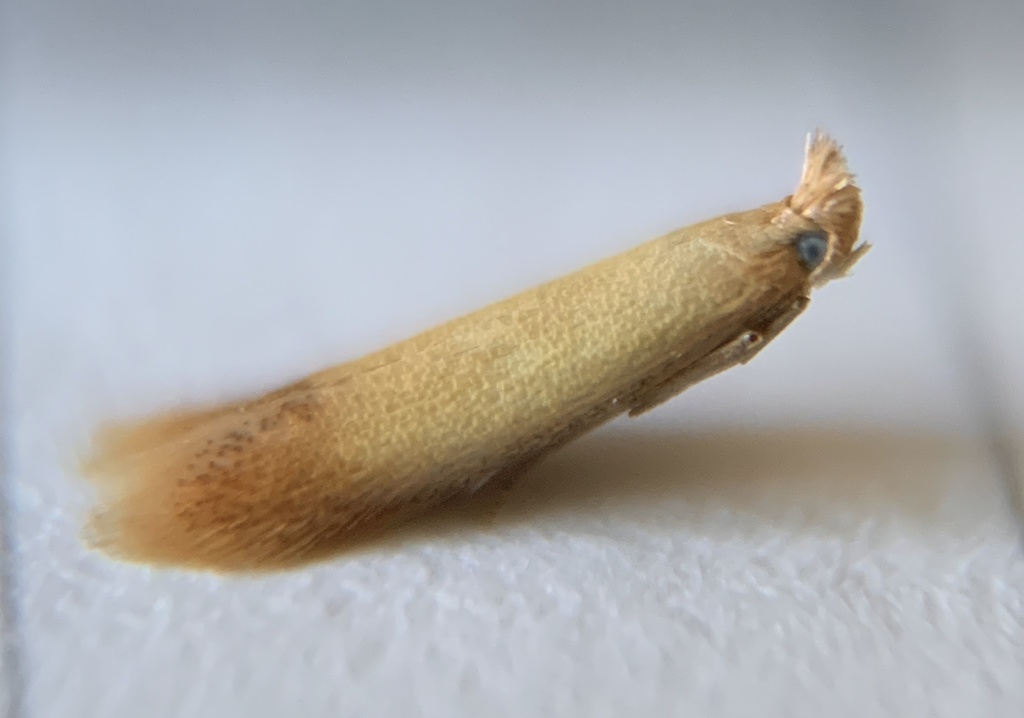
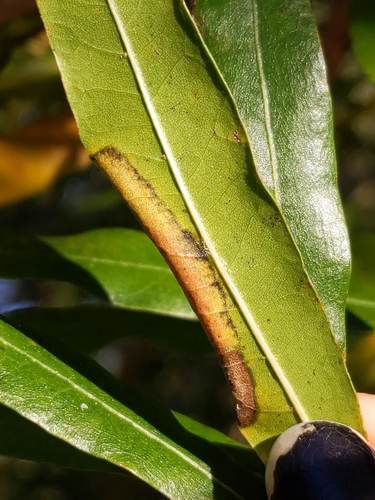
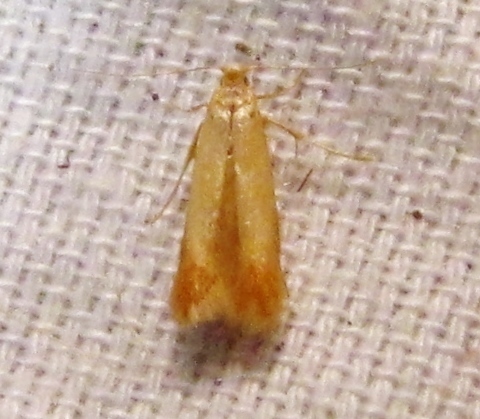
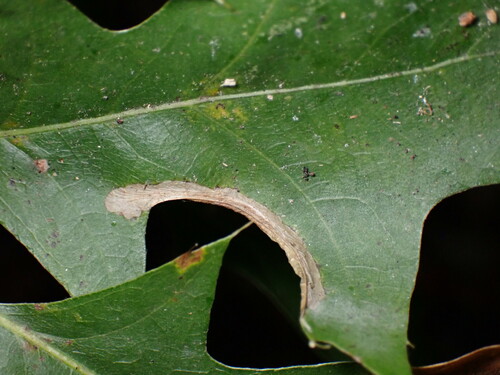
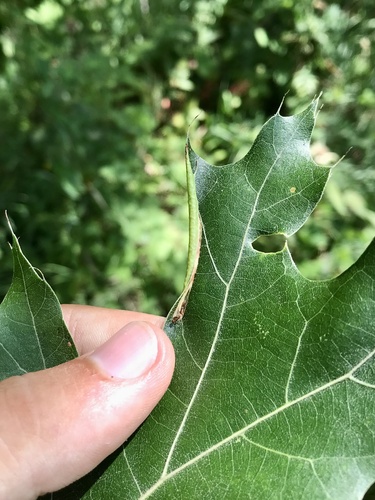
The Golden Sweeper is found in many parts of eastern Canada and the United States, including Nova Scotia, Ontario, Quebec, and states such as New York, Pennsylvania and Texas. Its larvae feed on several species of chestnut and oak, mining the leaves and causing damage to those trees.
Source: Wikipedia
What it eats
Larvae mine the leaves of chestnut species (Castanea dentata, C. mollissima, C. crenata) and oak species (Quercus coccinea, Q. ilicifolia, Q. imbricaria, Q. marilandica, Q. palustris, Q. phellos, Q. rubra).
Source: Wikipedia
Where it comes from
It is native to the same regions listed for its habitat across eastern Canada and the United States.
Source: Wikipedia
Where it is found in the US
Recorded in 30 of 51 states and DC. Most records: Michigan, Massachusetts, Virginia, Maryland, New York, Minnesota, New Jersey, Connecticut.
Darker = more records. Counts are museum and citizen-science records, not population size.
Source: GBIF
Status: native in North America; native in Canada. Source: iNaturalist
Months it is reported in the US
Source: GBIF
More photos
Questions people ask
What trees do Golden Sweeper larvae damage?
The larvae mine the leaves of chestnut and oak trees, feeding on species such as Castanea dentata and Quercus rubra.
Source: Wikipedia
Where is the Golden Sweeper found?
It is recorded from several provinces in Canada and many states across the eastern United States.
Source: Wikipedia
Sources
- Wikipedia: https://en.wikipedia.org/wiki/Coptotriche_citrinipennella
Look it up elsewhere: GBIF · iNaturalist · BugGuide · Wikipedia
Text written 2026-10-25 from the sources above and checked sentence by sentence against them. Data fetched 2026-10-25.