 Bug FAQ
Oak Blotch Miner Moth
Tischeria quercitella · Order: Lepidoptera · Family: Tischeriidae
Also called: Oak Blotch Miner
Source: Wikipedia
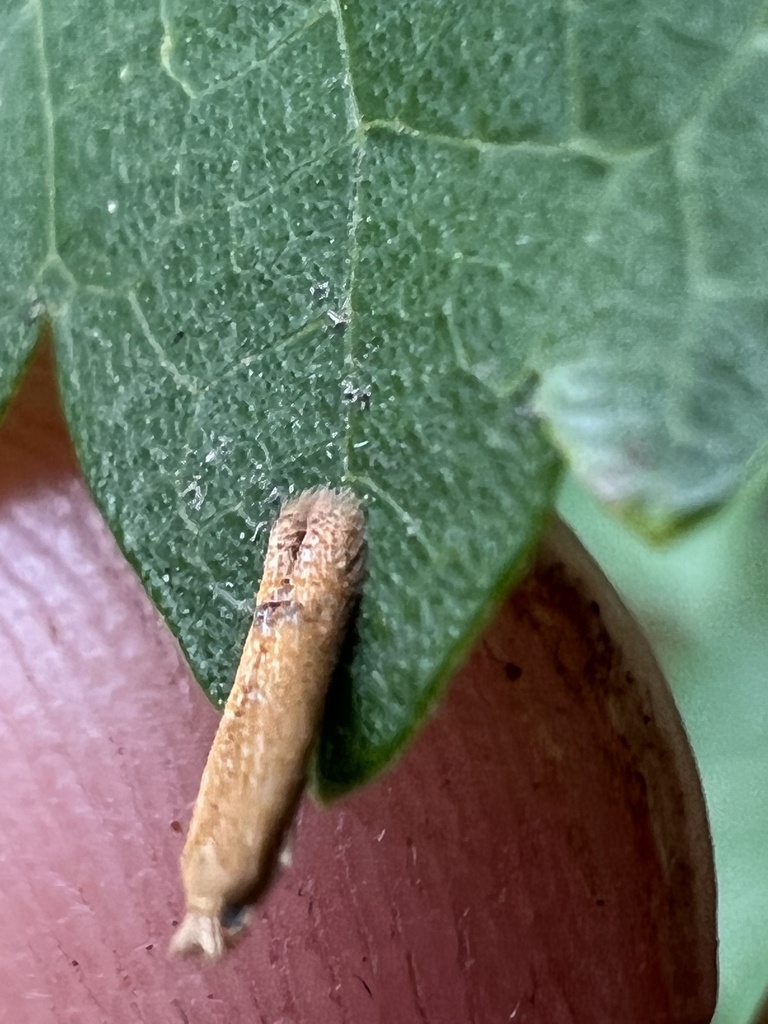
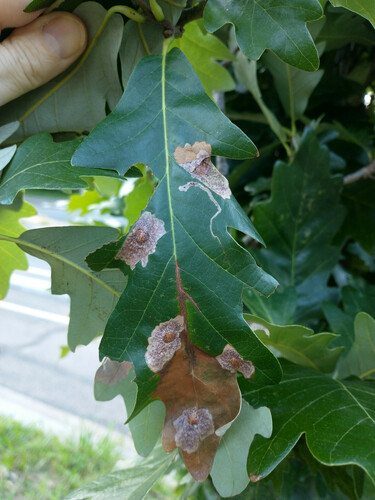
The oak blotch miner moth has been recorded in several U.S. states and Ontario, Canada. Its larvae feed on the leaves of oak and chestnut species, creating mines that harm the foliage.
Source: Wikipedia
What it eats
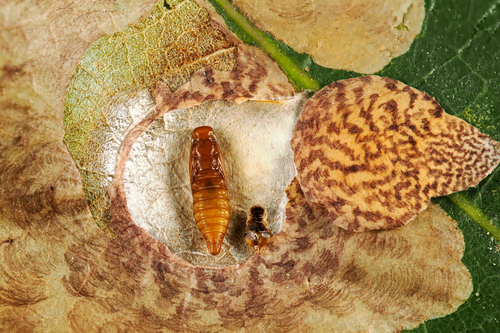
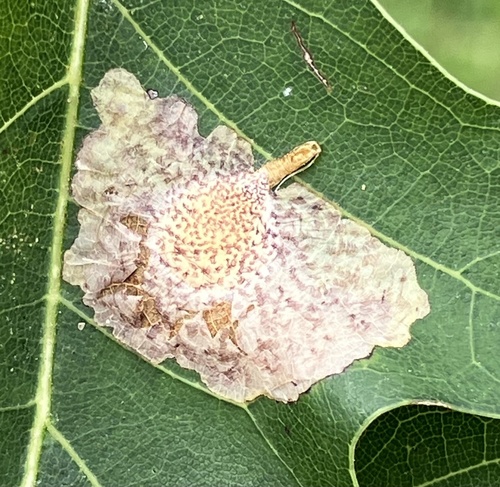
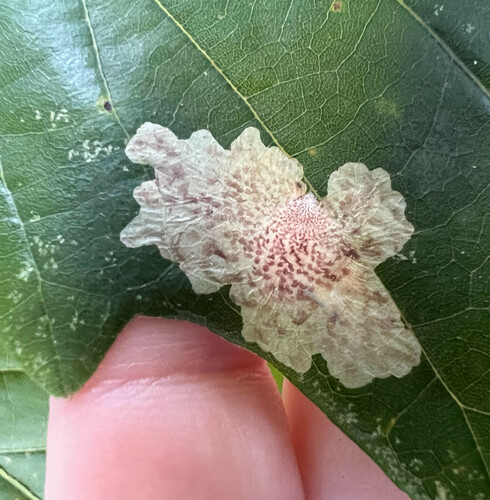
The caterpillars eat the leaves of several oak species (white oak, bear oak, chestnut oak, black oak) and chestnut species (American, sweet, Japanese, Ozark chestnut). They mine the leaves of these host plants, creating tunnels inside the leaf tissue.
Source: Wikipedia
Where it is found in the US
Recorded in 29 of 51 states and DC. Most records: Massachusetts, Texas, North Carolina, Virginia, Maryland, New York, Ohio, Michigan.
Darker = more records. Counts are museum and citizen-science records, not population size.
Source: GBIF
Status: native in North America; native in Canada; native in United States. Source: iNaturalist
Months it is reported in the US
Source: GBIF
More photos
Questions people ask
What trees are affected by the oak blotch miner moth?
Its larvae mine the leaves of oak species like white oak, bear oak, chestnut oak and black oak, as well as chestnut species such as American, sweet, Japanese and Ozark chestnut.
Source: Wikipedia
Same family (Tischeriidae)
Sources
- Wikipedia: https://en.wikipedia.org/wiki/Tischeria_quercitella
Look it up elsewhere: GBIF · iNaturalist · BugGuide · Wikipedia
Text written 2026-10-25 from the sources above and checked sentence by sentence against them. Data fetched 2026-10-25.