 Bug FAQ
Black Tree-ticker
Birrima varians · Order: Hemiptera · Family: Cicadidae
Also called: Black Treeticker
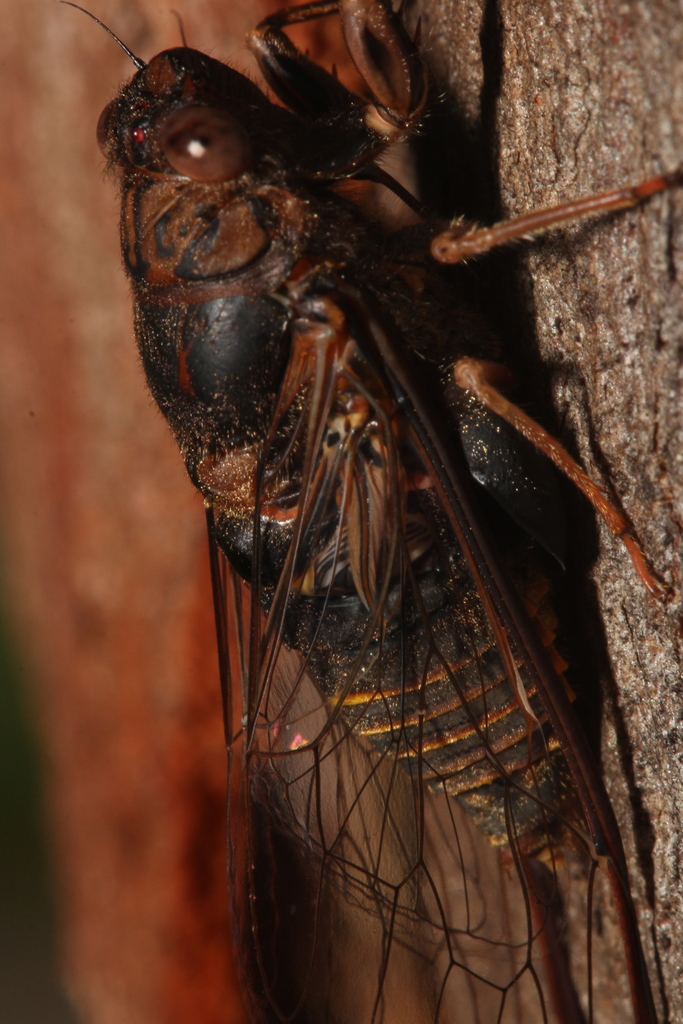
The black tree-ticker has forewings 24 to 32 mm long. It lives in open forests, especially where tall eucalypts grow. Adults are heard from August through March, sometimes as late as May.
Source: Wikipedia
How to recognize it
Birrima varians, also called the black tree-ticker, is a cicada species or species complex.
Source: Wikipedia
Size
The forewing length ranges from 24 to 32 mm.
Source: Wikipedia
Where it lives
It prefers open forest habitats, especially those with Eucalyptus tereticornis.
Source: Wikipedia
When you see it
Adults can be heard from August to March, and occasionally until May.
Source: Wikipedia
Where it comes from
The species is endemic to Australia.
Source: Wikipedia
Lookalikes
Birrima varians is a cicada species or species complex.
Source: Wikipedia
Questions people ask
When are black tree-tickers active?
Adults are heard from August through March and sometimes as late as May.
Source: Wikipedia
Where does the black tree-ticker live?
It lives in open forests, especially those with tall eucalypts like Eucalyptus tereticornis.
Source: Wikipedia
What is the scientific name of the black tree-ticker?
The insect is known as Birrima varians.
Source: Wikipedia
Same family (Cicadidae)
Sources
- Wikipedia: https://en.wikipedia.org/wiki/Birrima_varians
Look it up elsewhere: GBIF · iNaturalist · BugGuide · Wikipedia
Text written 2026-10-23 from the sources above and checked sentence by sentence against them. Data fetched 2026-10-23.