 Bug FAQ
Black Smooth Hispine
Stenispa metallica · Order: Coleoptera · Family: Chrysomelidae
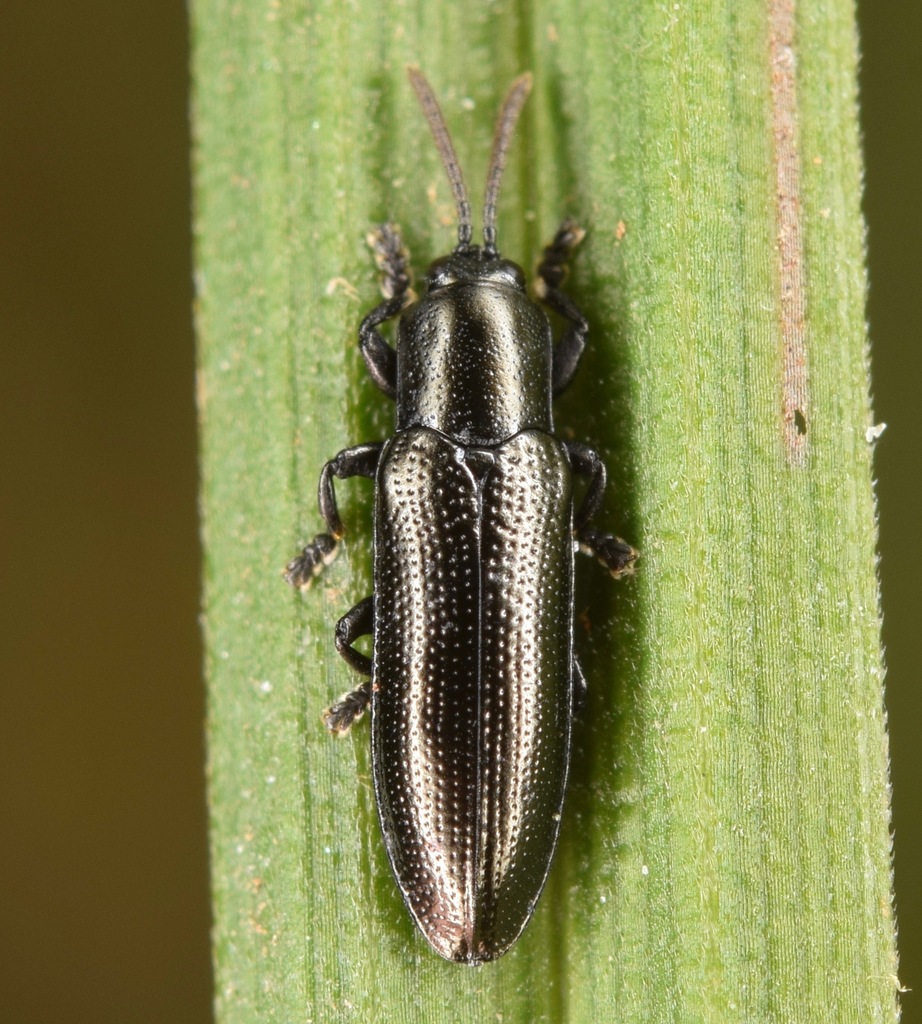
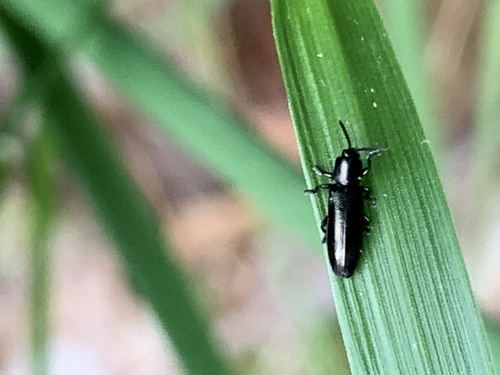
Adults are shiny black with a faint metallic sheen and have a thorax that is almost as long as it is wide, with slightly produced anterior angles and a finely punctured surface. The beetle occurs throughout Central and North America, recorded from many U.S. states and from Tamaulipas in Mexico. It is associated with the plant Scirpus atrovirens and has also been collected on several sedges, grasses and Spartina species.
Source: Wikipedia
How to recognize it
Adults are shining black with a subtle metallic tint. The thorax is nearly as long as it is broad, sides nearly parallel, with slightly produced anterior angles and a finely punctured surface.
Source: Wikipedia
Where it lives
The species is found in both Central America and North America.
Source: Wikipedia
What it eats
The recorded host plant is Scirpus atrovirens.
Source: Wikipedia
Life cycle
The beetle’s recorded host plant is Scirpus atrovirens.
Source: Wikipedia
Where it comes from
It has been recorded from many U.S. states across the continent and from Tamaulipas, Mexico.
Source: Wikipedia
Where it is found in the US
Recorded in 23 of 51 states and DC. Most records: Kentucky, New Jersey, Pennsylvania, Virginia, Indiana, Massachusetts, Missouri, Florida.
Darker = more records. Counts are museum and citizen-science records, not population size.
Source: GBIF
Months it is reported in the US
Source: GBIF
More photos
Questions people ask
What does the Black Smooth Hispine look like?
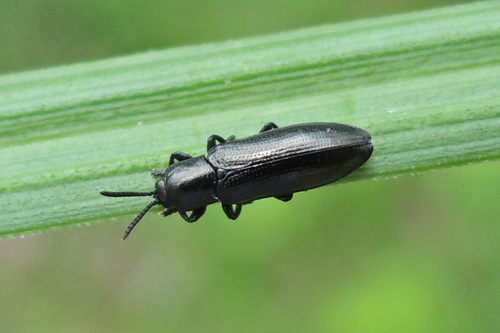
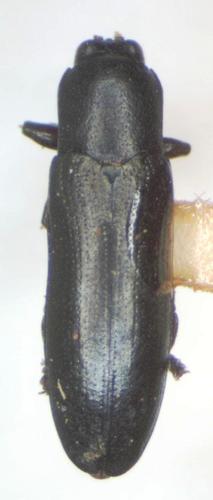
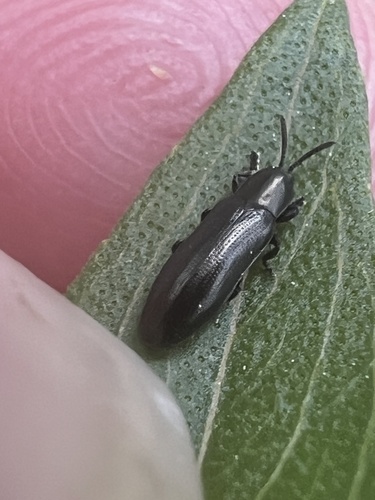
Adults are shiny black with a faint metallic sheen and a thorax that is almost as long as it is wide, with slightly produced front angles and fine punctures.
Source: Wikipedia
Where is this beetle found?
It occurs throughout Central America and North America, recorded from many U.S. states and from Tamaulipas in Mexico.
Source: Wikipedia
What plants does it live on?
It is recorded on Scirpus atrovirens and adults have also been collected on several sedges, grasses and Spartina species.
Source: Wikipedia
Same family (Chrysomelidae)
 Spotted Cucumber BeetleDiabrotica undecimpunctataDamages trees, gardens or crops
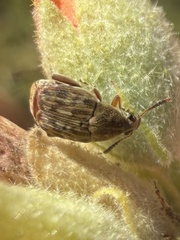 Bean WeevilAcanthoscelides obtectusDamages trees, gardens or crops
 Cowpea WeevilCallosobruchus maculatusDamages trees, gardens or crops
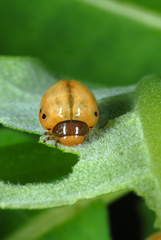 Swamp Milkweed Leaf BeetleLabidomera clivicollisDamages trees, gardens or crops
 Alder Leaf BeetleAgelastica alniDamages trees, gardens or crops
 Dogbane Leaf BeetleChrysochus auratus
Sources
- Wikipedia: https://en.wikipedia.org/wiki/Stenispa_metallica
Look it up elsewhere: GBIF · iNaturalist · BugGuide · ITIS · Wikipedia
Text written 2026-10-29 from the sources above and checked sentence by sentence against them. Data fetched 2026-10-29.