 Bug FAQ
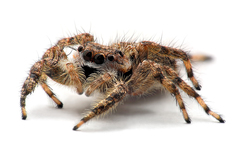
Black-palped Jumping Spider
Pseudeuophrys erratica · Order: Araneae · Family: Salticidae
Also called: Jumping spider
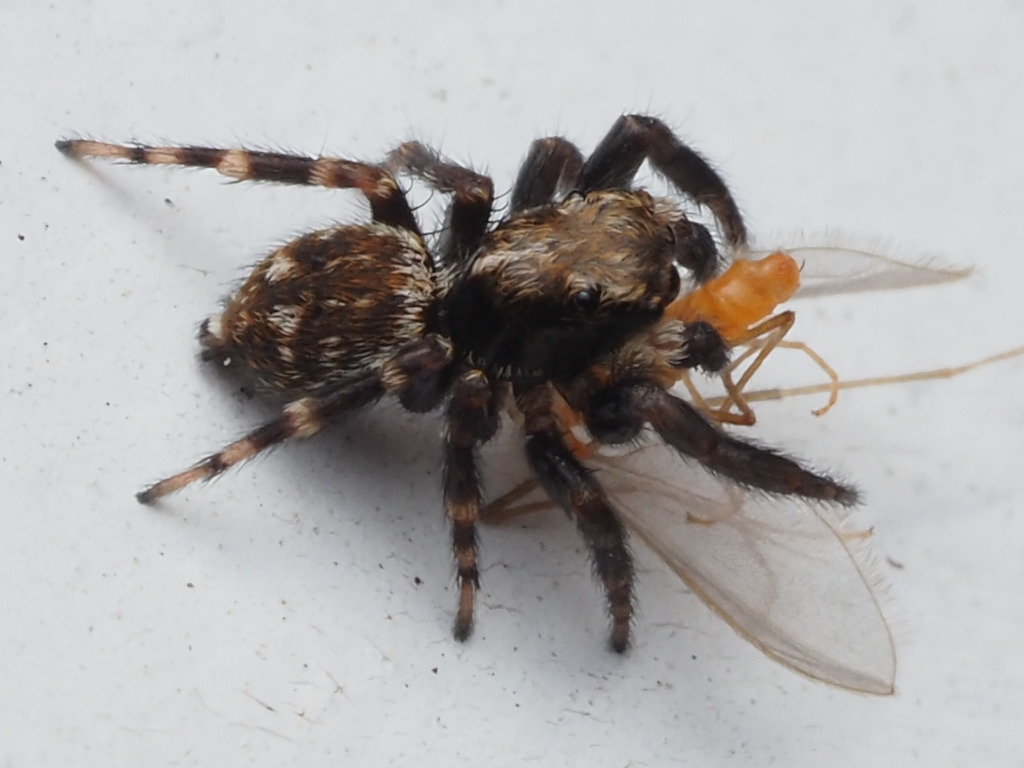
Males are three to four millimetres long and females up to five millimetres. They are usually found under tree bark or beneath rocks at forest edges. Adults are present in spring and summer, and females can still be seen in autumn.
Source: Wikipedia
Size
Males reach three to four millimetres in body length, while females grow up to five millimetres.
Source: Wikipedia
Where it lives
You’ll typically find it under bark or under rocks on the fringe of forests.
Source: Wikipedia
Life cycle
Adults appear in spring and summer; females may also be present in autumn.
Source: Wikipedia
Where it comes from
Its distribution covers Europe and Asia, and it now also occurs in the United States.
Source: Wikipedia
Where it is found in the US
Recorded in 16 of 51 states and DC. Most records: New York, Massachusetts, Pennsylvania, New Jersey, Ohio, Connecticut, Rhode Island, Maryland.
Darker = more records. Counts are museum and citizen-science records, not population size.
Source: GBIF
Status: introduced in North America; introduced in United States; introduced in Canada. Source: iNaturalist
Months it is reported in the US
Source: GBIF
More photos


Questions people ask
Where are these spiders most likely to be found?
They are normally found under tree bark or under rocks on forest fringes.
Source: Wikipedia
Same family (Salticidae)



Sources
- Wikipedia: https://en.wikipedia.org/wiki/Pseudeuophrys_erratica
Look it up elsewhere: GBIF · iNaturalist · BugGuide · ITIS · Wikipedia
Text written 2026-10-24 from the sources above and checked sentence by sentence against them. Data fetched 2026-10-24.