 Bug FAQ
Black-margined Loosestrife Beetle
Neogalerucella calmariensis · Order: Coleoptera · Family: Chrysomelidae
Source: Wikipedia
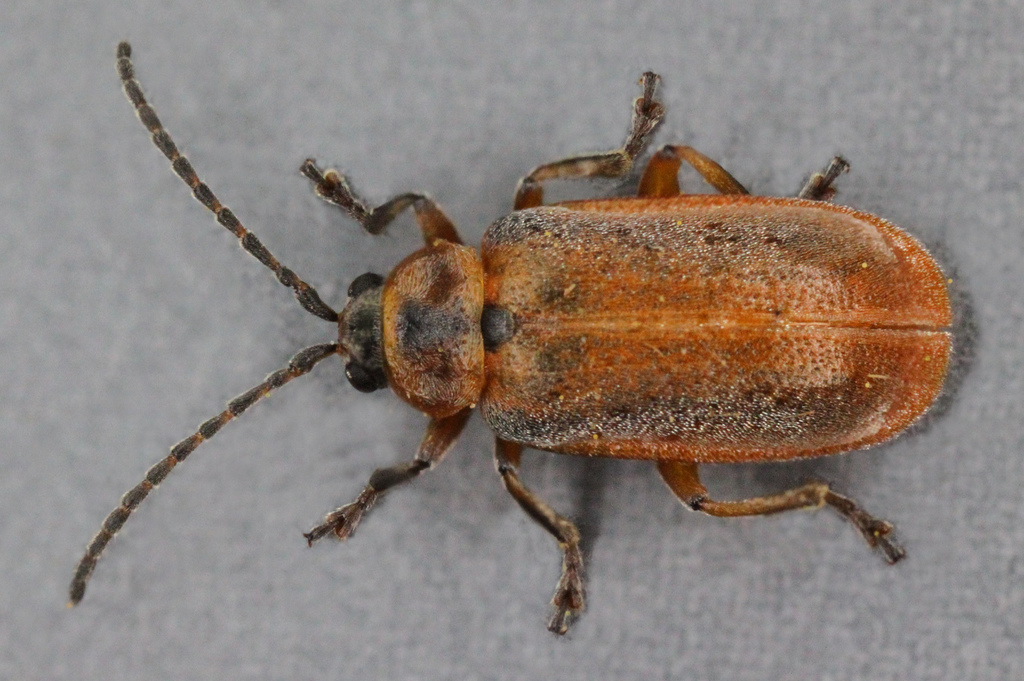
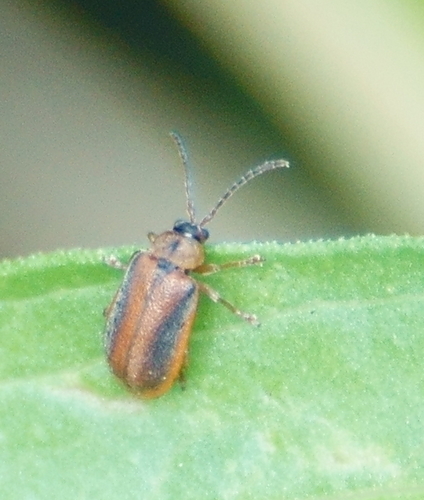
The beetle is a small, cylindrical brown insect about 3 to 6 mm long and half as wide.
Source: Wikipedia
How to recognize it
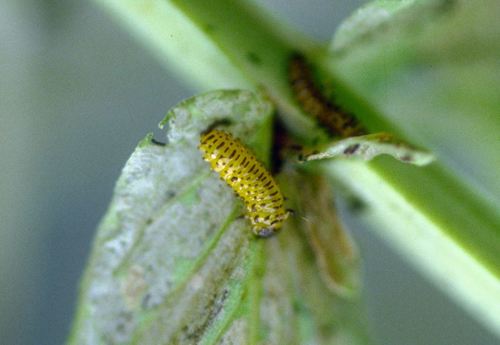
From above the beetle often shows two dark lines running down each side of its back. The larvae are yellow with black speckles and look like small caterpillars.
Source: Wikipedia
Size
It is a cylindrical beetle, mid-brown in colour, measuring three to six millimetres in length and about half that width.
Source: Wikipedia
Is it a pest in the house?
The beetle was introduced in North America to control the invasive purple loosestrife. Larval feeding damages buds and shoots, reducing the plant’s growth, flowering and seed production.
Source: Wikipedia
How to get rid of it
- Both the black-margined and golden loosestrife beetles have been released widely across the United States and Canada as biological control agents.
- Before release, about 50 native North American plants were tested for susceptibility to these beetles in Europe.
Source: Wikipedia
Where it lives
Adults spend the winter in leaf litter close to purple loosestrife plants.
Source: Wikipedia
What it eats
Both life stages feed on purple loosestrife (Lythrum salicaria). First-instar larvae eat the growing shoot tips, often killing them; later instars chew stems and leaves.
Source: Wikipedia
Life cycle
Adults overwinter in leaf litter near the host plant. Females lay up to 500 eggs in small batches on leaves and stems from May through July. New adults emerge in spring and begin feeding on fresh growth.
Source: Wikipedia
When you see it
They appear in spring and start feeding on young growth. Both species have become well established and are effective biological control agents.
Source: Wikipedia
Lookalikes
It is easily confused with the golden loosestrife beetle (Neogalerucella pusilla); both have been released in over 27 U.S. states and six Canadian provinces.
Source: Wikipedia
Where it is found in the US
Recorded in 18 of 51 states and DC. Most records: Massachusetts, Michigan, New York, Minnesota, Pennsylvania, New Jersey, Connecticut, Maine.
Darker = more records. Counts are museum and citizen-science records, not population size.
Source: GBIF
Status: introduced in United States. Source: iNaturalist
Months it is reported in the US
Source: GBIF
More photos
Questions people ask
How can I tell this beetle apart from similar species?
Look for two dark lateral lines on the back when viewing the beetle from above; the golden loosestrife beetle lacks this pattern.
Source: Wikipedia
What does this beetle eat?
Both adults and larvae feed exclusively on purple loosestrife, with larvae first attacking shoot tips and later chewing stems and leaves.
Source: Wikipedia
Does it damage my garden?
Larval feeding harms buds and shoots of purple loosestrife, reducing the plant’s growth and seed production.
Source: Wikipedia
Same family (Chrysomelidae)
 Spotted Cucumber BeetleDiabrotica undecimpunctataDamages trees, gardens or crops
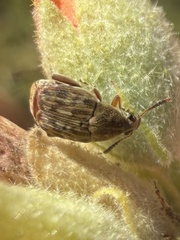 Bean WeevilAcanthoscelides obtectusDamages trees, gardens or crops
 Cowpea WeevilCallosobruchus maculatusDamages trees, gardens or crops
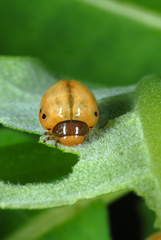 Swamp Milkweed Leaf BeetleLabidomera clivicollisDamages trees, gardens or crops
 Alder Leaf BeetleAgelastica alniDamages trees, gardens or crops
 Dogbane Leaf BeetleChrysochus auratus
Sources
- Wikipedia: https://en.wikipedia.org/wiki/Galerucella_calmariensis
Look it up elsewhere: GBIF · iNaturalist · BugGuide · Wikipedia
Text written 2026-10-26 from the sources above and checked sentence by sentence against them. Data fetched 2026-10-26.