 Bug FAQ
Birch Leafroller Moth
Epinotia solandriana · Order: Lepidoptera · Family: Tortricidae
Also called: Variable Bell
Source: Wikipedia
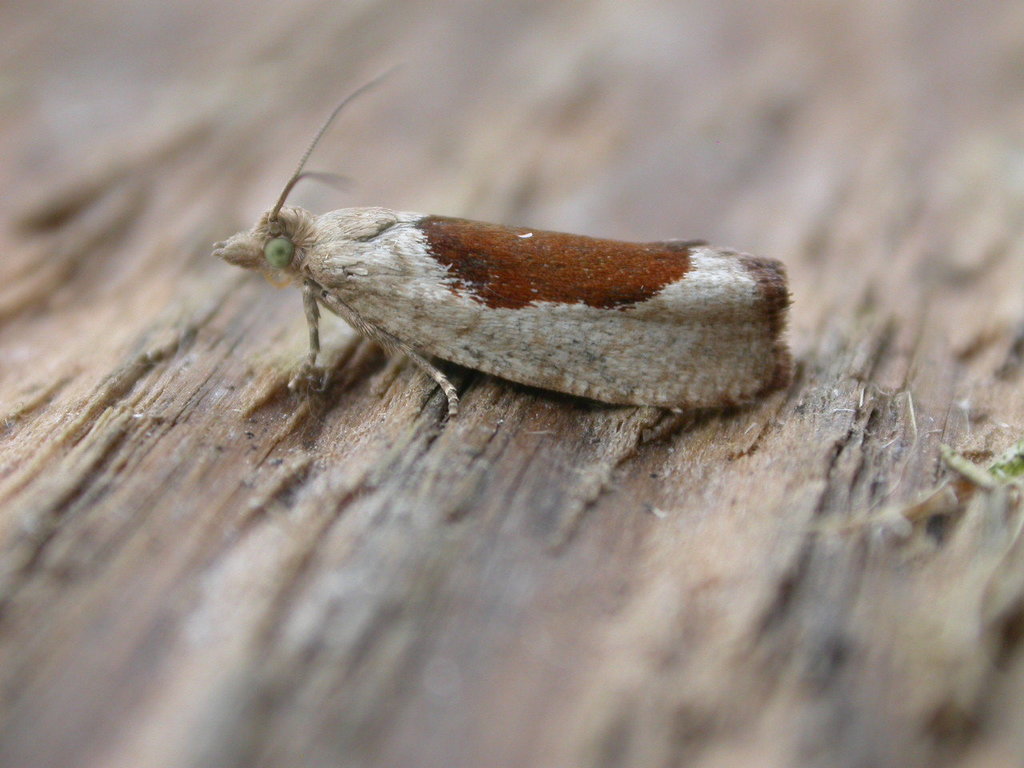
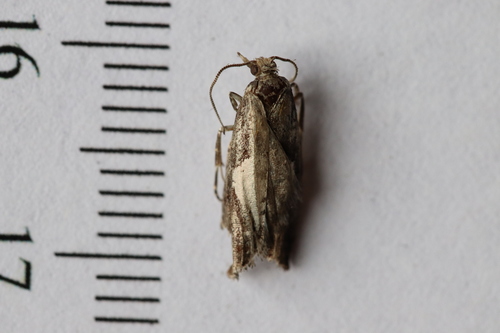
Adults have a wingspan of about 16 to 21 mm and light grey hindwings. Their forewings are elongated with a moderately curved leading edge, showing a variable ground colour that may include fine dark streaks and a distinctive white or pale dorsal blotch. One generation flies from July through September, and the caterpillars feed on birch, hazel and willow leaves, sometimes causing noticeable leaf damage.
Source: Wikipedia
How to recognize it
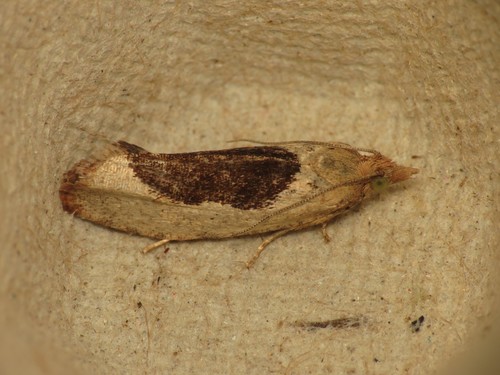
The forewings are long with a moderately arched front edge and a fold that reaches about one-third of the wing. The wing colour ranges from whitish-ochre to brownish or reddish-brown, often with fine dark streaks that may be mixed with white. A rounded triangular white or pale spot on the middle of the dorsal side is sometimes replaced by a longer, dark reddish-brown oval mark. The hindwings are a light grey shade.
Source: Wikipedia
Size
The moth’s wingspan measures between 16 and 21 mm.
Source: Wikipedia
Where it lives
It belongs to the Tortricidae family of moths.
Source: Wikipedia
What it eats
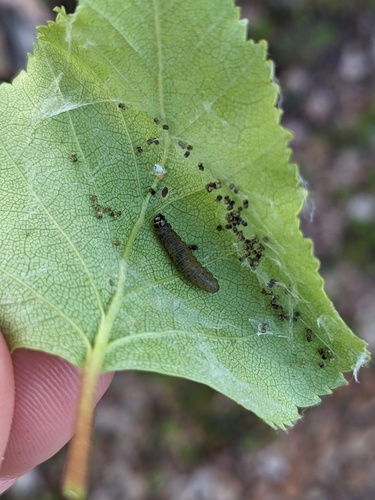
Caterpillars mainly eat the leaves of birch, hazel and willow species.
Source: Wikipedia
Life cycle
Adults are on the wing in a single generation from July to September, depending on location.
Source: Wikipedia
When you see it
The flight period spans July through September, varying with region.
Source: Wikipedia
Where it comes from
It occurs across Europe and parts of Asia, including China, Korea, Japan and Russia.
Source: Wikipedia
Where it is found in the US
Recorded in 13 of 51 states and DC. Most records: Alaska, California, Washington, Michigan, Wyoming, Minnesota, Kansas, New Hampshire.
Darker = more records. Counts are museum and citizen-science records, not population size.
Source: GBIF
Status: native in North America; native in Canada; native in United States. Source: iNaturalist
Months it is reported in the US
Source: GBIF
More photos
Questions people ask
When can I expect to see birch leafroller moths?
Adults fly in one generation from July to September, though the exact timing depends on where you are.
Source: Wikipedia
What do the larvae feed on?
The caterpillars feed on the leaves of birch, hazel and willow trees.
Source: Wikipedia
How can I recognize the birch leafroller moth?
Look for an elongated forewing with a moderately curved front edge, variable colour from whitish-ochre to reddish-brown, fine dark streaks, and a distinctive white or pale dorsal blotch that may appear as a dark reddish-brown oval; hindwings are light grey.
Source: Wikipedia
Same family (Tortricidae)
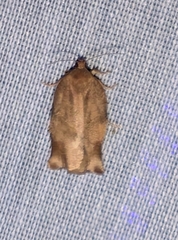 Oblique-banded Leafroller MothChoristoneura rosaceanaDamages trees, gardens or crops
 Garden TortrixClepsis peritanaDamages trees, gardens or crops
 Common MarbleSyricoris lacunanaDamages trees, gardens or crops
 Red-banded Leafroller MothArgyrotaenia velutinanaDamages trees, gardens or crops
 Light Brown Apple MothEpiphyas postvittanaDamages trees, gardens or crops
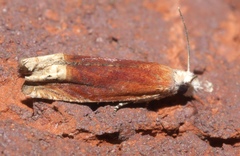 Aster and Reddish Eucosma Moths and AlliesEucosma parmatana
Sources
- Wikipedia: https://en.wikipedia.org/wiki/Epinotia_solandriana
Look it up elsewhere: GBIF · iNaturalist · BugGuide · Wikipedia
Text written 2026-10-25 from the sources above and checked sentence by sentence against them. Data fetched 2026-10-25.