 Bug FAQ
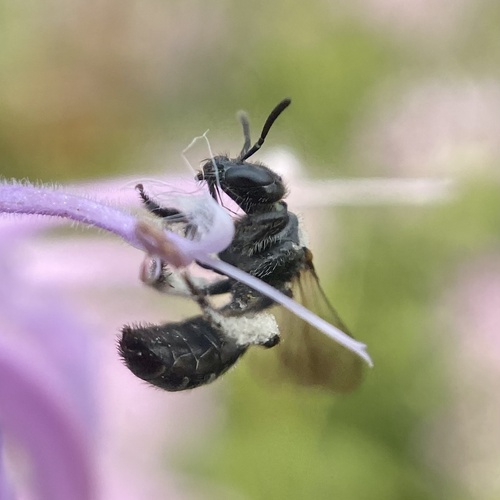
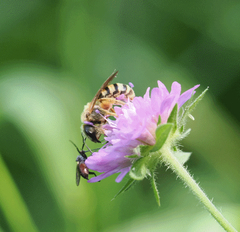
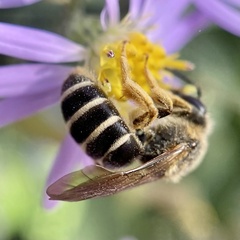
Beebalm Shortface
Dufourea monardae · Order: Hymenoptera · Family: Halictidae
Also called: Monarda Dufourea, beebalm sweat bee, Beebalm Shortface Bee
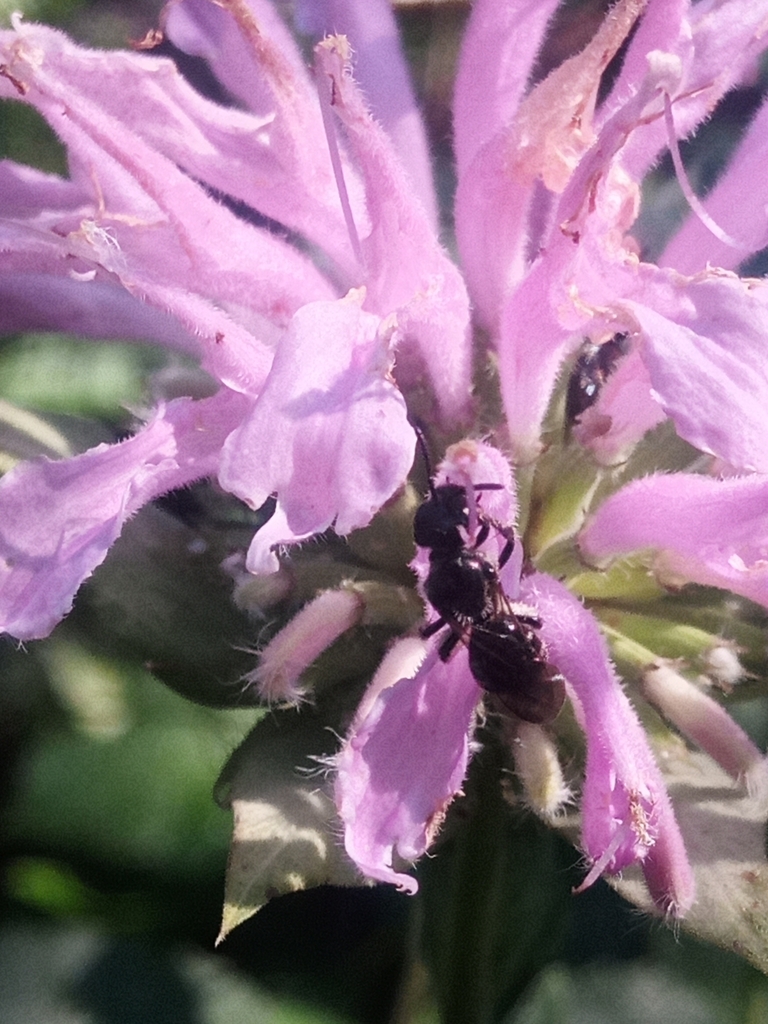
They live in North America and are most active in July and August, visiting bee-balm flowers for food.
Source: Wikipedia
Size
Adult females are about 7 mm long. Males are 6 to 7 mm long.
Source: Wikipedia
Where it lives
It is found in North America.
Source: Wikipedia
What it eats
It is an oligolectic bee that collects pollen from bee-balm plants.
Source: Wikipedia
When you see it
Adults are typically active during July and August.
Source: Wikipedia
Where it comes from
It is native to North America.
Source: Wikipedia
Where it is found in the US
Recorded in 15 of 51 states and DC. Most records: Illinois, Minnesota, Wisconsin, Michigan, Connecticut, New York, Iowa, Vermont.
Darker = more records. Counts are museum and citizen-science records, not population size.
Source: GBIF
Status: native in North America; native in Canada; native in United States. Source: iNaturalist
Months it is reported in the US
Source: GBIF
More photos
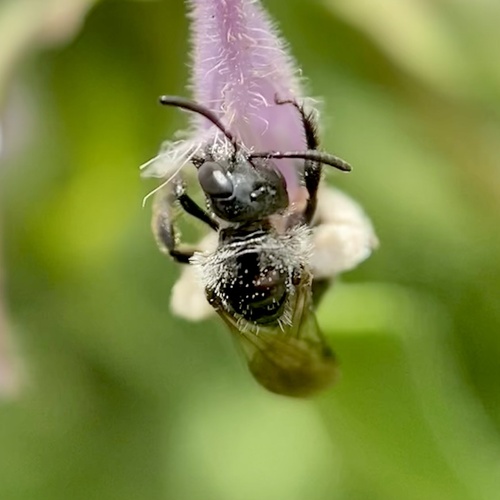
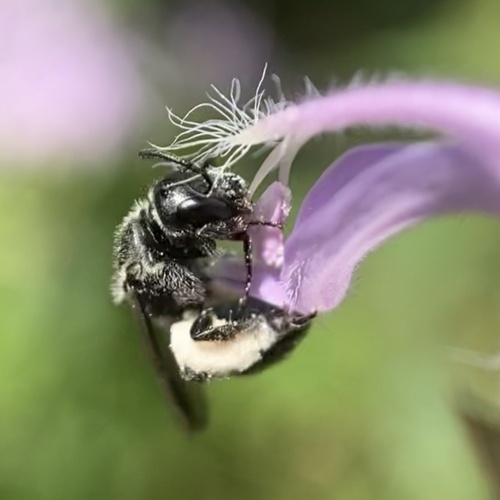
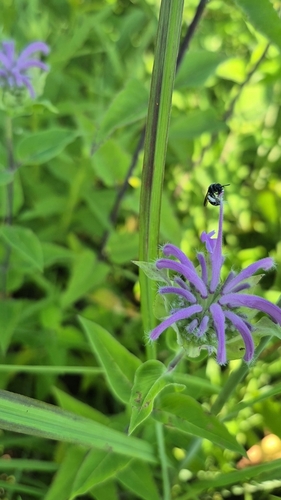
Questions people ask
When are Beebalm Shortface bees active?
They are usually seen flying in July and August.
Source: Wikipedia
Same family (Halictidae)

Sources
- Wikipedia: https://en.wikipedia.org/wiki/Dufourea_monardae
Look it up elsewhere: GBIF · iNaturalist · BugGuide · ITIS · Wikipedia
Text written 2026-10-25 from the sources above and checked sentence by sentence against them. Data fetched 2026-10-25.