 Bug FAQ
Bedstraw Hawkmoth
Hyles gallii · Order: Lepidoptera · Family: Sphingidae
Also called: Bedstraw Hawk-Moth, Galium Sphinx, Gallium Sphinx Moth
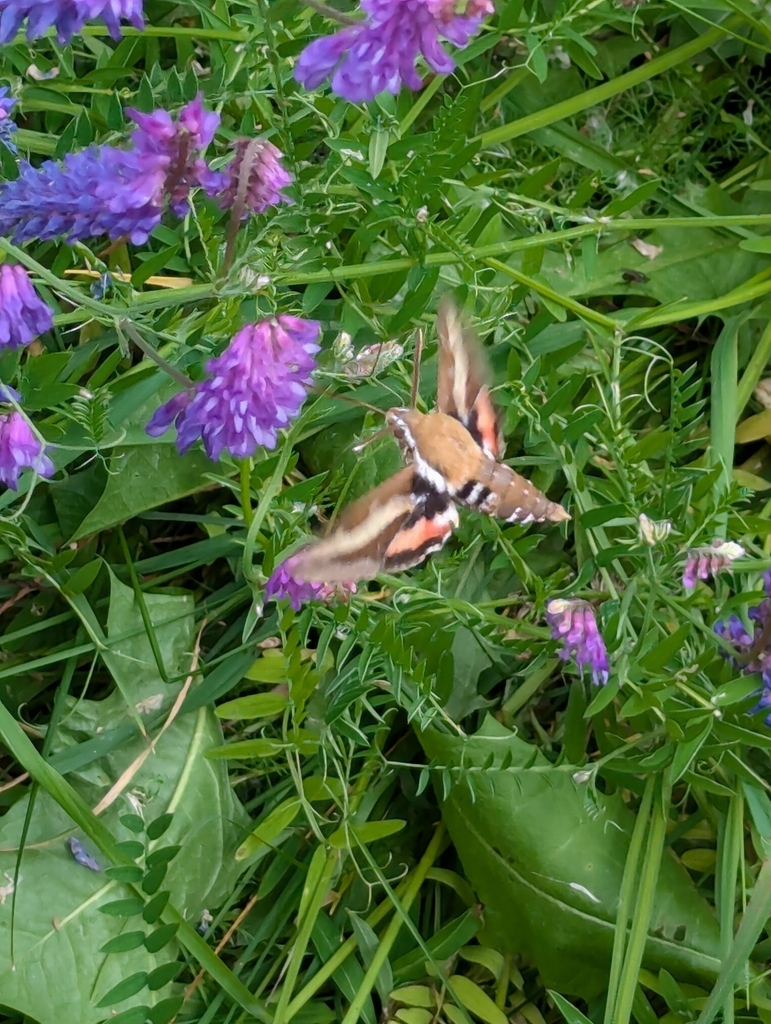
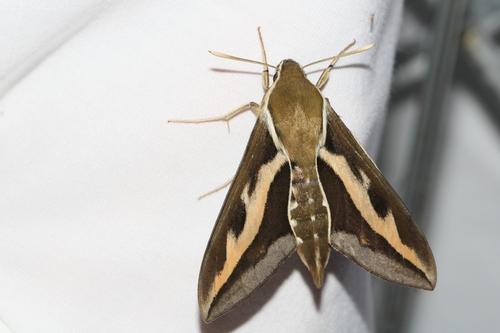
Bedstraw Hawkmoth has a wingspan of about 55-80 mm and olive-brown forewings with a distinctive whitish stripe; hindwings show a pinkish-white band and black and grey margins. It lives in sunny, sandy or calcareous habitats, up to 2700 m in the Alps, and is found across North America, Europe to the Arctic, Central Asia and Japan. The caterpillars feed on fireweed, bedstraw and many other plants, grow to 70-80 mm, and the adult flies from May to October, sometimes producing a second generation.
Source: Wikipedia
Size
Wingspan ranges from 55 to 80 mm.
Source: Wikipedia
Where it lives
Prefers sunny, sandy or chalky places, heath, plantations, warm forest edges, and any area with its host plants.
Source: Wikipedia
What it eats
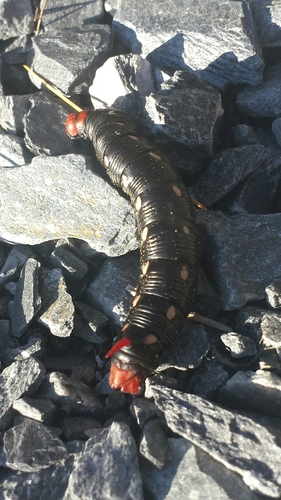
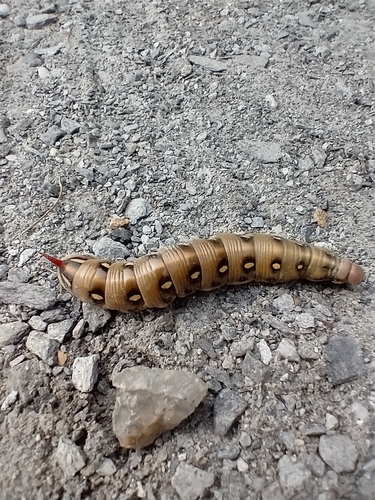
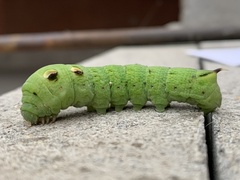
Caterpillars grow 70-80 mm, may be olive-green with cream spots or almost black, and darken before pupating. They eat fireweed, bedstraw and many other plants, especially members of the Onagraceae family.
Source: Wikipedia
Life cycle
Caterpillars feed in August and September; adults appear around midsummer.
Source: Wikipedia
When you see it
Adults fly from May to October, usually one generation, but a second may appear in good years.
Source: Wikipedia
Where it comes from
Occurs in North America, Europe up to the Arctic Circle, Central Asia and Japan.
Source: Wikipedia
Lookalikes
Looks similar to Hyles euphorbiae, but its hindwing red is less extensive and the olive band on the forewing is continuous.
Source: Wikipedia
Where it is found in the US
Recorded in 30 of 51 states and DC. Most records: Vermont, New York, Alaska, Massachusetts, Maine, New Hampshire, Connecticut, Montana.
Darker = more records. Counts are museum and citizen-science records, not population size.
Source: GBIF
Status: native in North America; native in United States; native in Canada. Source: iNaturalist
Months it is reported in the US
Source: GBIF
More photos
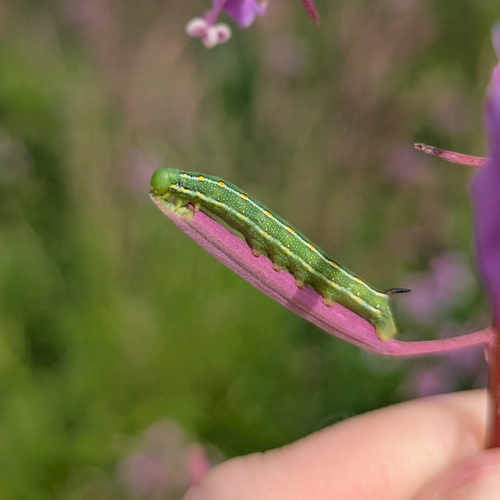
Same family (Sphingidae)
 White-lined SphinxHyles lineataDamages trees, gardens or crops
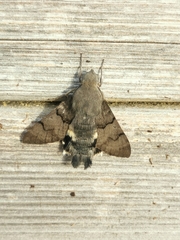 Eurasian Hummingbird HawkmothMacroglossum stellatarum
 Snowberry ClearwingHemaris diffinis
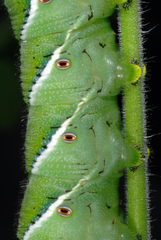 Carolina SphinxManduca sextaDamages trees, gardens or crops
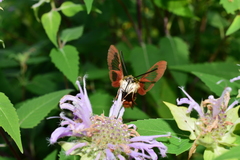 Hummingbird ClearwingHemaris thysbeDamages trees, gardens or crops
 Elephant HawkmothDeilephila elpenor
Sources
- Wikipedia: https://en.wikipedia.org/wiki/Hyles_gallii
Look it up elsewhere: GBIF · iNaturalist · BugGuide · ITIS · Wikipedia
Text written 2026-10-22 from the sources above and checked sentence by sentence against them. Data fetched 2026-10-22.