 Bug FAQ
Bean Leaf Beetle
Cerotoma trifurcata · Order: Coleoptera · Family: Chrysomelidae
Source: Wikipedia
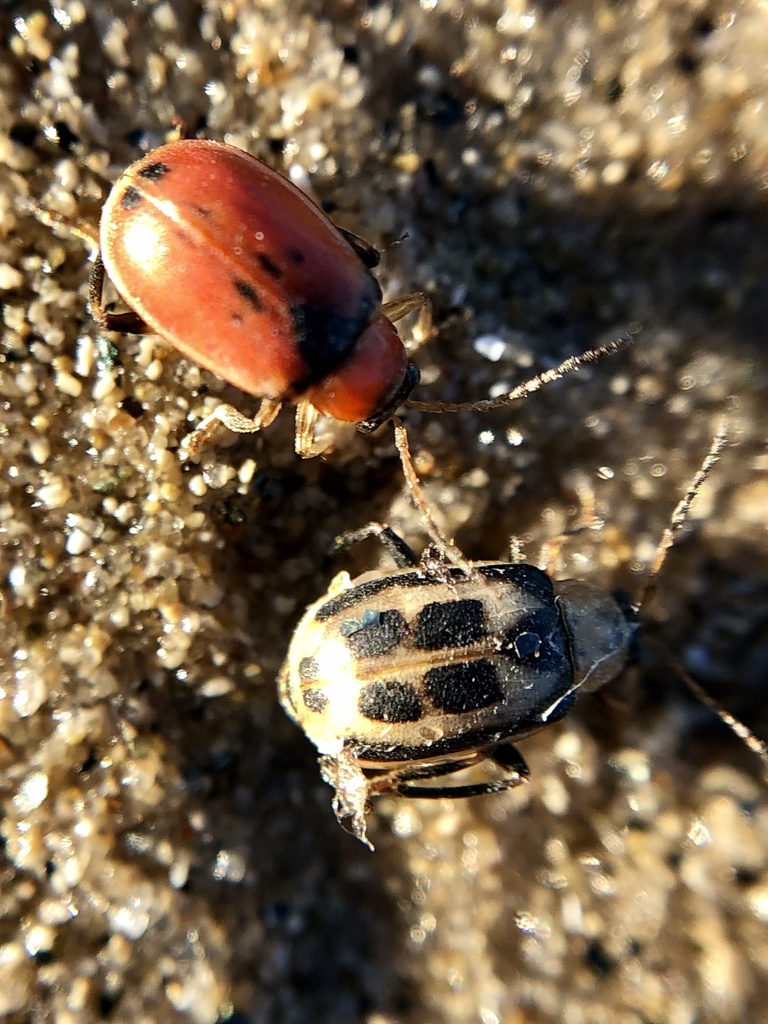
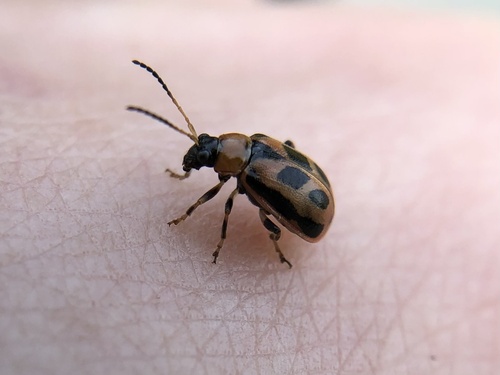
Adult bean leaf beetles are tiny (3.5 to 5.5 mm) and have a black head, a black triangle on the elytra, and usually six black spots with a dark edge band. They overwinter in leaf litter, emerge in late May-June, feed on soybean leaves and roots, and can reduce yields and transmit bean pod mottle virus.
Source: Wikipedia
How to recognize it
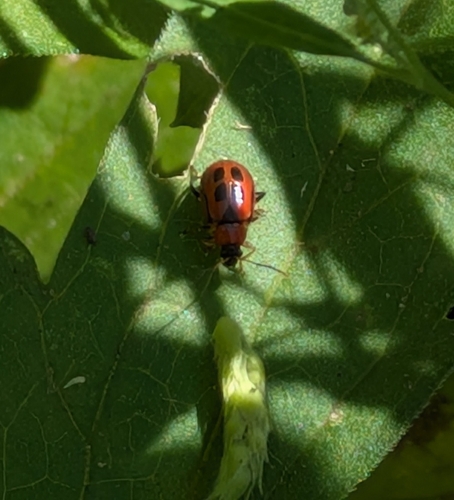
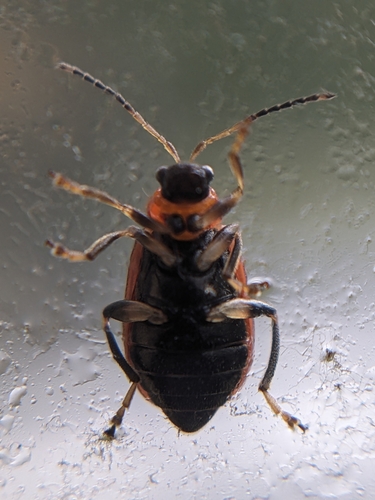
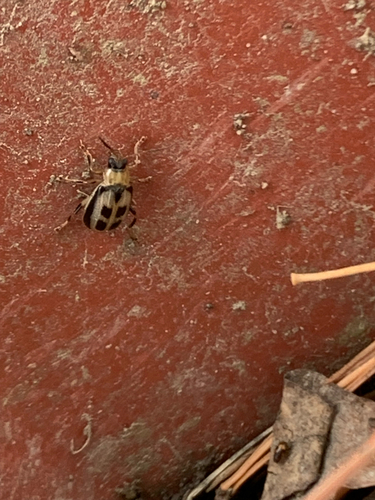
The beetle’s wing covers show a black triangle behind the thorax and typically six black spots surrounded by a black border; the head is always black.
Source: Wikipedia
Size
Adults measure about 3.5 to 5.5 mm long.
Source: Wikipedia
Is it a pest in the house?
They damage pods and act as the main carrier of bean pod mottle virus, which can further reduce crop quality.
Source: Wikipedia
How to get rid of it
Insecticides are the primary method used to manage infestations. Planting soybeans later in the season can lower beetle numbers.
Source: Wikipedia
Where it lives
Adults spend the winter in forest leaf litter and move to fields after they emerge to feed and mate.
Source: Wikipedia
What it eats
They prefer soybeans but also feed on alfalfa, cowpea, snap beans, and cucurbit plants. Larvae eat soybean roots and nodules, while early-season adults chew the leaves.
Source: Wikipedia
Life cycle
Females lay orange, spindle-shaped eggs in the soil near the base of host plants. After about three weeks the larvae pupate in the soil before emerging as adults.
Source: Wikipedia
When you see it
Beetles first appear in late May to early June, before soybean seedlings emerge. Their flight activity increases through the summer, peaking in August.
Source: Wikipedia
Where it comes from
Originally from the Mississippi Delta, the beetle has spread into the Midwest and Canada.
Source: Wikipedia
Where it is found in the US
Recorded in 37 of 51 states and DC. Most records: Illinois, Ohio, Indiana, Kentucky, Kansas, Tennessee, Missouri, Pennsylvania.
Darker = more records. Counts are museum and citizen-science records, not population size.
Source: GBIF
Status: native in North America; native in Canada; native in United States. Source: iNaturalist
Months it is reported in the US
Source: GBIF
More photos
Questions people ask
How can I tell if I have bean leaf beetles?
Look for tiny (3.5 to 5.5 mm) beetles with a black head, a black triangle on the wing covers, and usually six black spots edged in black.
Source: Wikipedia
What crops do bean leaf beetles damage?
They feed on soybeans, alfalfa, snap beans, cowpea, and cucurbit plants, chewing leaves and roots and damaging pods.
Source: Wikipedia
When are bean leaf beetles most active?
Adults emerge in late May to early June and their flight activity peaks in August.
Source: Wikipedia
How can I control bean leaf beetles in my field?
Use insecticides as the main control method and consider delayed planting of soybeans to reduce beetle numbers.
Source: Wikipedia
Same family (Chrysomelidae)
 Spotted Cucumber BeetleDiabrotica undecimpunctataDamages trees, gardens or crops
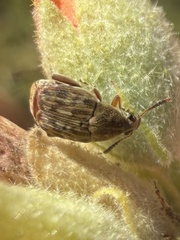 Bean WeevilAcanthoscelides obtectusDamages trees, gardens or crops
 Cowpea WeevilCallosobruchus maculatusDamages trees, gardens or crops
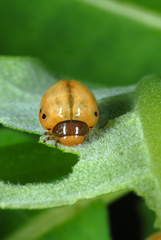 Swamp Milkweed Leaf BeetleLabidomera clivicollisDamages trees, gardens or crops
 Alder Leaf BeetleAgelastica alniDamages trees, gardens or crops
 Dogbane Leaf BeetleChrysochus auratus
Sources
- Wikipedia: https://en.wikipedia.org/wiki/Bean_leaf_beetle
Look it up elsewhere: GBIF · iNaturalist · BugGuide · ITIS · Wikipedia
Text written 2026-10-23 from the sources above and checked sentence by sentence against them. Data fetched 2026-10-22.