 Bug FAQ
Baryphas Jumping Spider
Baryphas ahenus · Order: Araneae · Family: Salticidae
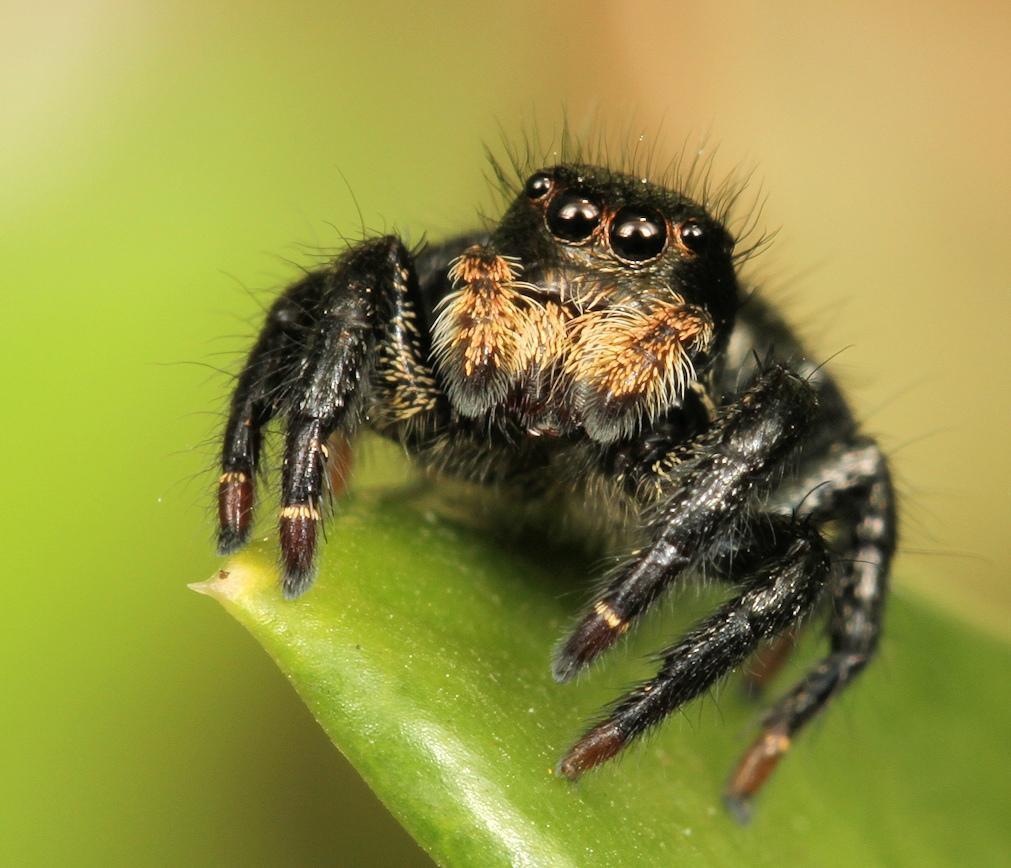
They live in gardens, shrubs and trees across most African biomes (except deserts) from sea level up to 1,836 m, and also in citrus, maize, pine and strawberry farms. The species is native to Tanzania, Zimbabwe, Mozambique and South Africa, where it occurs in all nine provinces.
Source: Wikipedia
How to recognize it
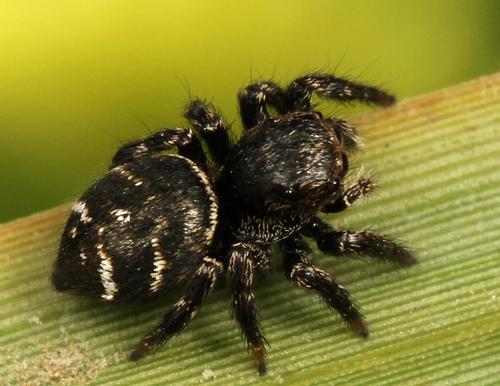
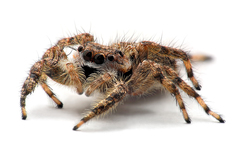
Females look like males but are lighter and have white or orange transverse stripes with a central patch on the abdomen.
Source: Wikipedia
Size
Both sexes range from 4.5 to 10.8 mm in total length.
Source: Wikipedia
Where it lives
They are commonly found in gardens, either alone or in pairs.
Source: Wikipedia
Where it comes from
Baryphas ahenus occurs in Tanzania, Zimbabwe, Mozambique and South Africa. In South Africa it is found in all nine provinces.
Source: Wikipedia
Lookalikes
It can be distinguished from other Baryphas species by the short tibial apophysis with apical teeth and the lack of a visible basal lobe on the palpal tegulum.
Source: Wikipedia
More photos
Questions people ask
How big are Baryphas Jumping Spiders?
Adults measure between 4.5 and 10.8 mm in total length.
Source: Wikipedia
Where does Baryphas ahenus live?
It is native to Tanzania, Zimbabwe, Mozambique and South Africa, occurring in all South African provinces.
Source: Wikipedia
What does the female look like?
Females are lighter than males and have white or orange transverse stripes with a central patch on the abdomen.
Source: Wikipedia
What habitats does this spider prefer?
It is commonly found in gardens, either solitary or paired, and across most biomes (except deserts) from sea level to 1,836 m, including citrus, maize, pine and strawberry farms.
Source: Wikipedia
Same family (Salticidae)



Sources
- Wikipedia: https://en.wikipedia.org/wiki/Baryphas_ahenus
Look it up elsewhere: GBIF · iNaturalist · BugGuide · ITIS · Wikipedia
Text written 2026-10-23 from the sources above and checked sentence by sentence against them. Data fetched 2026-10-23.