 Bug FAQ
Banded Net-winged Beetle
Calopteron discrepans · Order: Coleoptera · Family: Lycidae
Also called: Net-winged Beetle
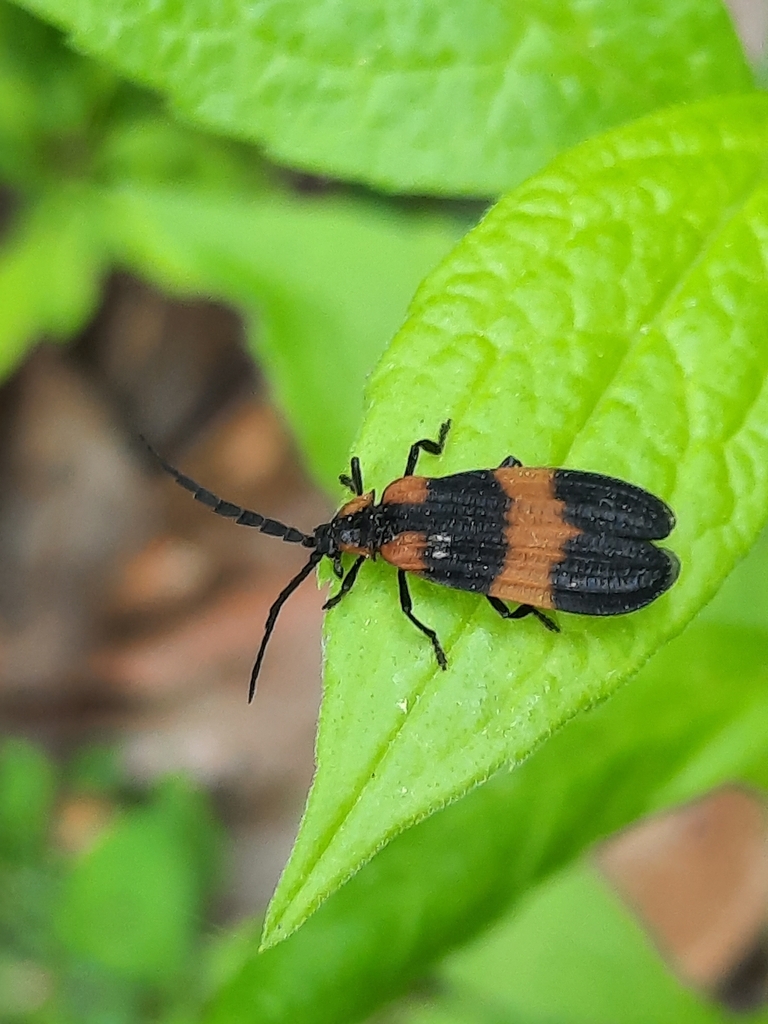
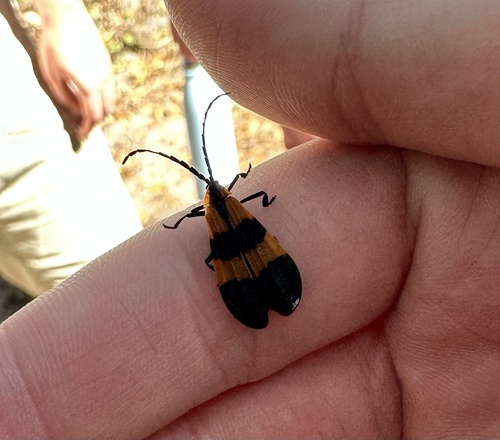
The banded net-winged beetle is 10 to 15 mm long, females a bit larger than males. Adults have orange wing covers with black bands and a black pronotum edged with fulvous strips. It lives in moist eastern North-American woods, where larvae hide in rotten logs, under bark, soil or leaf litter.
Source: Wikipedia
How to recognize it
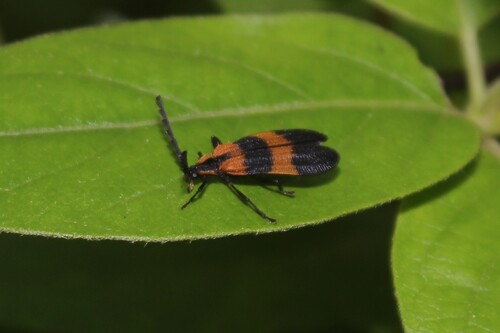
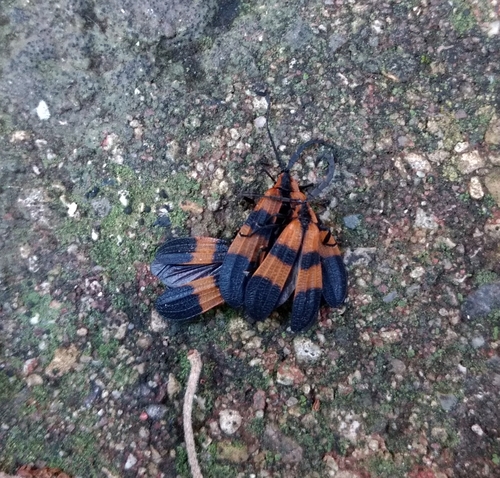
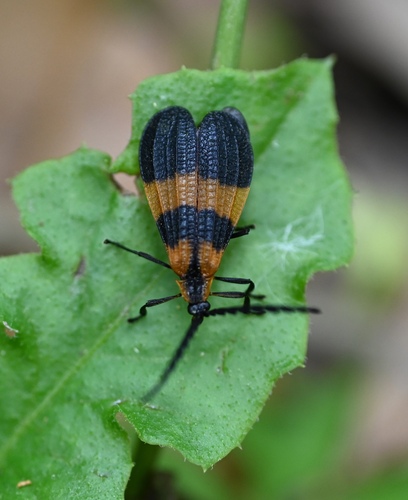
The elytra are orange with distinct black bands and have raised lengthwise and cross ridges; the pronotum is black on top with small fulvous strips along the sides.
Source: Wikipedia
Size
Adults measure about 10 to 15 mm, females being the larger sex.
Source: Wikipedia
Where it lives
Larvae are found in moist woodlands, living in rotten logs, under loose bark, in soil or leaf litter.
Source: Wikipedia
What it eats
Larvae have a varied diet; some sources say they are predacious, others report they feed on slime molds, fungi, or fermenting plant juices.
Source: Wikipedia
Life cycle
During pupation, many larvae gather together, forming shingled masses that can contain hundreds of pupae.
Source: Wikipedia
Lookalikes
It looks much like Calopteron reticulatum; a reliable difference is that C. discrepans has a completely black metasternum and second antennal segment, while C. reticulatum shows reddish-brown coloration antero-medially on the metasternum.
Source: Wikipedia
Where it is found in the US
Recorded in 32 of 51 states and DC. Most records: Florida, Pennsylvania, Ohio, Georgia, Maryland, Virginia, Louisiana, New York.
Darker = more records. Counts are museum and citizen-science records, not population size.
Source: GBIF
Status: native in North America; native in Canada. Source: iNaturalist
Months it is reported in the US
Source: GBIF
More photos
Questions people ask
How can I tell the banded net-winged beetle apart from similar species?
Check the metasternum and second antennal segment: in Calopteron discrepans they are entirely black, while in the look-alike C. reticulatum they are partly reddish-brown.
Source: Wikipedia
What do the larvae eat?
Their diet is variable; some reports say they hunt other small organisms, while others note they consume slime molds, fungi, or fermenting plant juices.
Source: Wikipedia
Same family (Lycidae)


Sources
- Wikipedia: https://en.wikipedia.org/wiki/Calopteron_discrepans
Look it up elsewhere: GBIF · iNaturalist · BugGuide · ITIS · Wikipedia
Text written 2026-10-24 from the sources above and checked sentence by sentence against them. Data fetched 2026-10-24.