 Bug FAQ
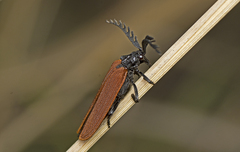
End Band Net-winged Beetle
Calopteron terminale · Order: Coleoptera · Family: Lycidae
Also called: End Band Net-wing

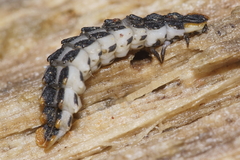
The End Band Net-winged Beetle lives in eastern North American deciduous woodlands. Its larvae develop under bark of dead or dying trees, where they eat small arthropods. People most often see it from July through September.
Source: Wikipedia
Where it lives
Found in woodlands, especially eastern North American deciduous forests.
Source: Wikipedia
What it eats
Larvae prey on small arthropods under the bark of dead or dying trees.
Source: Wikipedia
Life cycle
Eggs are laid on dead or dying trees; larvae hatch and feed under the bark.
Source: Wikipedia
When you see it
Most observations occur between July and September.
Source: Wikipedia
Where it comes from
Its range is North America.
Source: Wikipedia
Where it is found in the US
Recorded in 38 of 51 states and DC. Most records: Pennsylvania, Maryland, Ohio, Virginia, New York, Connecticut, New Jersey, Indiana.
Darker = more records. Counts are museum and citizen-science records, not population size.
Source: GBIF
Status: native in North America; native in Canada. Source: iNaturalist
Months it is reported in the US
Source: GBIF
More photos
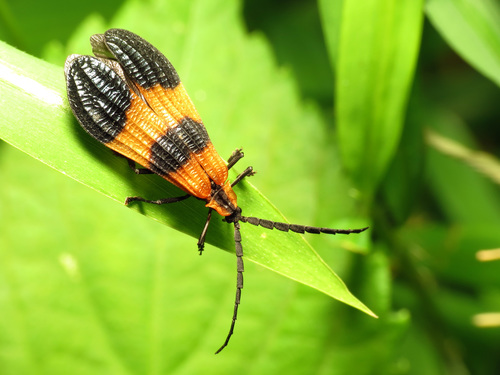
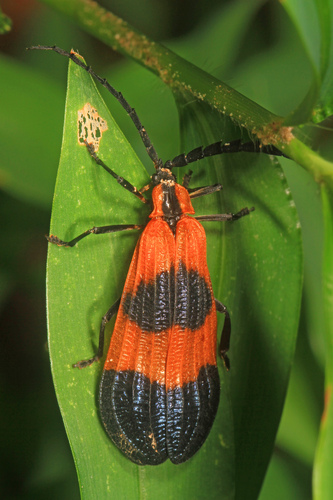
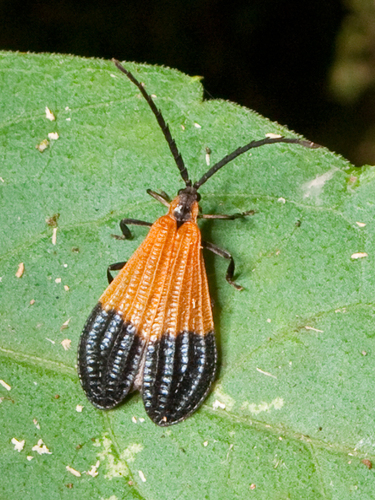
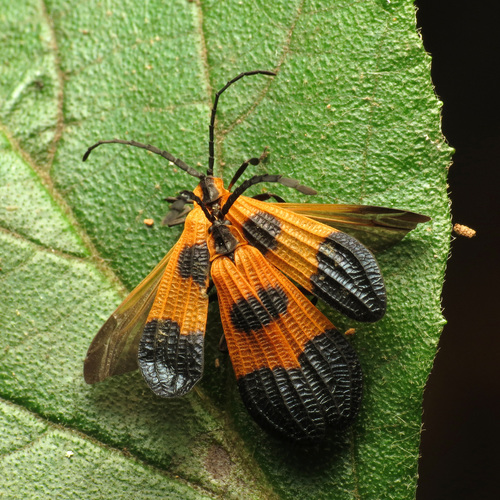
Same family (Lycidae)


Sources
- Wikipedia: https://en.wikipedia.org/wiki/Calopteron_terminale
Look it up elsewhere: GBIF · iNaturalist · BugGuide · ITIS · Wikipedia
Text written 2026-10-22 from the sources above and checked sentence by sentence against them. Data fetched 2026-10-22.