 Bug FAQ
Bagheera prosper
Bagheera prosper · Order: Araneae · Family: Salticidae
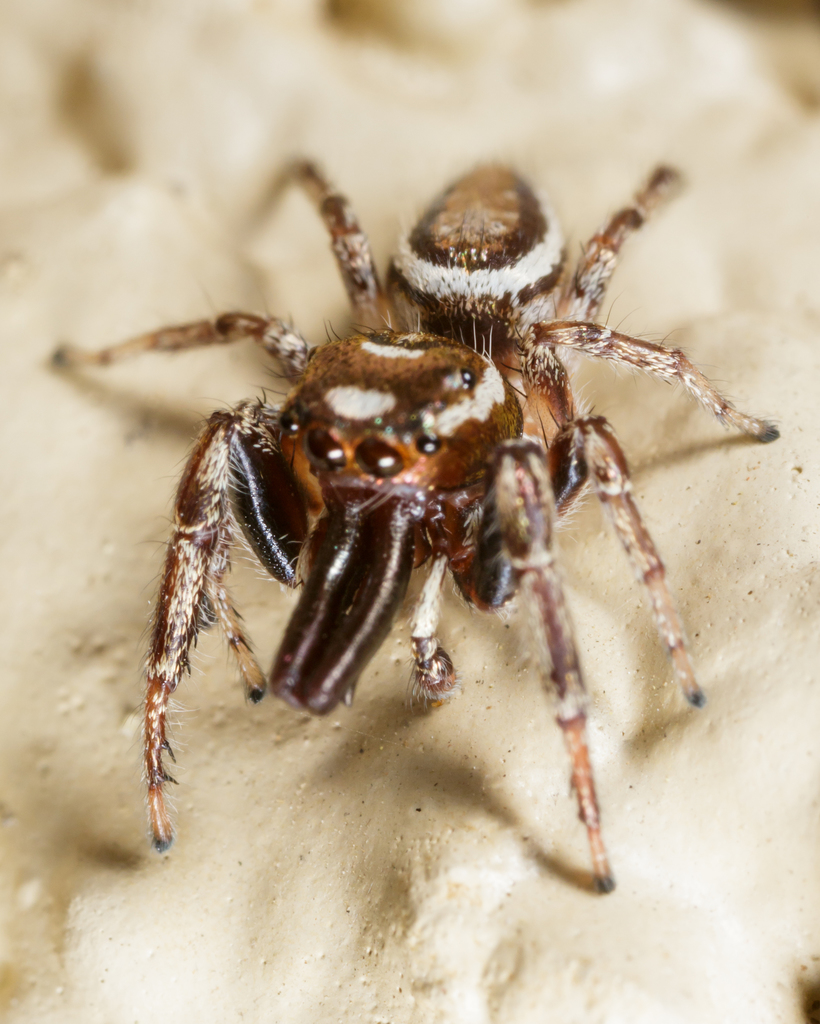
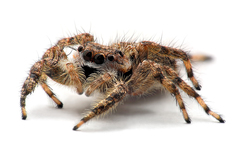
Bagheera prosper is a brown jumping spider that may show black, tan, grey or white markings and has two rows of triangle-shaped black spots on its abdomen. It lives in warm habitats of northern Mexico and the U.S. states of Texas, Oklahoma and western Arkansas, and adults are most often seen in March or April.
Source: Wikipedia
How to recognize it
The spider is generally brown, sometimes with black, tan, grey or white patches on its body. Its abdomen displays two lines of triangle-shaped black spots.
Source: Wikipedia
When you see it
Adults are most commonly observed in March or April.
Source: Wikipedia
Where it comes from
Bagheera prosper is a jumping spider native to the United States and Mexico.
Source: Wikipedia
Where it is found in the US
Recorded in 11 of 51 states and DC. Most records: Texas, Tennessee, Oklahoma, Alabama, Georgia, Kentucky, North Carolina, Virginia.
Darker = more records. Counts are museum and citizen-science records, not population size.
Source: GBIF
Status: native in North America. Source: iNaturalist
Months it is reported in the US
Source: GBIF
More photos


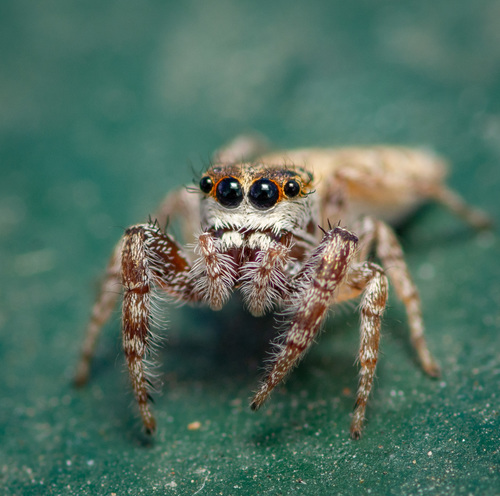
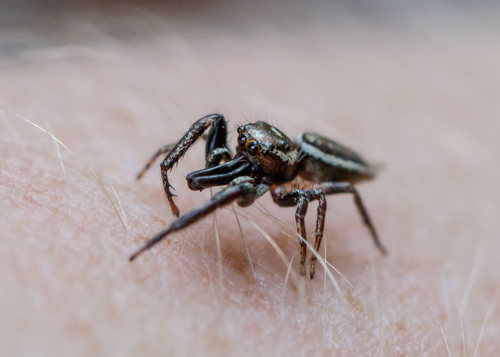
Questions people ask
When are Bagheera prosper spiders most often seen?
They are most frequently observed in March or April.
Source: Wikipedia
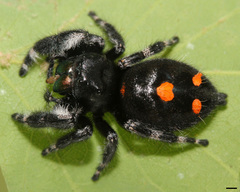
Same family (Salticidae)



Sources
- Wikipedia: https://en.wikipedia.org/wiki/Bagheera_prosper
Look it up elsewhere: GBIF · iNaturalist · BugGuide · ITIS · Wikipedia
Text written 2026-10-25 from the sources above and checked sentence by sentence against them. Data fetched 2026-10-25.