 Bug FAQ
Azalea Sphinx
Darapsa choerilus · Order: Lepidoptera · Family: Sphingidae
Also called: Azalea Sphinx Moth
Source: Wikipedia

The adult has a wingspan of about 57 to 75 mm. Its caterpillars eat azalea and viburnum, potentially harming those shrubs.
Source: Wikipedia
Size
Wingspan ranges from 57 to 75 mm.
Source: Wikipedia
What it eats
Larvae feed on azalea and Viburnum species.
Source: Wikipedia
Where it is found in the US
Recorded in 35 of 51 states and DC. Most records: Massachusetts, Connecticut, Ohio, New Jersey, Pennsylvania, Alabama, Michigan, North Carolina.
Darker = more records. Counts are museum and citizen-science records, not population size.
Source: GBIF
Status: native in North America; native in Canada; native in United States. Source: iNaturalist
Months it is reported in the US
Source: GBIF
More photos
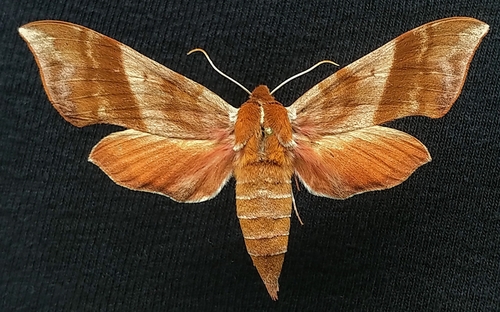

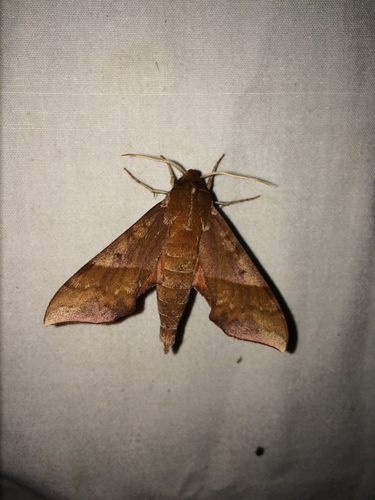
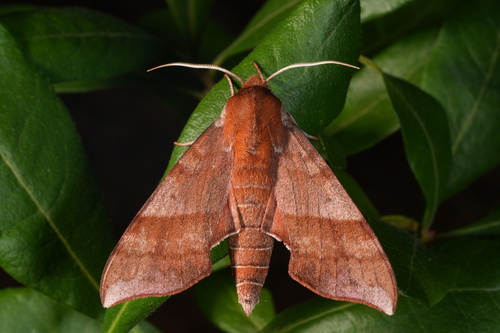
Questions people ask
Same family (Sphingidae)
 White-lined SphinxHyles lineataDamages trees, gardens or crops
 Eurasian Hummingbird HawkmothMacroglossum stellatarum
 Snowberry ClearwingHemaris diffinis
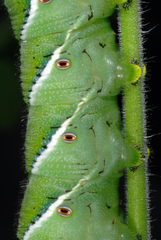 Carolina SphinxManduca sextaDamages trees, gardens or crops
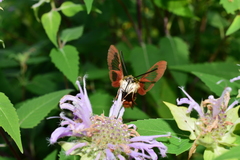 Hummingbird ClearwingHemaris thysbeDamages trees, gardens or crops
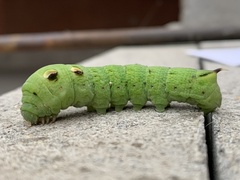 Elephant HawkmothDeilephila elpenor
Sources
- Wikipedia: https://en.wikipedia.org/wiki/Darapsa_choerilus
Look it up elsewhere: GBIF · iNaturalist · BugGuide · ITIS · Wikipedia
Text written 2026-10-23 from the sources above and checked sentence by sentence against them. Data fetched 2026-10-23.