 Bug FAQ
Australian Plague Locust
Chortoicetes terminifera · Order: Orthoptera · Family: Acrididae
Source: Wikipedia
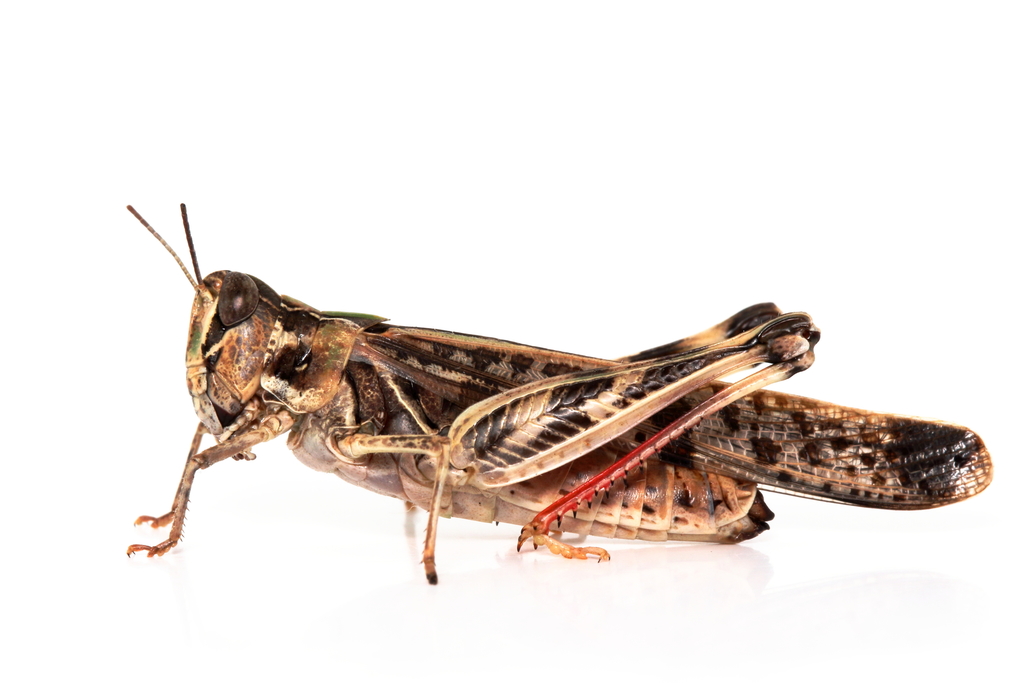
Adult Australian plague locusts are 20 to 45 mm long and have a higher head than thorax with an X-shaped mark on the thorax. They live in inland grasslands and open woodlands across Australia and may be blown to coastal areas or Tasmania, though those populations rarely persist. They feed on green shoots after rain, mainly harming pasture but can also damage crops.
Source: Wikipedia
How to recognize it
In profile the head sits higher than the thorax, which bears an X-shaped mark. The legs have reddish shanks and the wings are clear except for a dark peripheral spot.
Source: Wikipedia
Size
Adults range from 20 to 45 mm (0.79 to 1.77 in) in length.
Source: Wikipedia
Is it a pest in the house?
They are less gregarious than other locusts, forming swarms of varying density down to scattered individuals. Damage is mainly to pasture, though crops can also be affected.
Source: Wikipedia
How to get rid of it
The Australian Plague Locust Commission monitors and controls outbreaks using fipronil and juvenile growth regulators like diflubenzuron. Diflubenzuron, developed by CSIRO and the LUBILOSA programme, now accounts for over 12 % of spray applications, especially in organic or environmentally sensitive areas.
Source: Wikipedia
Where it lives
Found in grassland and open wooded habitats across inland Australia. Upper-level winds can carry them to coastal mainland areas, northern Tasmania, and eastern valleys of the Great Dividing Range, but those groups usually last only a few generations.
Source: Wikipedia
What it eats
Adults eat green shoots that appear after rain, maturing and laying eggs within a week of a rain event. Damage is mainly to pasture, though crops can also be affected.
Source: Wikipedia
Life cycle
Nymphs develop in about 20 to 25 days during mid-summer. They pass through five instars, with wings growing larger at each molt.
Source: Wikipedia
When you see it
Eggs develop in roughly two weeks under warm, moist conditions. Locusts become active in early summer when advanced winter crops have hardened off.
Source: Wikipedia
Where it comes from
It is native to Australia.
Source: Wikipedia
Lookalikes
They are less gregarious than other locust species, with swarms ranging from dense to scattered adults.
Source: Wikipedia
Questions people ask
How big are Australian plague locusts?
Adults are 20 to 45 mm (0.79 to 1.77 in) long.
Source: Wikipedia
Where do they live?
They inhabit inland grasslands and open woodlands across Australia and can be blown to coastal areas or Tasmania, though those populations rarely persist.
Source: Wikipedia
What do they eat and what damage do they cause?
They feed on green shoots after rain, mainly damaging pasture but can also affect crops.
Source: Wikipedia
How are outbreaks controlled?
The Australian Plague Locust Commission uses fipronil and diflubenzuron, the latter covering about 12 % of spray applications, especially in organic or sensitive areas.
Source: Wikipedia
Same family (Acrididae)
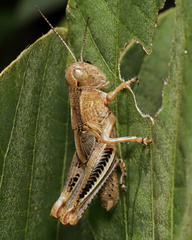 Differential GrasshopperMelanoplus differentialisDamages trees, gardens or crops
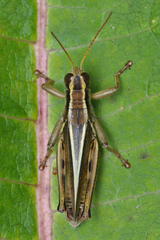 Two-striped GrasshopperMelanoplus bivittatusDamages trees, gardens or crops
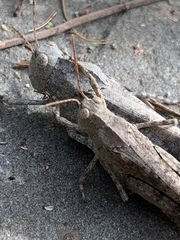 Carolina GrasshopperDissosteira carolinaDamages trees, gardens or crops
 Common Field GrasshopperChorthippus brunneus
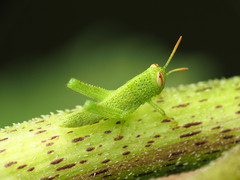 Egyptian Bird GrasshopperAnacridium aegyptium
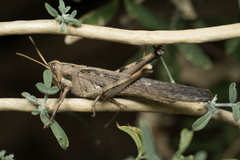 Gray Bird GrasshopperSchistocerca nitensDamages trees, gardens or crops
Sources
- Wikipedia: https://en.wikipedia.org/wiki/Australian_plague_locust
Look it up elsewhere: GBIF · iNaturalist · BugGuide · Wikipedia
Text written 2026-10-23 from the sources above and checked sentence by sentence against them. Data fetched 2026-10-22.