 Bug FAQ
Australian Common Garden Katydid
Caedicia simplex · Order: Orthoptera · Family: Tettigoniidae
Also called: Common garden Katydid
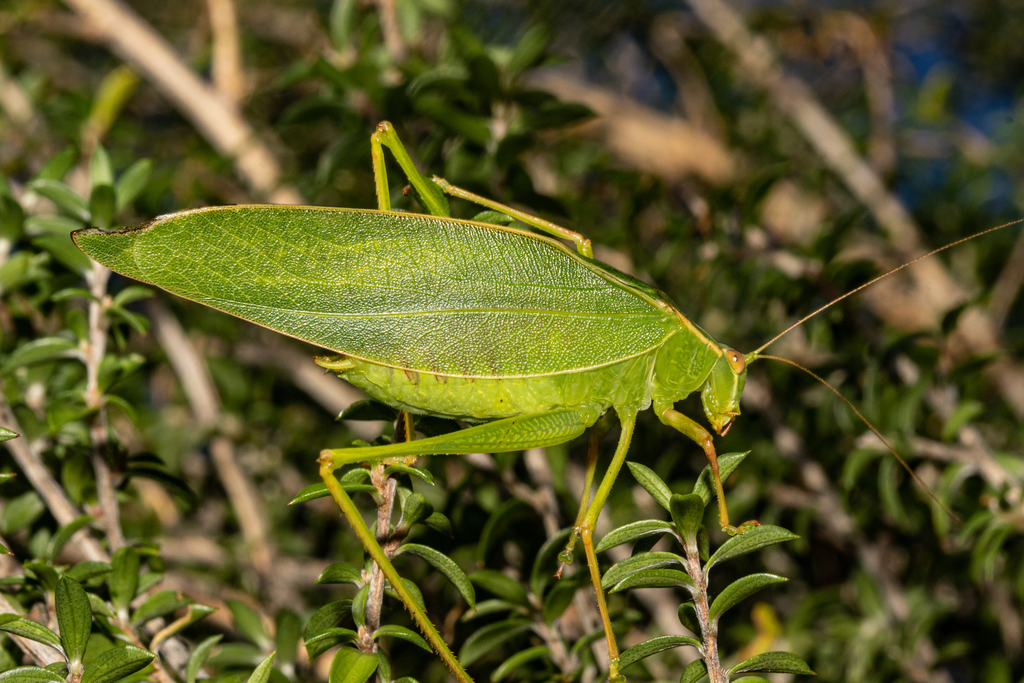
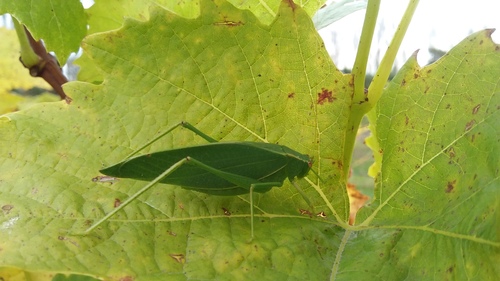
The Australian common garden katydid is a green insect about 4 to 6 cm long that looks like a small leaf. It lives in New Zealand and Australia, feeds on a wide range of plants, and completes its life cycle in about one year.
Source: Wikipedia
How to recognize it
It has a tiny oval head with velvety green color and bright orange-red eyes, and a keeled pronotum with a yellow stripe, a notched front edge and rounded back.
Source: Wikipedia
Size
Adults measure roughly 4 to 6 cm in length.
Source: Wikipedia
Is it a pest in the house?
Although it can affect gardens, it is not considered an economic threat or pest.
Source: Wikipedia
Where it lives
It is native to New Zealand and Australia.
Source: Wikipedia
What it eats
It forages on many plants, preferring those with higher protein such as flowering species, but can also survive on green leafy matter.
Source: Wikipedia
Life cycle
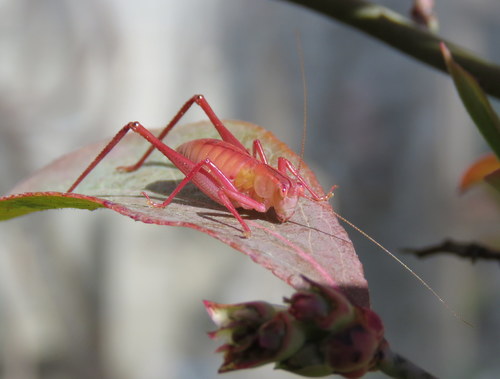
The species completes its life cycle in about a year, with nymphs molting several times before reaching adult size and wings.
Source: Wikipedia
When you see it
Mating occurs in the rainy season, and adults die after autumn while eggs overwinter until spring.
Source: Wikipedia
Where it comes from
Its natural range is limited to New Zealand and Australia.
Source: Wikipedia
More photos
Questions people ask
Are they a problem for my garden?
They can feed on garden plants but are not regarded as a pest or economic threat.
Source: Wikipedia
Same family (Tettigoniidae)
 Great Green Bush-cricketTettigonia viridissimaCan bite
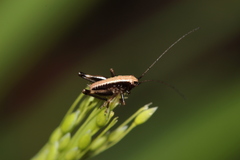 Dark Bush-cricketPholidoptera griseoaptera
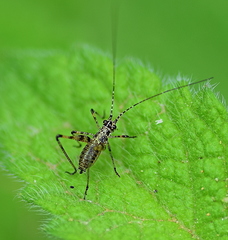 Mediterranean KatydidPhaneroptera nanaDamages trees, gardens or crops
 Fork-tailed Bush KatydidScudderia furcataDamages trees, gardens or crops
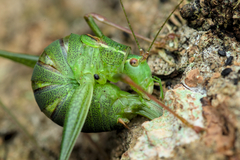 Speckled Bush-cricketLeptophyes punctatissima
 Roesel's Bush-cricketRoeseliana roeselii
Sources
- Wikipedia: https://en.wikipedia.org/wiki/Caedicia_simplex
Look it up elsewhere: GBIF · iNaturalist · BugGuide · Wikipedia
Text written 2026-10-22 from the sources above and checked sentence by sentence against them. Data fetched 2026-10-22.