 Bug FAQ
Asian Longhorned Tick
Haemaphysalis longicornis · Order: Ixodida · Family: Ixodidae
Also called: Bush tick, New Zealand cattle tick
Source: Wikipedia, Penn State Extension, extension.umd.edu
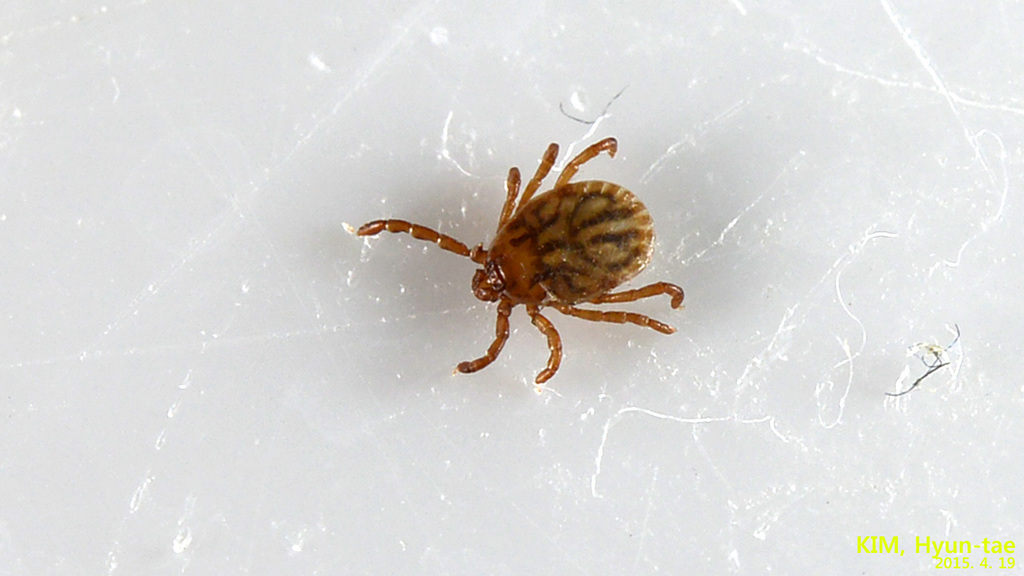
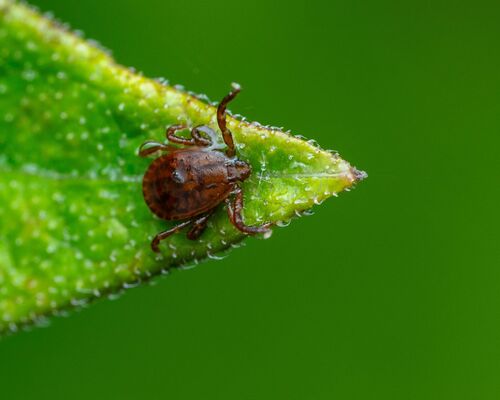
The Asian longhorned tick is a reddish-brown tick about 2.5 mm long as an adult and can swell to nearly 10 mm when engorged. It feeds on a wide range of mammals and birds, including livestock, pets, wildlife and humans. It can transmit Lyme-like spirochetes, spotted-fever rickettsiae, Ehrlichia, Anaplasma, Powassan virus and Thrombocytopenia syndrome virus (-).
Source: extension.umd.edu, Wikipedia, Penn State Extension
How to recognize it
Adults are reddish-brown and lack distinctive markings; microscopic examination is needed to separate them from other Haemaphysalis species.
Source: extension.umd.edu, Wikipedia
Is it a pest in the house?
Ticks often gather in large numbers on livestock and pets, and can be found on many domestic animals including cats, dogs and humans (-). Pet owners should consult veterinarians for tick-control measures.
Source: Wikipedia, Penn State Extension, extension.umd.edu
Does it bite or sting?
They bite humans and animals and have been shown to carry Lyme-like spirochetes, spotted-fever rickettsiae, Ehrlichia, Anaplasma, Powassan virus and Thrombocytopenia syndrome virus (-).
Source: Wikipedia, Penn State Extension, extension.umd.edu
How to get rid of it
Prevent bites by using integrated tick-management, regular animal checks, personal tick checks, permethrin-treated clothing and DEET on skin (-). If a tick is attached, remove it with fine-tipped tweezers as close to the skin as possible.
Source: Penn State Extension, extension.umd.edu
Where it lives
The tick parasitizes mammals and birds and has been found on cats, dogs and humans.
Source: Wikipedia
What it eats
It feeds on a broad host range, from wildlife and livestock to companion animals and people.
Source: Wikipedia
Life cycle
Its seasonal feeding and reproductive cycles are similar to other ticks, and it can reproduce sexually or by parthenogenesis.
Source: Wikipedia
When you see it
Feeding and reproduction follow typical tick seasonal patterns.
Source: Wikipedia
Where it comes from
It is native to temperate East and Central Asia, including China, Korea, Japan, and several Pacific islands such as Australia and New Zealand.
Source: Wikipedia
Lookalikes
Other Haemaphysalis species in the U.S. (rabbit tick and bird tick) look similar and require microscopic examination to tell apart (-). Immature longhorned ticks can be confused with immature lone-star ticks in some regions.
Source: Wikipedia, Penn State Extension
Where it is found in the US
Recorded in 17 of 51 states and DC. Most records: Virginia, New York, Pennsylvania, Maryland, New Jersey, Delaware, Massachusetts, Ohio.
Darker = more records. Counts are museum and citizen-science records, not population size.
Source: GBIF
Status: introduced in North America; introduced in United States. Source: iNaturalist
Months it is reported in the US
Source: GBIF
More photos

Questions people ask
Do Asian longhorned ticks bite humans?
Yes, they will bite people as well as many animals.
Source: Wikipedia, extension.umd.edu
Can they transmit diseases?
They are known to carry several pathogens, including Lyme-like bacteria, spotted-fever rickettsiae, Ehrlichia, Anaplasma, Powassan virus and Thrombocytopenia syndrome virus (-).
Source: Wikipedia, Penn State Extension, extension.umd.edu
How can I identify this tick?
Adults are reddish-brown, about 2.5 mm long, lack distinct markings, and require microscopic examination to separate them from other Haemaphysalis species.
Source: extension.umd.edu, Wikipedia
What should I do if I find one on my pet?
Check the animal regularly, consult a veterinarian for control options, and remove the tick with fine-tipped tweezers as close to the skin as possible.
Source: extension.umd.edu
Same family (Ixodidae)
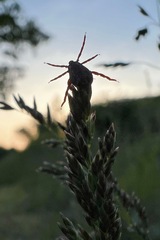 American Dog TickDermacentor variabilisCan spread germs or disease
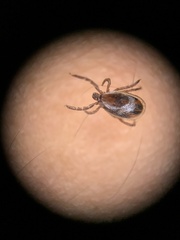 Eastern Black-legged TickIxodes scapularisCan spread germs or disease
 Lone Star TickAmblyomma americanumCan spread germs or disease
 Gulf Coast TickAmblyomma maculatumCan spread germs or disease
 Western Black-legged TickIxodes pacificusCan spread germs or disease
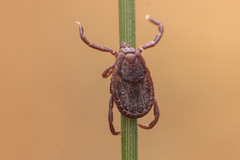 Brown Dog TickRhipicephalus sanguineusCan spread germs or disease
Sources
- Wikipedia: https://en.wikipedia.org/wiki/Haemaphysalis_longicornis
- Penn State Extension: https://extension.psu.edu/asian-longhorned-tick-haemaphysalis-longicornis
- extension.umd.edu: https://extension.umd.edu/resource/asian-longhorned-tick
Look it up elsewhere: GBIF · iNaturalist · BugGuide · ITIS · Wikipedia
Text written 2026-10-22 from the sources above and checked sentence by sentence against them. Data fetched 2026-10-22.