 Bug FAQ
Aroga unifasciella
Aroga unifasciella · Order: Lepidoptera · Family: Gelechiidae
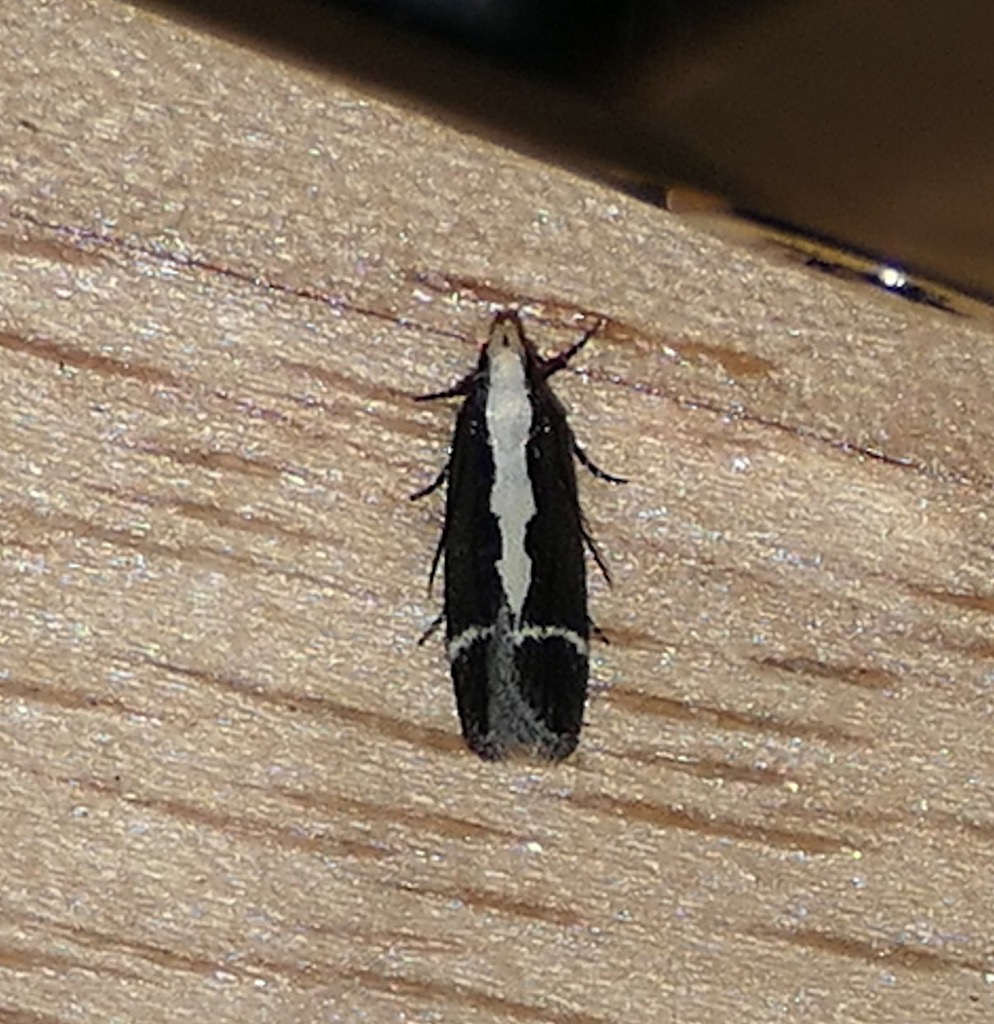
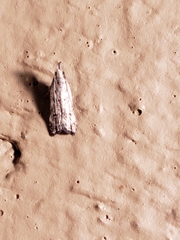
Aroga unifasciella is a small moth with a wingspan of about 18 mm. Its forewings are deep bronzy black with a white edge and a narrow white band near the tip, while the hindwings are a shining light brownish-gray. It lives in western North America, from Montana down through New Mexico and across Arizona to eastern and southern California, and adults fly from July through September.
Source: Wikipedia
How to recognize it
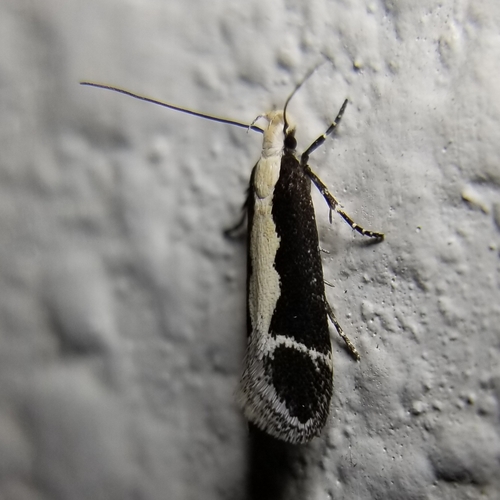
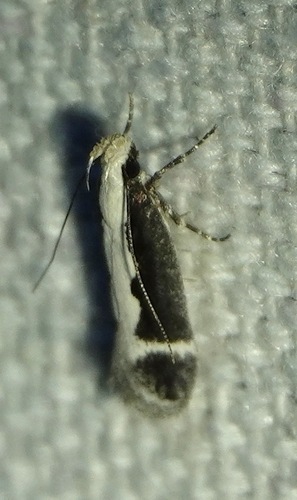
The forewings are deep bronzy black, have a white dorsal edge below the fold from base to cilia, and a narrow white curved band near the apex; the black area is speckled with tiny bluish-white spots, and the hindwings are shining light fuscous.
Source: Wikipedia
Size
The wingspan is about 18 mm.
Source: Wikipedia
When you see it
Adults are on the wing from July to September.
Source: Wikipedia
Where it comes from
Its range is in North America, specifically from Montana down to western New Mexico and across Arizona to eastern and southern California.
Source: Wikipedia
Where it is found in the US
Recorded in 7 of 51 states and DC. Most records: California, Arizona, New Mexico, Texas, Utah, Colorado, Montana.
Darker = more records. Counts are museum and citizen-science records, not population size.
Source: GBIF
Status: native in North America; native in Canada; native in United States. Source: iNaturalist
Months it is reported in the US
Source: GBIF
More photos
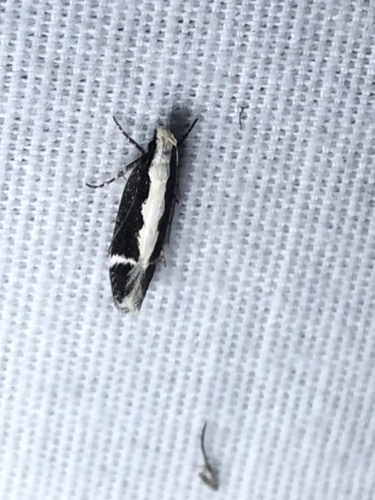
Questions people ask
When are adult Aroga unifasciella moths active?
Adults can be seen flying from July through September.
Source: Wikipedia
Same family (Gelechiidae)
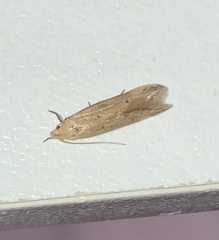 Angoumois Grain MothSitotroga cerealellaDamages trees, gardens or crops
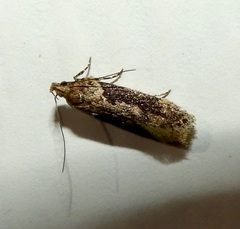 Boxelder Leafworm MothChionodes obscurusella
 Hairy, Toothed, and Shining Dichomeris Moths and AlliesDichomeris setosella
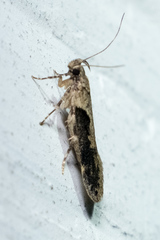 Black-smudged Chionodes Moth and AlliesChionodes occidentellaBlack-smudged Chionodes MothChionodes mediofuscella
 Inverse and Kimball's Dichomeris MothsDichomeris inversella
Sources
- Wikipedia: https://en.wikipedia.org/wiki/Aroga_unifasciella
Look it up elsewhere: GBIF · iNaturalist · BugGuide · Wikipedia
Text written 2026-10-27 from the sources above and checked sentence by sentence against them. Data fetched 2026-10-27.