 Bug FAQ
Aroga paulella
Aroga paulella · Order: Lepidoptera · Family: Gelechiidae
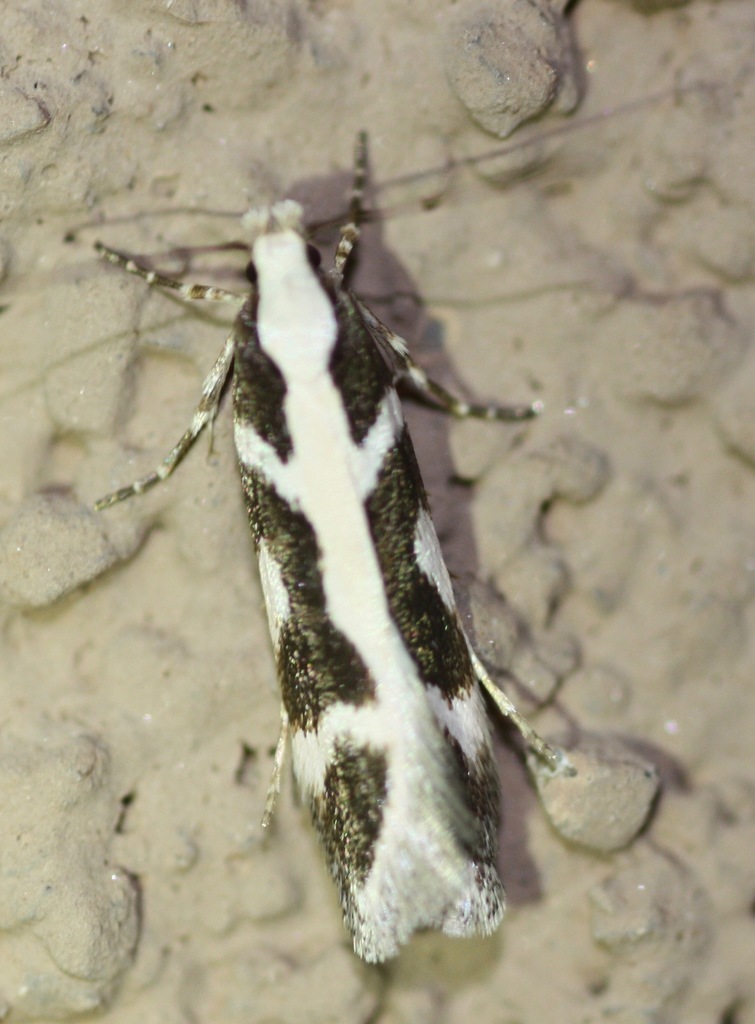
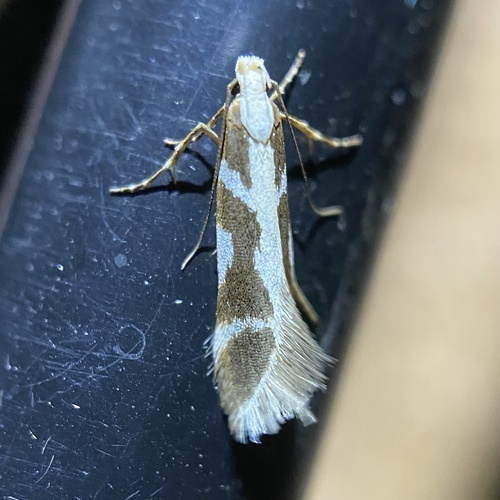
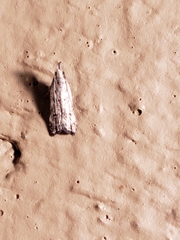
The moth has a wingspan between 13 and 23 mm. Its forewings are dark black-brown with distinctive white markings, including a white edge along the dorsal side that extends up the fold and a small upward projection near the wing tip.
Source: Wikipedia
How to recognize it
The forewings are a shiny dark black-brown color with white markings. A white band runs along the entire dorsal edge, reaching up the fold except near the base and forming a small upward projection near the apical third of the wing.
Source: Wikipedia
Size
The wingspan ranges from 13 to 23 mm.
Source: Wikipedia
Where it is found in the US
Recorded in 11 of 51 states and DC. Most records: California, Arizona, New Mexico, Montana, Colorado, Texas, Wyoming, Nevada.
Darker = more records. Counts are museum and citizen-science records, not population size.
Source: GBIF
Status: native in North America; native in United States. Source: iNaturalist
Months it is reported in the US
Source: GBIF
More photos
Questions people ask
How can I recognize Aroga paulella?
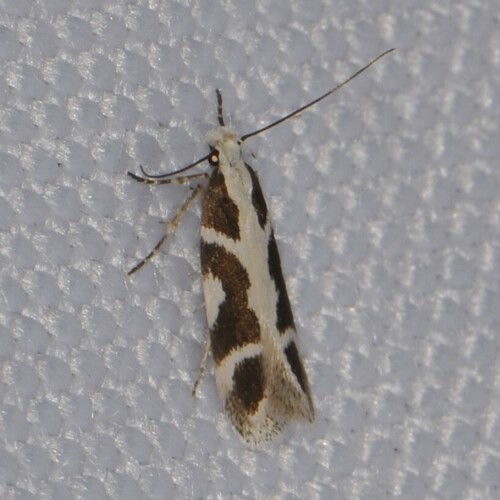
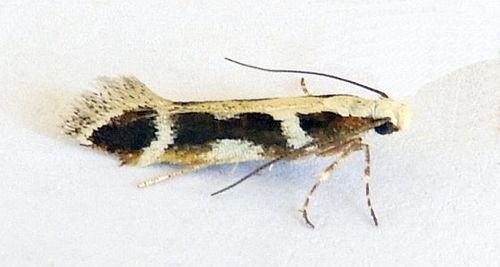
Look for dark black-brown forewings with white markings, a white dorsal edge that runs up the fold, and a small upward projection near the wing tip.
Source: Wikipedia
Same family (Gelechiidae)
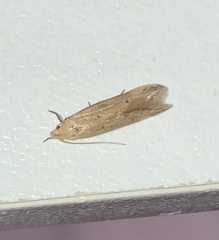 Angoumois Grain MothSitotroga cerealellaDamages trees, gardens or crops
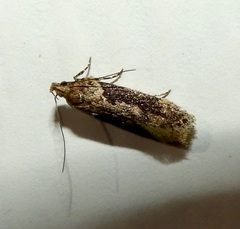 Boxelder Leafworm MothChionodes obscurusella
 Hairy, Toothed, and Shining Dichomeris Moths and AlliesDichomeris setosella
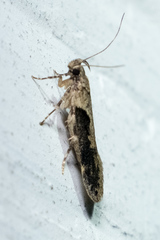 Black-smudged Chionodes Moth and AlliesChionodes occidentellaBlack-smudged Chionodes MothChionodes mediofuscella
 Inverse and Kimball's Dichomeris MothsDichomeris inversella
Sources
- Wikipedia: https://en.wikipedia.org/wiki/Aroga_paulella
Look it up elsewhere: GBIF · iNaturalist · BugGuide · Wikipedia
Text written 2026-10-27 from the sources above and checked sentence by sentence against them. Data fetched 2026-10-27.