 Bug FAQ
Arizona house centipede
Scutigera linceci · Order: Scutigeromorpha · Family: Scutigeridae
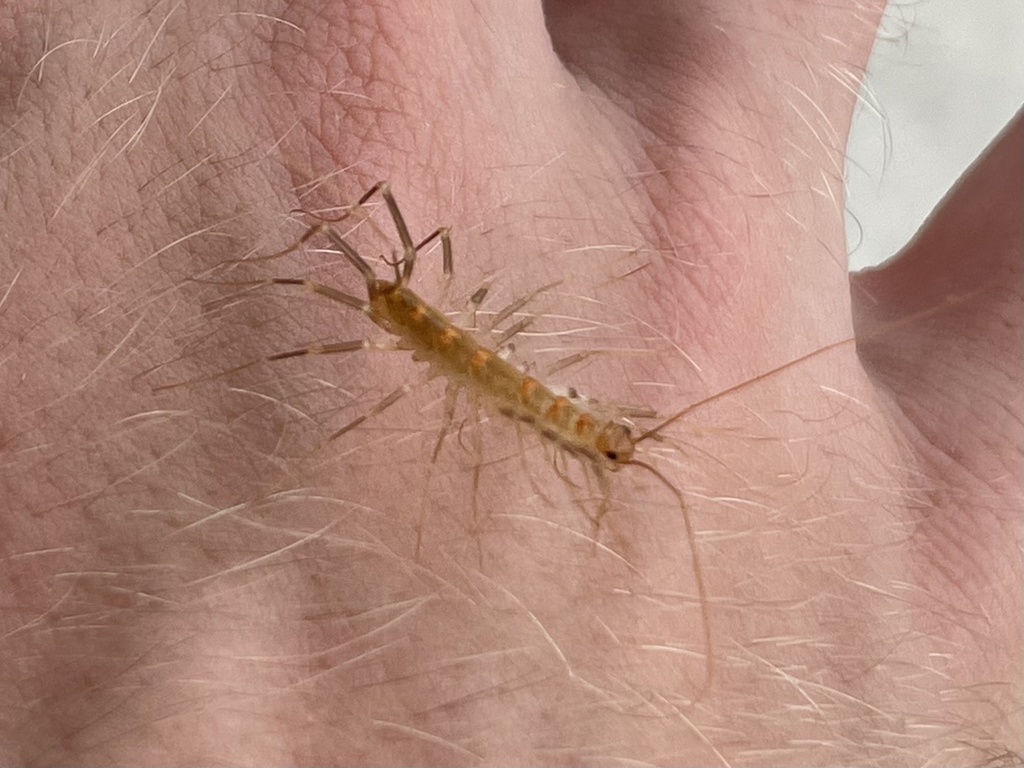
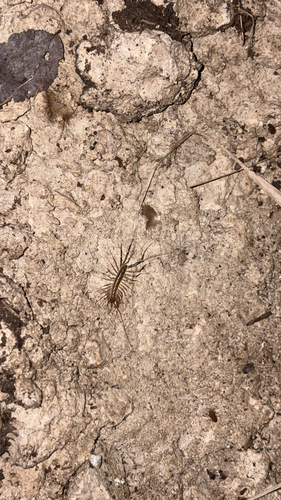
The Arizona house centipede grows to about 3.8 cm (1.5 in), much smaller than the common house centipede. It lives under stones and in hollow logs in the wild but often wanders into homes. It is native to the southern United States and Central America.
Source: Wikipedia
How to recognize it
It can be distinguished from the common house centipede by its head shape, tergite shape, and colouration.
Source: Wikipedia
Size
Adults reach only about 3.8 cm (1.5 in) in length, which is much smaller than Scutigera coleoptrata.
Source: Wikipedia
Where it lives
In nature it hides under stones and inside hollow logs, yet it frequently enters human dwellings.
Source: Wikipedia
Lookalikes
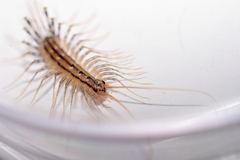
It is often confused with the common house centipede, but it is considerably smaller.
Source: Wikipedia
Where it is found in the US
Recorded in 4 of 51 states and DC. Most records: Texas, Arizona, Oklahoma, New Mexico.
Darker = more records. Counts are museum and citizen-science records, not population size.
Source: GBIF
Status: native in North America; native in United States. Source: iNaturalist
Months it is reported in the US
Source: GBIF
More photos
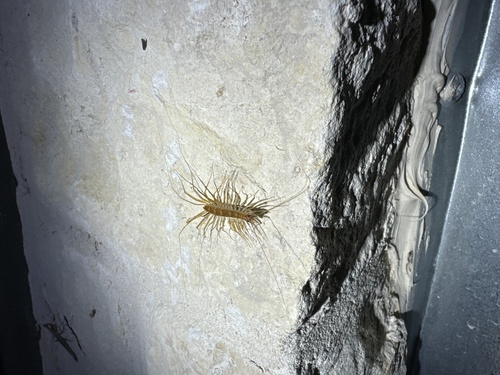
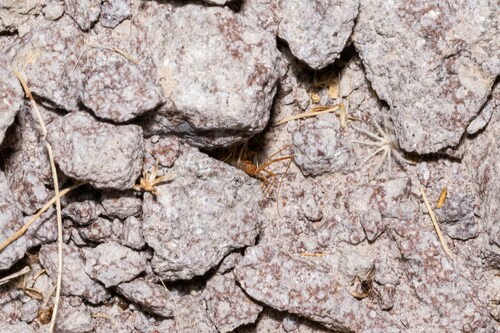
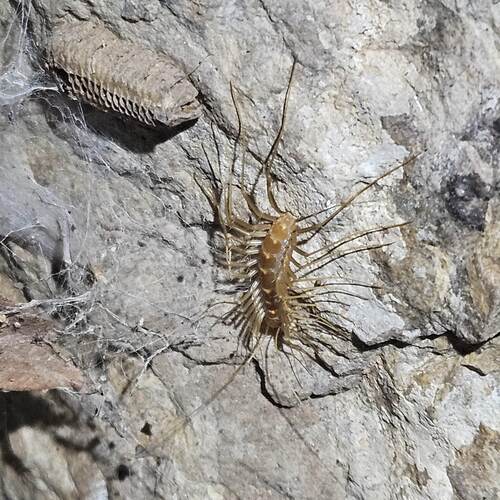
Questions people ask
How can I tell an Arizona house centipede apart from a common house centipede?
Look for a smaller body (about 3.8 cm), and note differences in head shape, tergite shape, and colouration.
Source: Wikipedia
Same family (Scutigeridae)


Sources
- Wikipedia: https://en.wikipedia.org/wiki/Scutigera_linceci
Look it up elsewhere: GBIF · iNaturalist · BugGuide · ITIS · Wikipedia
Text written 2026-10-27 from the sources above and checked sentence by sentence against them. Data fetched 2026-10-27.