 Bug FAQ
Argyrotaenia dorsalana
Argyrotaenia dorsalana · Order: Lepidoptera · Family: Tortricidae
Source: Wikipedia
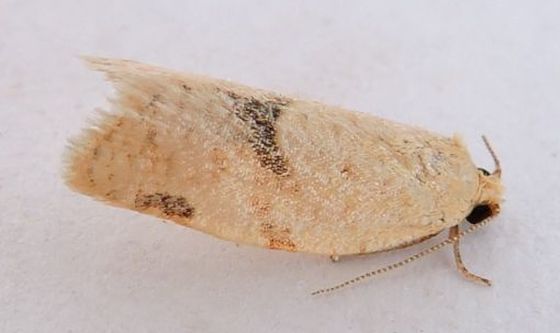
Argyrotaenia dorsalana is a small moth with a wingspan of about 18 to 24 mm (0.7 to 0.9 in). The caterpillars eat the foliage of Douglas-fir, western hemlock, western larch and other conifers, sometimes harming forest trees.
Source: Wikipedia
Size
The adult’s wingspan ranges from 18 to 24 mm.
Source: Wikipedia
Life cycle
The species overwinters as eggs, with larvae appearing from early May to mid-June. Pupation occurs in late June and adults emerge shortly thereafter.
Source: Wikipedia
Where it comes from
Its native range covers the same western North American region from southern British Columbia to California, Arizona and New Mexico.
Source: Wikipedia
Where it is found in the US
Recorded in 11 of 51 states and DC. Most records: Montana, Utah, Oregon, New Mexico, Colorado, Arizona, Washington, Idaho.
Darker = more records. Counts are museum and citizen-science records, not population size.
Source: GBIF
Status: native in North America; native in Canada; native in United States. Source: iNaturalist
Months it is reported in the US
Source: GBIF
Questions people ask
What trees do the larvae feed on?
They eat Douglas-fir, western hemlock, western larch and several other conifers such as grand fir and ponderosa pine.
Source: Wikipedia
When can I see the caterpillars?
Caterpillars are found from early May through mid-June.
Source: Wikipedia
Same family (Tortricidae)
 Oblique-banded Leafroller MothChoristoneura rosaceanaDamages trees, gardens or crops
 Garden TortrixClepsis peritanaDamages trees, gardens or crops
 Common MarbleSyricoris lacunanaDamages trees, gardens or crops
 Red-banded Leafroller MothArgyrotaenia velutinanaDamages trees, gardens or crops
 Light Brown Apple MothEpiphyas postvittanaDamages trees, gardens or crops
 Aster and Reddish Eucosma Moths and AlliesEucosma parmatana
Sources
- Wikipedia: https://en.wikipedia.org/wiki/Argyrotaenia_dorsalana
Look it up elsewhere: GBIF · iNaturalist · BugGuide · Wikipedia
Text written 2026-10-28 from the sources above and checked sentence by sentence against them. Data fetched 2026-10-28.