 Bug FAQ
Apple Leaf Skeletonizer Moth
Choreutis pariana · Order: Lepidoptera · Family: Choreutidae
Also called: Apple Leaf Skeletoniser, Apple Leaf Skeletonizer
Source: Wikipedia
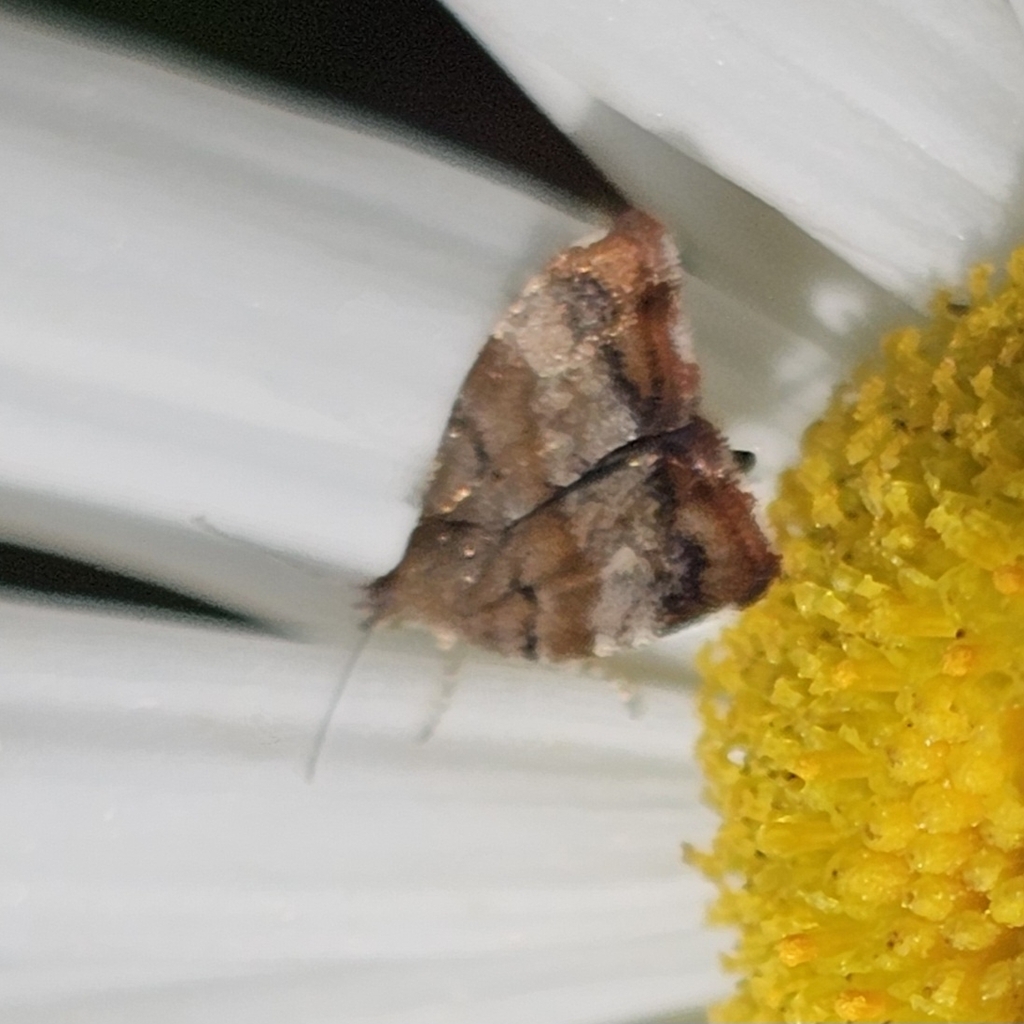
Adult apple leaf skeletonizer moths have a wingspan of about 11 to 15 mm. The caterpillars feed under a silken web on the upper leaf surface, eating the leaf tissue and leaving a brown, skeleton-like blotch on many trees and fruit plants. They are found in agricultural areas of the western United States and several Canadian provinces, and they are native to Eurasia.
Source: Wikipedia
How to recognize it
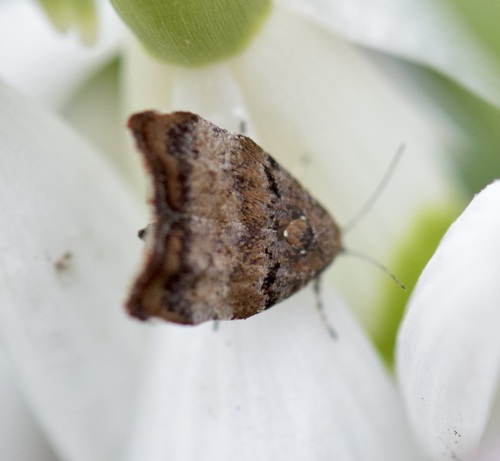
Adults are usually brownish in their wing markings, but the banding must be carefully checked.
Source: Wikipedia
Size
The moth’s wingspan ranges from 11 to 15 mm.
Source: Wikipedia
What it eats
Larvae spin a fine silken web on the upper side of leaves and eat the leaf tissue, leaving the lower cuticle as a brown blotch that looks like a skeleton leaf. Host plants include crab apples, hawthorns, paper birches, willows, cherries, whitebeams, ashes, roses and alders.
Source: Wikipedia
Life cycle
In North America, larvae are found from June through early September, while in Britain they appear in May-June and again in August.
Source: Wikipedia
Where it comes from
The species is native to Eurasia.
Source: Wikipedia
Lookalikes
Its wing pattern can look like that of other Choreutis species, often requiring genital examination to tell them apart.
Source: Wikipedia
Where it is found in the US
Recorded in 20 of 51 states and DC. Most records: Vermont, New York, Massachusetts, Michigan, Alaska, Maine, Pennsylvania, Idaho.
Darker = more records. Counts are museum and citizen-science records, not population size.
Source: GBIF
Months it is reported in the US
Source: GBIF
More photos
Questions people ask
What plants do the larvae feed on?
They eat the leaf tissue of crab apples, hawthorns, birches, willows, cherries, whitebeams, ashes, roses and alders, leaving a skeletonized leaf.
Source: Wikipedia
When are the adult moths active?
In Canada adults are seen from late July through late October, while in Western Europe they appear in July, again in September and may show up in early spring.
Source: Wikipedia
How can I tell this moth apart from similar species?
Its brownish wing markings can be confused with other Choreutis moths, so a genital examination is often needed for reliable identification.
Source: Wikipedia
Where is this moth found?
It occurs in agricultural areas of the western United States and several Canadian provinces, and it is native to Eurasia.
Source: Wikipedia
Same family (Choreutidae)


Sources
- Wikipedia: https://en.wikipedia.org/wiki/Choreutis_pariana
Look it up elsewhere: GBIF · iNaturalist · BugGuide · Wikipedia
Text written 2026-10-26 from the sources above and checked sentence by sentence against them. Data fetched 2026-10-26.