 Bug FAQ
Everlasting Tebenna Moth
Tebenna gnaphaliella · Order: Lepidoptera · Family: Choreutidae

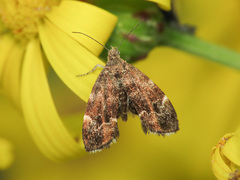
The Everlasting Tebenna Moth has a wingspan of about ten millimetres and is found on the flowers of herbaceous plants. It lives across the United States from Florida to California and north to at least New Hampshire, and adults are on the wing in June and July with likely two generations per year. Its larvae mine the leaves of former Gnaphalium plants such as Pseudognaphalium obtusifolium, Pseudognaphalium helleri and Helichrysum species.
Source: Wikipedia
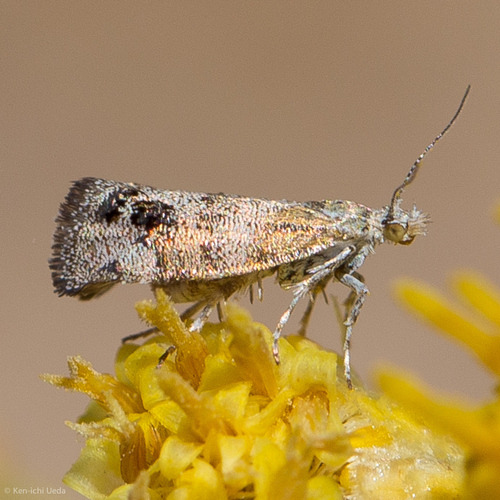
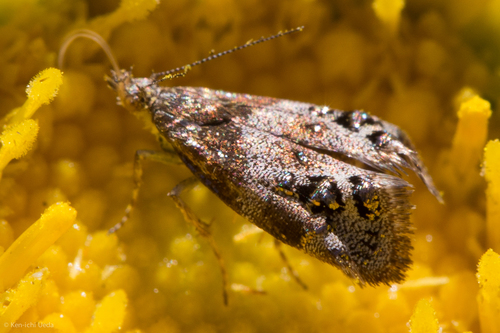
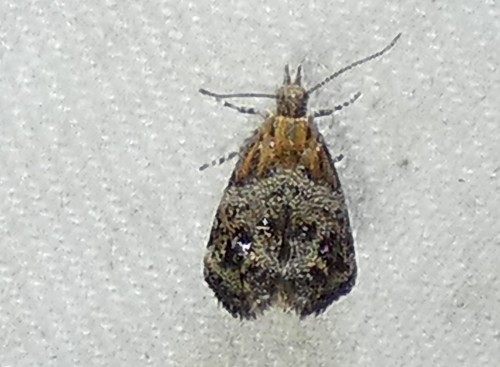
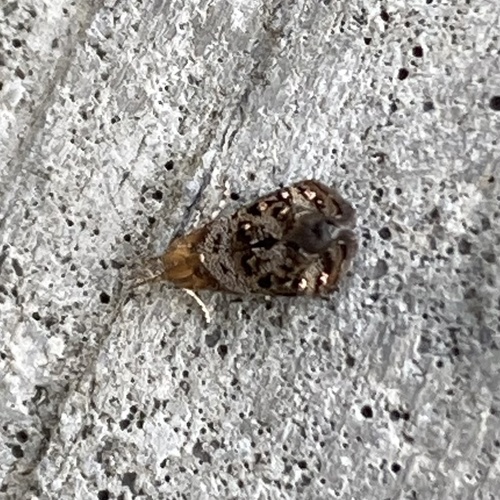
How to recognize it
It looks just like the Palearctic Tebenna micalis.
Source: Wikipedia
Size
The adult’s wingspan is about ten millimetres.
Source: Wikipedia
Where it lives
Adults are usually seen on the flowers of herbaceous plants.
Source: Wikipedia
Life cycle
Adults fly in June and July and there are probably at least two generations each year.
Source: Wikipedia
Where it comes from
It occurs across the United States from Florida to California and as far north as New Hampshire.
Source: Wikipedia
Lookalikes
It is extremely similar to the Palearctic Tebenna micalis.
Source: Wikipedia
Where it is found in the US
Recorded in 33 of 51 states and DC. Most records: North Carolina, Massachusetts, Louisiana, Pennsylvania, Alabama, California, Texas, Virginia.
Darker = more records. Counts are museum and citizen-science records, not population size.
Source: GBIF
Status: native in North America; native in Canada; native in United States. Source: iNaturalist
Months it is reported in the US
Source: GBIF
More photos
Questions people ask
What plants do the larvae feed on?
The larvae mine the leaves of former Gnaphalium plants such as Pseudognaphalium obtusifolium, Pseudognaphalium helleri and Helichrysum species.
Source: Wikipedia
Same family (Choreutidae)

Sources
- Wikipedia: https://en.wikipedia.org/wiki/Tebenna_gnaphaliella
Look it up elsewhere: GBIF · iNaturalist · BugGuide · Wikipedia
Text written 2026-10-25 from the sources above and checked sentence by sentence against them. Data fetched 2026-10-25.