 Bug FAQ
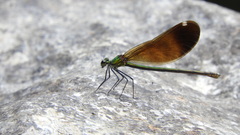
Appalachian Jewelwing
Calopteryx angustipennis · Order: Odonata · Family: Calopterygidae
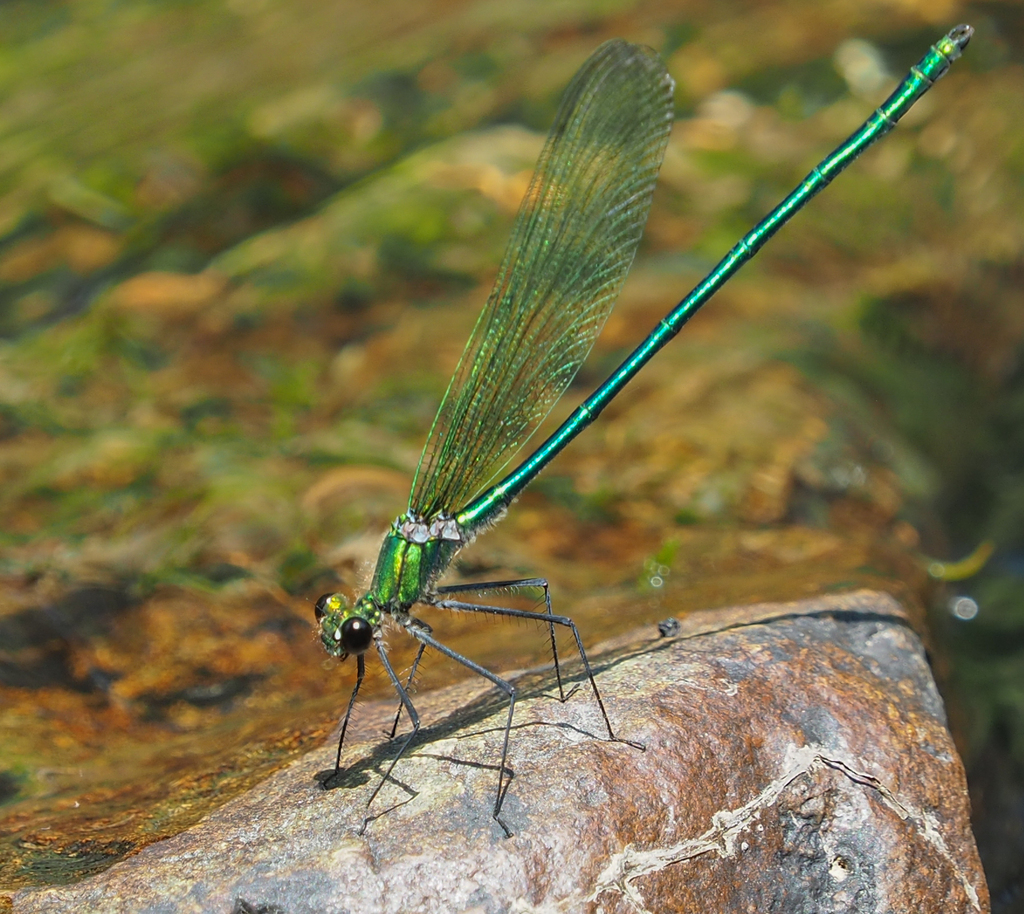
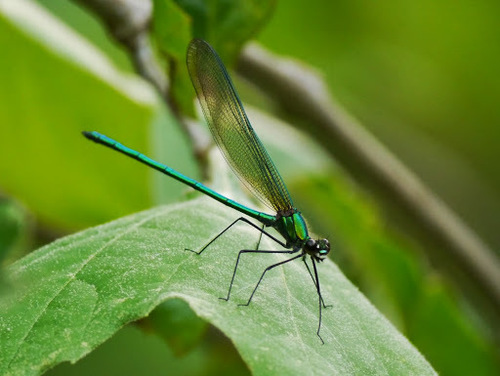
The Appalachian jewelwing is the largest jewelwing damselfly, measuring about 50 to 67 mm long. It lives beside fast-flowing, cold streams and rocky rivers in woodland areas from Alabama up to New York. Adults are on the wing from early spring (April-May) through midsummer (June-August), depending on location.
Source: Wikipedia
How to recognize it
Females show a duller abdomen tip and some pale brown on the thorax.
Source: Wikipedia
Size
Adults range from 50 to 67 mm (2 to 2.6 in) in length.
Source: Wikipedia
Where it lives
Prefers woodland settings with cold, fast-flowing water.
Source: Wikipedia
Where it comes from
It is endemic to the United States, occurring in southeastern and eastern states.
Source: Wikipedia
Lookalikes
It can be told apart from other jewelwings because its wings lack dark coloration.
Source: Wikipedia
Where it is found in the US
Recorded in 13 of 51 states and DC. Most records: Virginia, North Carolina, Tennessee, Georgia, Maryland, Pennsylvania, West Virginia, Alabama.
Darker = more records. Counts are museum and citizen-science records, not population size.
Source: GBIF
Status: native in North America; native in United States. Source: iNaturalist
Months it is reported in the US
Source: GBIF
More photos
Questions people ask
When can I see Appalachian jewelwings?
Adults are active from April-May through June-August, depending on where you are.
Source: Wikipedia
How can I tell this damselfly apart from other jewelwings?
Its wings are clear or amber without any dark spots, unlike other jewelwing species.
Source: Wikipedia
Same family (Calopterygidae)


Sources
- Wikipedia: https://en.wikipedia.org/wiki/Calopteryx_angustipennis
Look it up elsewhere: GBIF · iNaturalist · BugGuide · ITIS · Wikipedia
Text written 2026-10-25 from the sources above and checked sentence by sentence against them. Data fetched 2026-10-25.