 Bug FAQ
Antaeotricha haesitans
Antaeotricha haesitans · Order: Lepidoptera · Family: Depressariidae
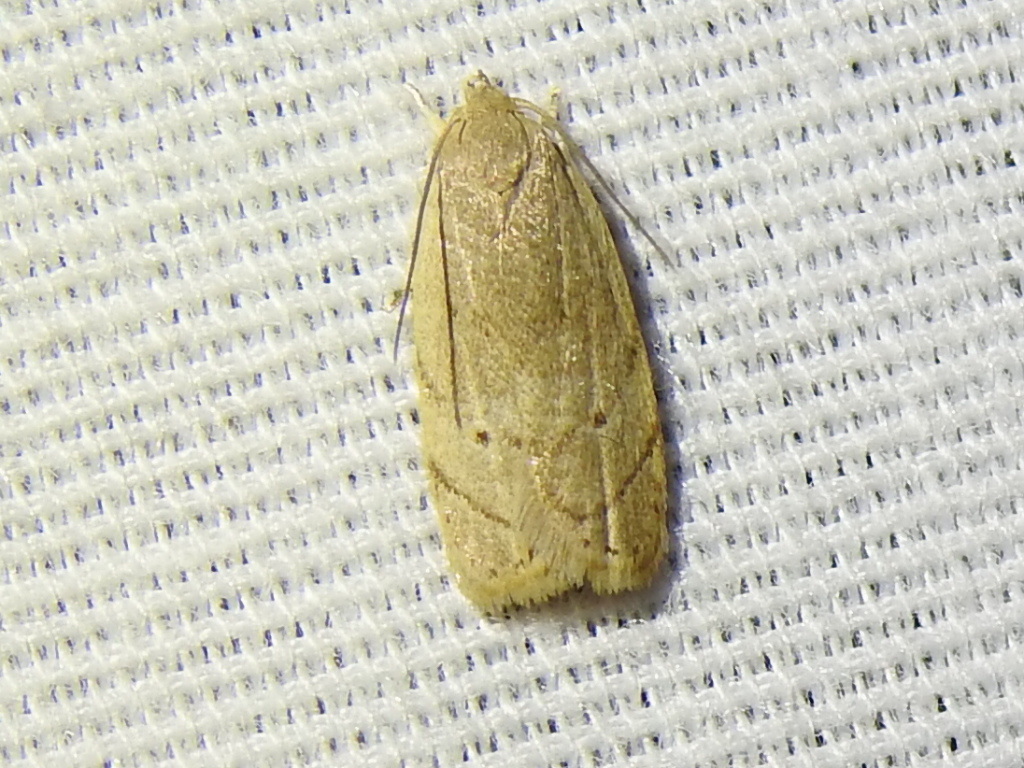
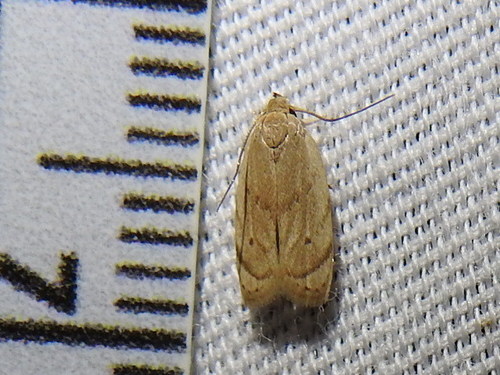
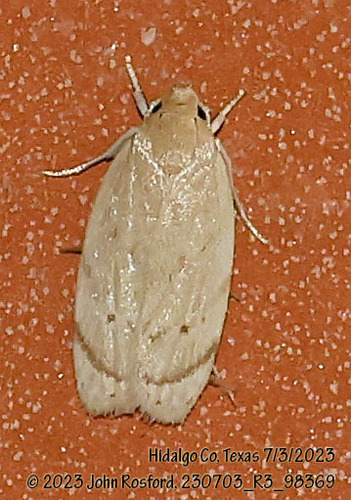
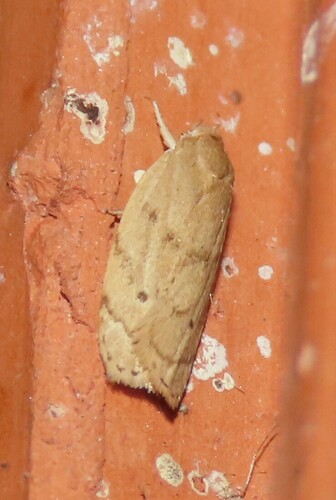
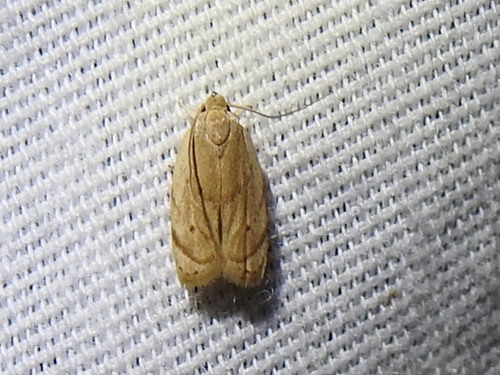
Antaeotricha haesitans is a small moth with a wingspan of about 12 mm. Its forewings are pale fawn-ochre with a distinctive oblique brown line, and the hindwings are a fawn-brown shade. The species occurs in Durango, Mexico and has been recorded in Texas, USA. Caterpillars feed on the plant Pithecellobium flexicaule.
Source: Wikipedia
How to recognize it
The forewings show a pale fawn-ochre background crossed by an oblique fawn-brown line that runs from the start of the costal cilia down to the tornus. The hindwings are colored a fawn-brownish tone.
Source: Wikipedia
Size
Adults have a wingspan of roughly 12 mm.
Source: Wikipedia
Where it lives
It has been found in the Mexican state of Durango and in Texas, USA.
Source: Wikipedia
What it eats
Larvae feed on the leguminous shrub Pithecellobium flexicaule.
Source: Wikipedia
Life cycle
The species was first described by Lord Walsingham in 1912.
Source: Wikipedia
Where it comes from
The moth is native to Mexico (Durango) and the United States (Texas).
Source: Wikipedia
Where it is found in the US
Recorded in 1 of 51 states and DC. Most records: Texas.
Darker = more records. Counts are museum and citizen-science records, not population size.
Source: GBIF
Months it is reported in the US
Source: GBIF
More photos
Questions people ask
What do the caterpillars of Antaeotricha haesitans eat?
The larvae feed on the plant Pithecellobium flexicaule.
Source: Wikipedia
Where is Antaeotricha haesitans found?
It occurs in Durango, Mexico and has been recorded in Texas, USA.
Source: Wikipedia
Same family (Depressariidae)


Sources
- Wikipedia: https://en.wikipedia.org/wiki/Antaeotricha_haesitans
Look it up elsewhere: GBIF · iNaturalist · BugGuide · Wikipedia
Text written 2026-10-28 from the sources above and checked sentence by sentence against them. Data fetched 2026-10-28.