 Bug FAQ
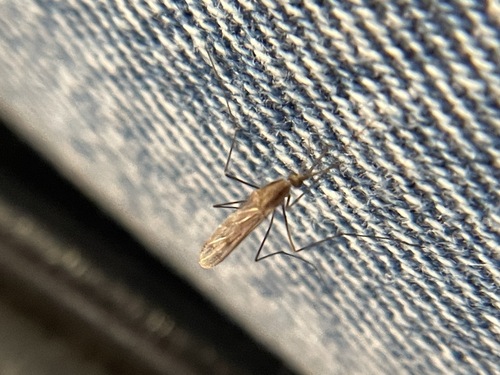
Anopheles freeborni
Anopheles freeborni · Order: Diptera · Family: Culicidae
Source: Wikipedia
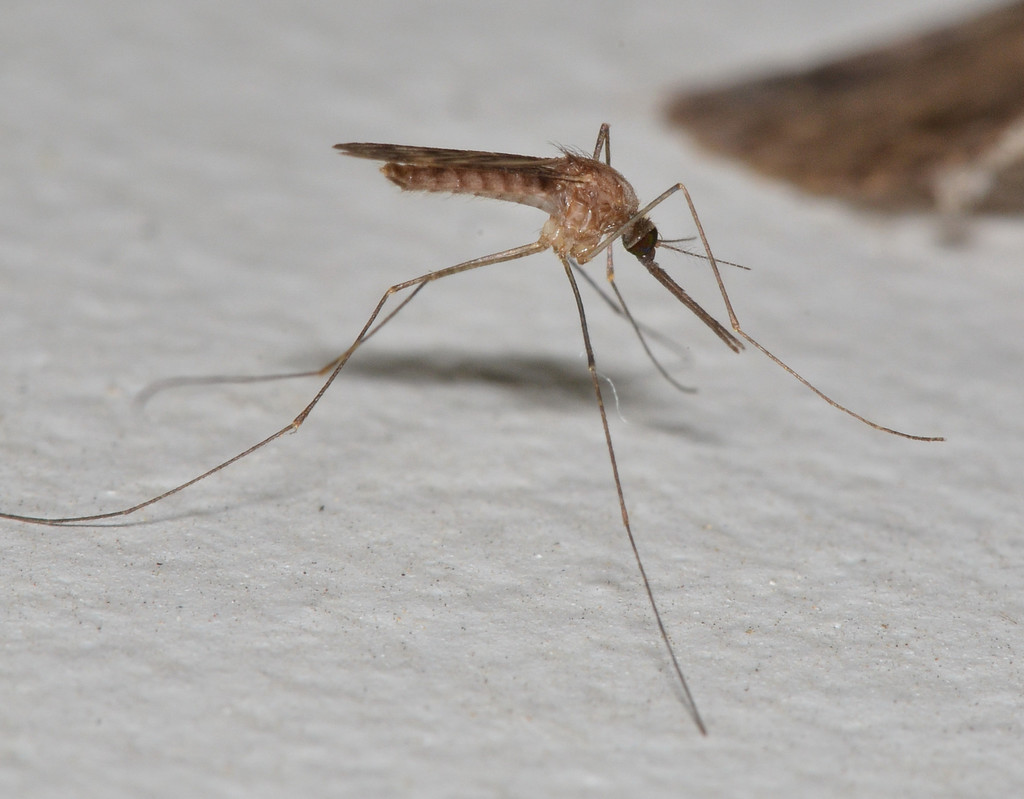
They breed in stagnant water such as rice fields and roadside pools, and the whole life cycle takes about 20 days. Females overwinter in cool, shaded places like basements or under bridges, emerging in spring to lay eggs.
Source: Wikipedia
Is it a pest in the house?
Females often overwinter inside human structures like basements, garages, and barns, moving between shelters during winter.
Source: Wikipedia
Does it bite or sting?
The species feeds on blood meals.
Source: Wikipedia
How to get rid of it
Insecticides have traditionally been used for control. Mosquitofish have been studied as a biological control because they eat mosquito larvae.
Source: Wikipedia
Where it lives
Larvae develop in stagnant water, especially in rice fields, roadside pools, and groundwater with algal mats.
Source: Wikipedia
What it eats
Adult females feed on blood meals. Larvae are preyed upon by dragonfly larvae, frogs, spiders, and flatworms.
Source: Wikipedia
Life cycle
It goes through the four typical mosquito stages, completing development in about 20 days.
Source: Wikipedia
When you see it
Females can survive the winter and lay eggs in spring. Hibernating adults have been found in wood-rat nests in California.
Source: Wikipedia
Where it comes from
It is native to the western United States and Canada.
Source: Wikipedia
Lookalikes
Its similarity to Anopheles hermsi has led to questions about its role as a malaria vector.
Source: Wikipedia
Where it is found in the US
Recorded in 10 of 51 states and DC. Most records: Idaho, Utah, Nevada, Montana, California, New Mexico, Arizona, Washington.
Darker = more records. Counts are museum and citizen-science records, not population size.
Source: GBIF
Status: native in North America; native in Canada. Source: iNaturalist
Months it is reported in the US
Source: GBIF
More photos
Questions people ask
Can they spread disease?
Historically they have been the main malaria vector in the western United States.
Source: Wikipedia
How can I control them around my home?
Traditional insecticides work, and introducing mosquitofish into standing water can reduce larvae.
Source: Wikipedia
Where do they breed?
They lay eggs in stagnant water such as rice fields, roadside pools, and groundwater with algae.
Source: Wikipedia
Same family (Culicidae)
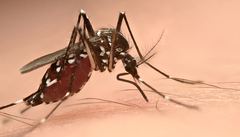 Asian Tiger MosquitoAedes albopictusCan spread germs or disease
 House Mosquito ComplexCulex pipiensCan spread germs or disease
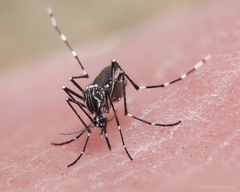 Yellow Fever MosquitoAedes aegyptiCan spread germs or disease
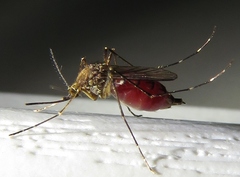 Inland Floodwater MosquitoAedes vexansCan spread germs or disease
 Asian Bush MosquitoAedes japonicusCan bite
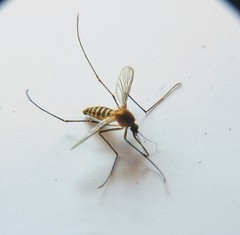 Southern House MosquitoCulex quinquefasciatusCan spread germs or disease
Sources
- Wikipedia: https://en.wikipedia.org/wiki/Anopheles_freeborni
Look it up elsewhere: GBIF · iNaturalist · BugGuide · ITIS · Wikipedia
Text written 2026-10-23 from the sources above and checked sentence by sentence against them. Data fetched 2026-10-23.