 Bug FAQ
Anopheles crucians
Anopheles crucians · Order: Diptera · Family: Culicidae
Source: Wikipedia
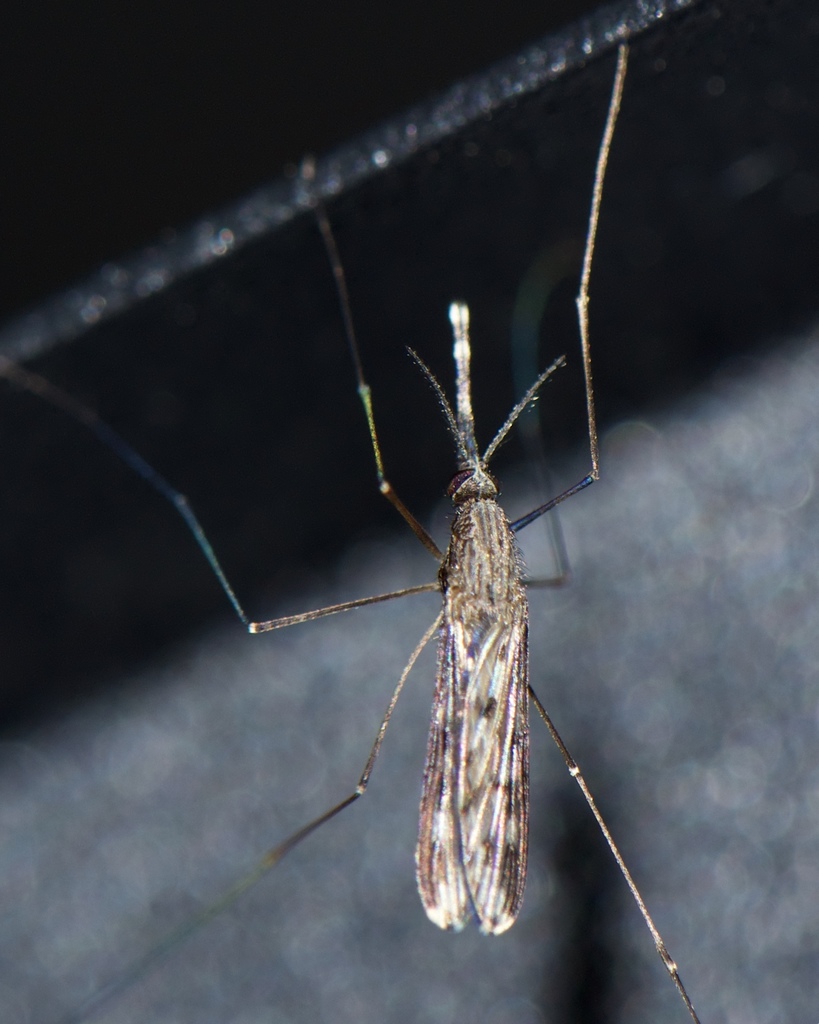
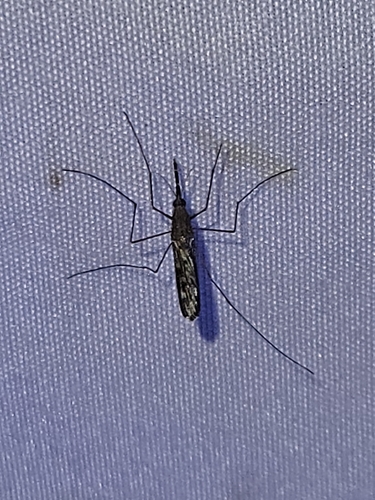
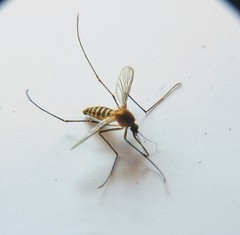
The wings are about 4 mm long and have white-yellow scales with dark spots, while the proboscis and legs are dark with white patches on the femora and tibiae. It lives in dim, acidic water such as cypress swamps and may act as a malaria vector.
Source: Wikipedia
How to recognize it
The proboscis is dark black and the legs are dark with white patches on the femora and tibiae.
Source: Wikipedia
Size
Wings measure roughly 4 mm in length and show white-yellow scales with contrasting spots.
Source: Wikipedia
Does it bite or sting?
Females can carry malaria, making them disease-spreading mosquitoes.
Source: Wikipedia
Where it lives
It inhabits aquatic areas with little light, preferring acidic water found in cypress swamps.
Source: Wikipedia
Where it is found in the US
Recorded in 28 of 51 states and DC. Most records: Florida, Virginia, Maryland, Alabama, Georgia, Texas, Louisiana, South Carolina.
Darker = more records. Counts are museum and citizen-science records, not population size.
Source: GBIF
Months it is reported in the US
Source: GBIF
More photos
Questions people ask
Can Anopheles crucians spread disease?
Yes, females can carry malaria and transmit it to people.
Source: Wikipedia
What does Anopheles crucians look like?
It has dark black proboscis, dark legs with white patches, and 4 mm wings with white-yellow scales and dark spots.
Source: Wikipedia
Where does Anopheles crucians live?
It lives in dim, acidic aquatic habitats such as cypress swamps.
Source: Wikipedia
Is Anopheles crucians similar to any other mosquito?
Its anatomy closely resembles that of Anopheles bradleyi.
Source: Wikipedia
Same family (Culicidae)
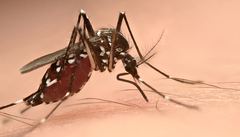 Asian Tiger MosquitoAedes albopictusCan spread germs or disease
 House Mosquito ComplexCulex pipiensCan spread germs or disease
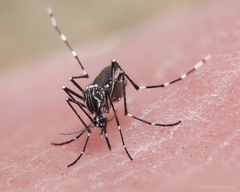 Yellow Fever MosquitoAedes aegyptiCan spread germs or disease
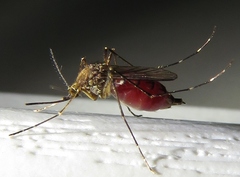 Inland Floodwater MosquitoAedes vexansCan spread germs or disease
 Asian Bush MosquitoAedes japonicusCan bite
 Southern House MosquitoCulex quinquefasciatusCan spread germs or disease
Sources
- Wikipedia: https://en.wikipedia.org/wiki/Anopheles_crucians
Look it up elsewhere: GBIF · iNaturalist · BugGuide · ITIS · Wikipedia
Text written 2026-10-23 from the sources above and checked sentence by sentence against them. Data fetched 2026-10-23.