 Bug FAQ
Twin-flagged Jumping Spider
Anasaitis canosus · Order: Araneae · Family: Salticidae
Also called: Twinflagged Jumping Spider
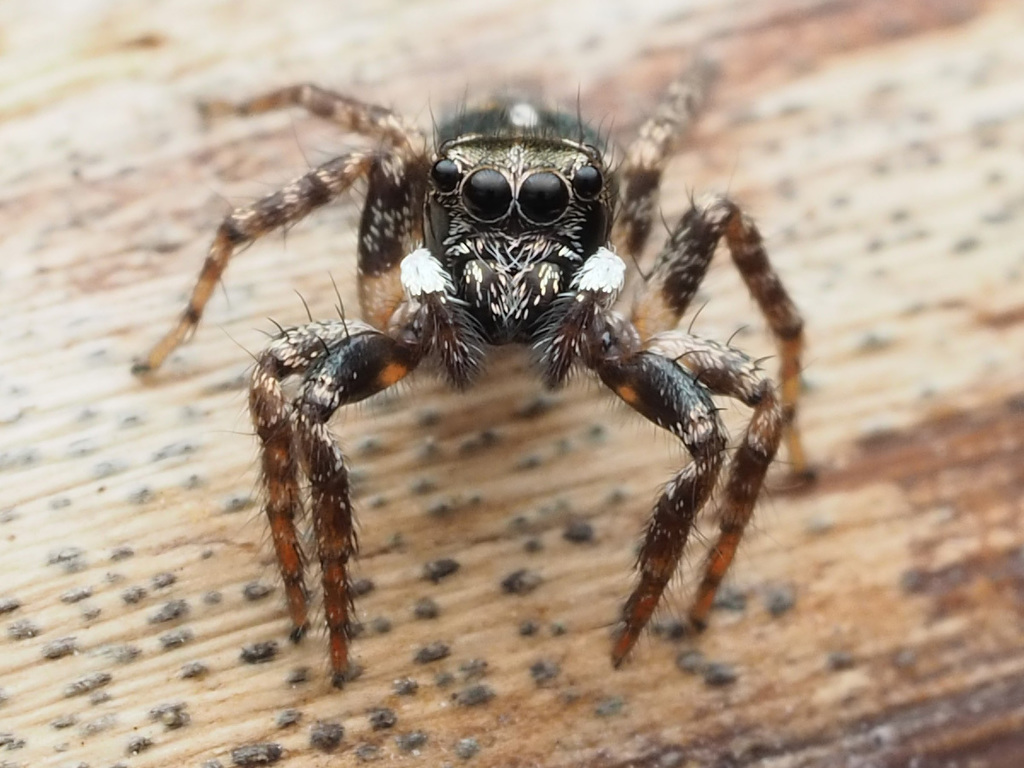
The twin-flagged jumping spider is a small 5-6 mm salticid with distinctive iridescent “flag” markings on its cephalothorax and male pedipalps. It lives on leaf litter, fences and walls from Mexico up to South Carolina, hunts ants with a special method and other insects by pouncing, and females guard egg sacs of about fifteen spiderlings.
Source: Wikipedia
How to recognize it
Two pennant-shaped, iridescent markings on the dorsal cephalothorax give this spider its “twin-flagged” name.
Source: Wikipedia
Size
Adults measure about 5 to 6 mm in length.
Source: Wikipedia
Where it lives
Found on leaf litter and on man-made surfaces such as fences and exterior walls.
Source: Wikipedia
What it eats
It uses a unique hunting technique to capture ants, while it pounces directly on flies or beetles.
Source: Wikipedia
Life cycle
Females lay eggs in a silk hide and guard them until they hatch, producing about fifteen spiderlings per clutch.
Source: Wikipedia
Where it comes from
Its range extends from Mexico northward along the Gulf Coast to South Carolina.
Source: Wikipedia
Where it is found in the US
Recorded in 23 of 51 states and DC. Most records: Texas, Georgia, Florida, Alabama, Louisiana, South Carolina, North Carolina, Mississippi.
Darker = more records. Counts are museum and citizen-science records, not population size.
Source: GBIF
Status: native in North America; native in United States. Source: iNaturalist
Months it is reported in the US
Source: GBIF
More photos


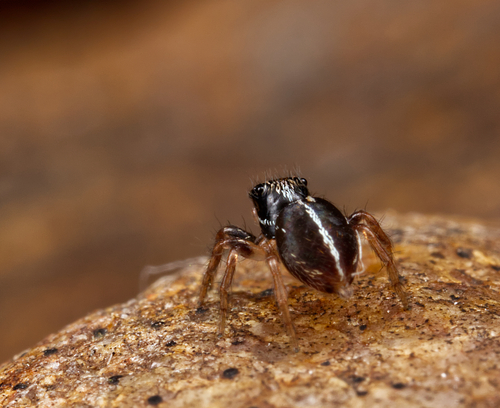

Same family (Salticidae)



Sources
- Wikipedia: https://en.wikipedia.org/wiki/Anasaitis_canosus
Look it up elsewhere: GBIF · iNaturalist · BugGuide · ITIS · Wikipedia
Text written 2026-10-22 from the sources above and checked sentence by sentence against them. Data fetched 2026-10-22.