 Bug FAQ
Amblypsilopus scintillans
Amblypsilopus scintillans · Order: Diptera · Family: Dolichopodidae
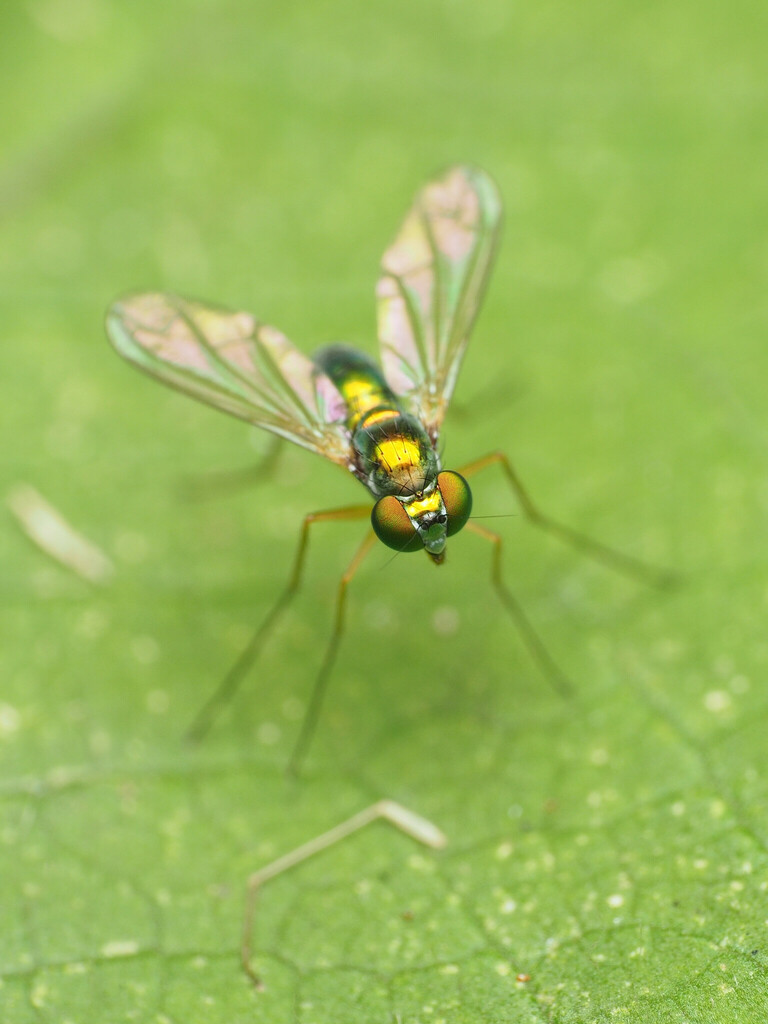
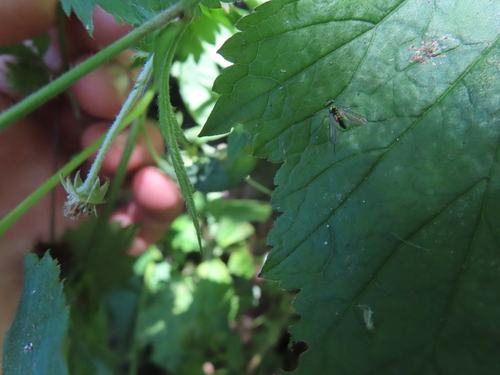
Amblypsilopus scintillans lives in eastern North America. Males have black second and third coxae, females have dark-yellow to brown coxae; both sexes have yellow legs and males lack bristles on the second tibia. Its shiny body and normal wing costa distinguish it from the look-alikes A. costalis and A. pollinosus.
Source: Wikipedia
How to recognize it
Males have black second and third coxae, while females have dark-yellow to brown coxae. The legs are yellow in both sexes, apart from the coxae. Male second tibia lacks bristles.
Source: Wikipedia
Where it lives
It is found in eastern North America.
Source: Wikipedia
Where it comes from
Its native range is eastern North America.
Source: Wikipedia
Lookalikes
It may be mistaken for A. costalis or A. pollinosus, but its shiny body and normal wing costa set it apart.
Source: Wikipedia
Where it is found in the US
Recorded in 27 of 51 states and DC. Most records: Michigan, New York, Massachusetts, Pennsylvania, Illinois, Vermont, Maryland, Ohio.
Darker = more records. Counts are museum and citizen-science records, not population size.
Source: GBIF
Months it is reported in the US
Source: GBIF
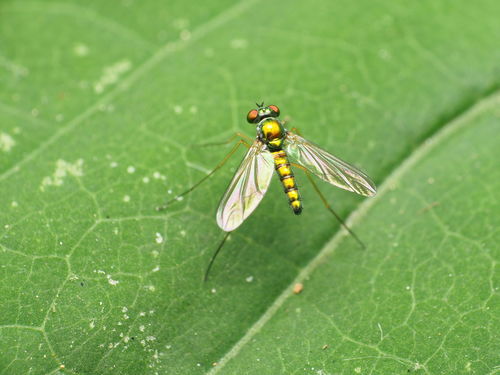
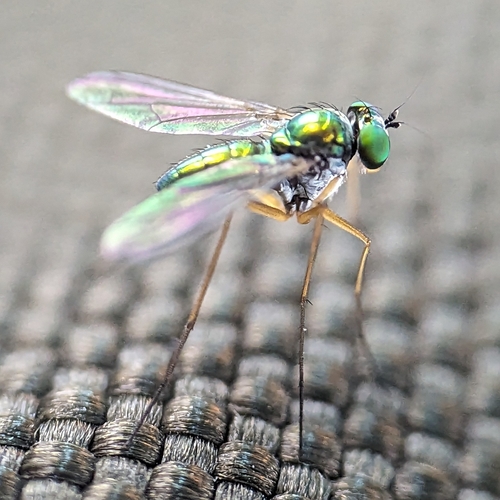
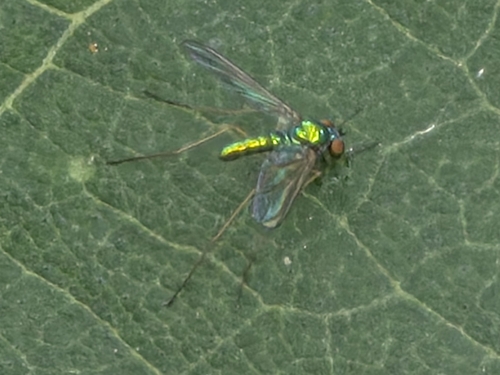
More photos
Questions people ask
How can I tell Amblypsilopus scintillans apart from similar species?
Look for a shiny body and a normal wing costa; these features differentiate it from A. costalis and A. pollinosus.
Source: Wikipedia
What are the color differences between male and female Amblypsilopus scintillans?
Males have black second and third coxae, while females show dark-yellow to brown coxae.
Source: Wikipedia
Same family (Dolichopodidae)


Sources
- Wikipedia: https://en.wikipedia.org/wiki/Amblypsilopus_scintillans
Look it up elsewhere: GBIF · iNaturalist · BugGuide · Wikipedia
Text written 2026-10-25 from the sources above and checked sentence by sentence against them. Data fetched 2026-10-25.