 Bug FAQ
Long-legged fly
Condylostylus longicornis · Order: Diptera · Family: Dolichopodidae
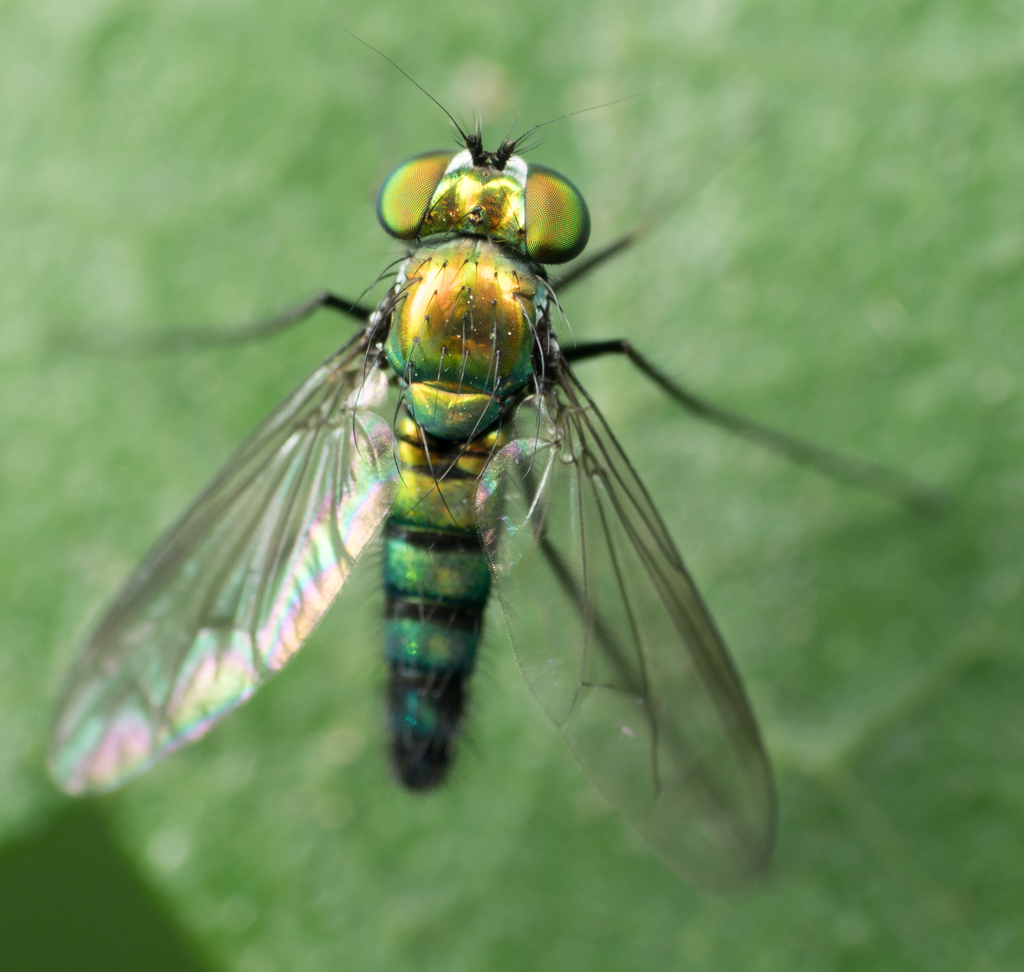
Males show a sparse row of bristles on the mid tibia and basitarsus, while females always have a yellow mid-tibia.
Source: Wikipedia
How to recognize it
Males have a sparse row of bristles on the mid tibia and basitarsus; females always have a yellow mid-tibia.
Source: Wikipedia
Size
It is a long-legged fly with a green, iridescent exoskeleton.
Source: Wikipedia
Where it lives
Prefers lightly shaded spots near swamps, streams, meadows, or woodlands.
Source: Wikipedia
Lookalikes
Like other Condylostylus flies, it holds its wings diagonally when at rest.
Source: Wikipedia
Where it is found in the US
Recorded in 22 of 51 states and DC. Most records: California, Texas, Florida, Arizona, Hawaii, Georgia, North Carolina, Alabama.
Darker = more records. Counts are museum and citizen-science records, not population size.
Source: GBIF
Months it is reported in the US
Source: GBIF
More photos


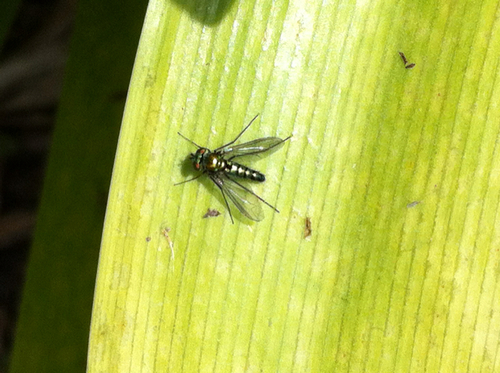
Same family (Dolichopodidae)

Sources
- Wikipedia: https://en.wikipedia.org/wiki/Condylostylus_longicornis
Look it up elsewhere: GBIF · iNaturalist · BugGuide · Wikipedia
Text written 2026-10-22 from the sources above and checked sentence by sentence against them. Data fetched 2026-10-22.