 Bug FAQ
Alder erineum mite
Acalitus brevitarsus · Order: Trombidiformes · Family: Eriophyidae
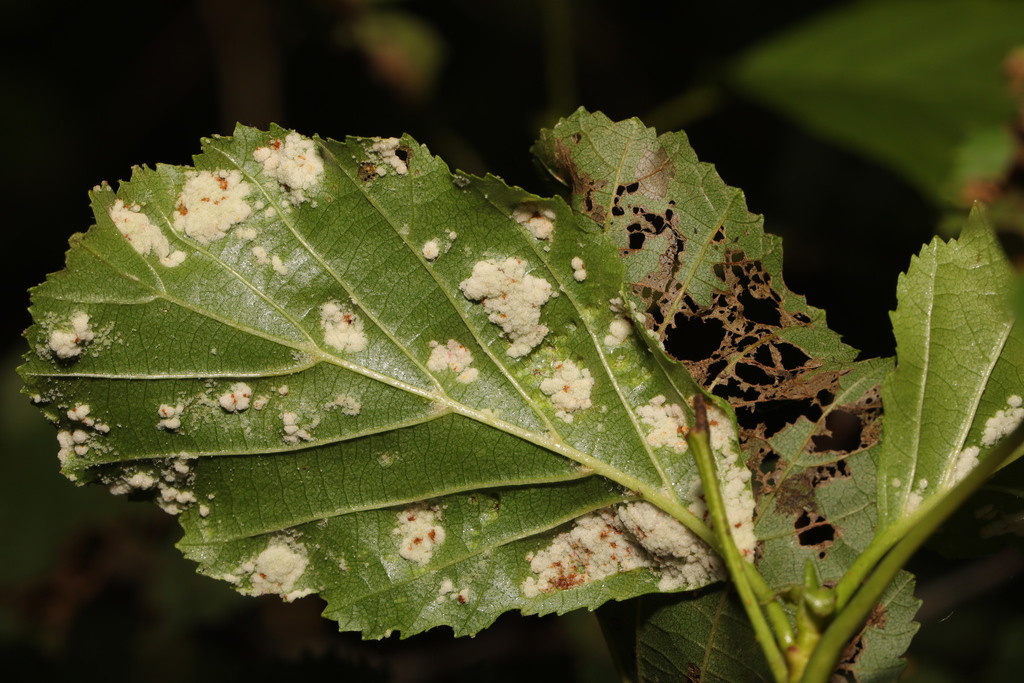
It lives on several alder species across Europe from Spain to Russia, and overwinters in old cones and bark crevices.
Source: Wikipedia
How to recognize it
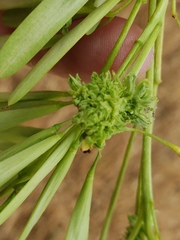
The mite causes a pale, slightly raised swelling on the upper surface of alder leaves. When examined with a hand lens the hairs look like a glossy, glassy mat.
Source: Wikipedia
Life cycle
The mites overwinter in old cones and bark crevices during the autumn.
Source: Wikipedia
Where it comes from
It is found throughout Europe, from Spain eastward to Russia, including the Balkans.
Source: Wikipedia
Lookalikes
The gall may be mistaken for the fungus Taphrina sadebeckii, which can look similar on the leaf upper surface.
Source: Wikipedia
Where it is found in the US
Recorded in 12 of 51 states and DC. Most records: Alaska, Minnesota, Oregon, Michigan, California, New York, Ohio, Washington.
Darker = more records. Counts are museum and citizen-science records, not population size.
Source: GBIF
Status: native in North America. Source: iNaturalist
Months it is reported in the US
Source: GBIF
More photos


Questions people ask
What does the gall caused by alder erineum mite look like?
It appears as a pale, slightly domed swelling on the leaf upper side, and the hairs inside look like a shiny, glass-like mat.
Source: Wikipedia
Where does alder erineum mite live and overwinter?
It lives on several alder species across Europe and overwinters in old cones and bark crevices during autumn.
Source: Wikipedia
Can the gall be confused with anything else?
Yes, it can look similar to the fungus Taphrina sadebeckii on the leaf upper surface.
Source: Wikipedia
Same family (Eriophyidae)


Sources
- Wikipedia: https://en.wikipedia.org/wiki/Acalitus_brevitarsus
Look it up elsewhere: GBIF · iNaturalist · BugGuide · Wikipedia
Text written 2026-10-28 from the sources above and checked sentence by sentence against them. Data fetched 2026-10-28.