 Bug FAQ
Alder Leaf Gall Mite
Eriophyes laevis · Order: Trombidiformes · Family: Eriophyidae
Also called: Alder Bead Gall Mite
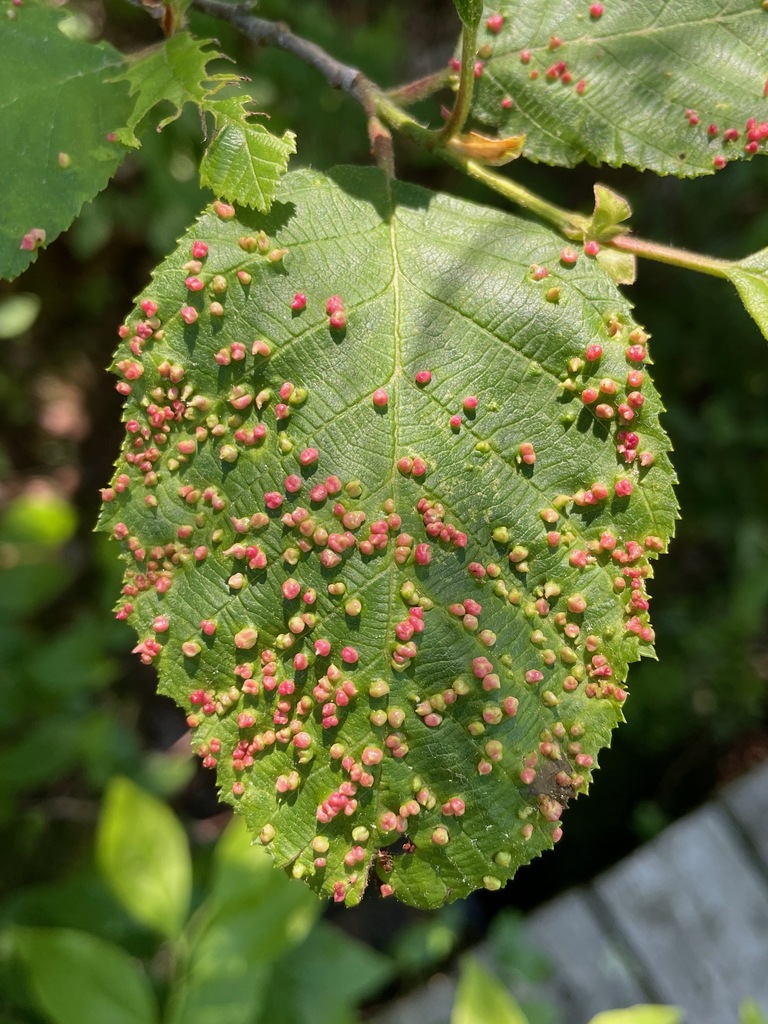
The alder leaf gall mite forms galls that can cover most of a leaf, limiting its growth. Galls start green, turn purple or red later in the year, and each has a narrow opening on the leaf underside.
Source: Wikipedia
How to recognize it
Young galls are green and later become purple or red.
Source: Wikipedia
Where it lives
Mites overwinter in empty alder cones or bark crevices after leaving the gall.
Source: Wikipedia
When you see it
The autumn departure and winter sheltering of the mites are noted.
Source: Wikipedia
Lookalikes
Identification of alder gall mites is tentative and requires microscopic examination. Leaves may be infected by both this mite and Eriophyes inangulis.
Source: Wikipedia
Where it is found in the US
Recorded in 29 of 51 states and DC. Most records: California, Minnesota, Maine, Massachusetts, Vermont, Alaska, Pennsylvania, Virginia.
Darker = more records. Counts are museum and citizen-science records, not population size.
Source: GBIF
Status: native in North America. Source: iNaturalist
Months it is reported in the US
Source: GBIF
More photos

Questions people ask
How can I identify alder leaf gall mite galls?
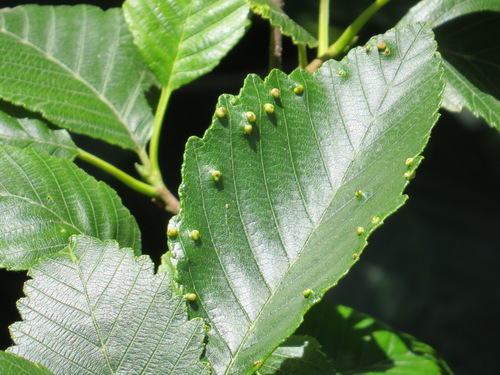
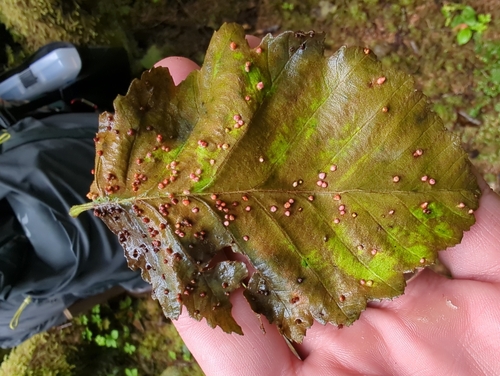
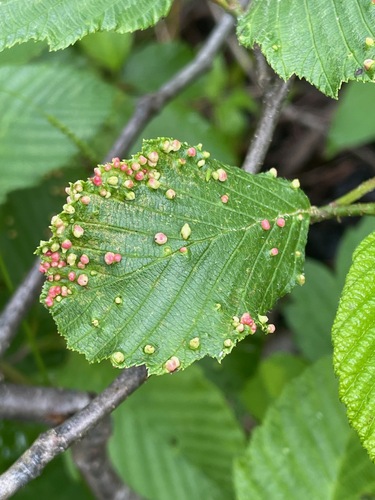
The galls start green, turn purple or red later, and each has a narrow opening on the leaf underside.
Source: Wikipedia
When do the mites leave the galls?
Mites exit the galls in autumn and overwinter in empty alder cones or bark crevices.
Source: Wikipedia
Same family (Eriophyidae)

Sources
- Wikipedia: https://en.wikipedia.org/wiki/Eriophyes_laevis
Look it up elsewhere: GBIF · iNaturalist · BugGuide · Wikipedia
Text written 2026-10-25 from the sources above and checked sentence by sentence against them. Data fetched 2026-10-25.