 Bug FAQ
Alaskan winter mosquito
Culiseta alaskaensis · Order: Diptera · Family: Culicidae
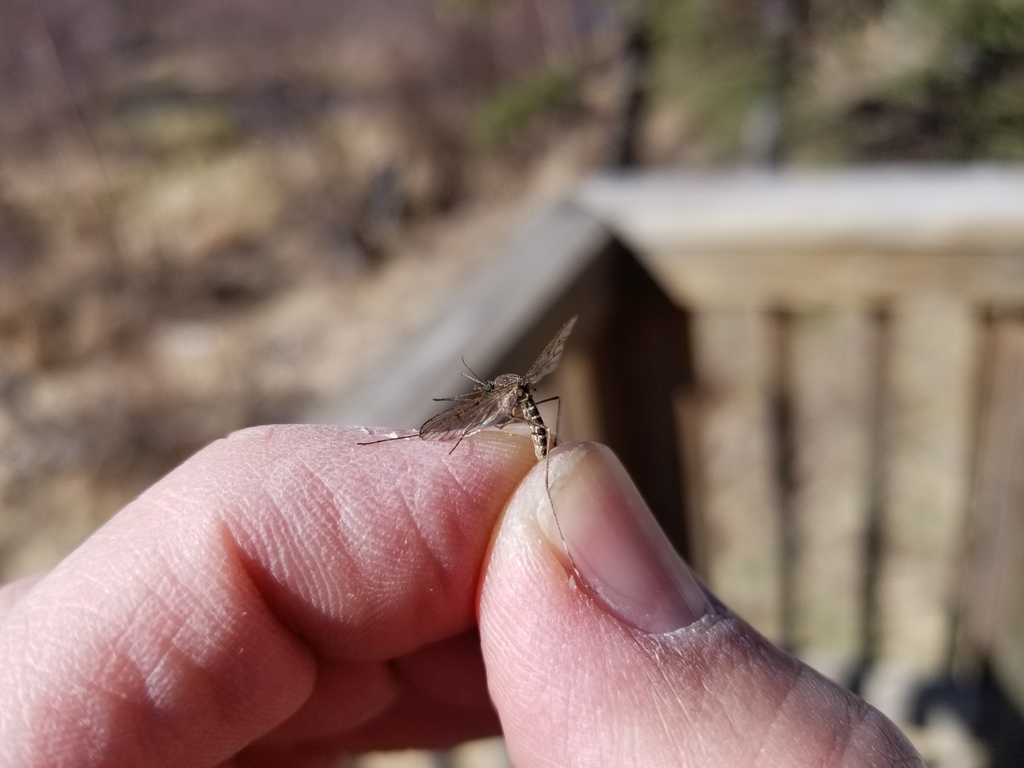
The Alaskan winter mosquito lives across the Holarctic, from Colorado up through Alaska and the tundra. It breeds in any standing or slow-moving water such as ponds, marshes, containers, hollow trees, tundra depressions, fields, bogs and forests. Eggs can remain dormant for years and the insect survives freezing temperatures in two phases; adults are most active from mid-June to late July.
Source: Wikipedia
How to recognize it
Like other Culiseta species, C. alaskaensis is adapted to cold and shares habitats with C. impatiens.
Source: Wikipedia
Does it bite or sting?
There is currently no evidence that it transmits any disease to people.
Source: Wikipedia
Where it lives
It lives wherever there is standing or slow-moving water, including ponds, sloughs, marshes, containers, hollow trees, tundra depressions, moist fields, bogs and forests.
Source: Wikipedia
What it eats
All life stages except the adult are aquatic.
Source: Wikipedia
Life cycle
Mosquito eggs can stay dormant for years. The insect survives below-freezing temperatures by entering two distinct phases.
Source: Wikipedia
When you see it
In many northern areas, large numbers emerge around the winter breakup.
Source: Wikipedia
Where it comes from
It is a Holarctic species found from Colorado northward, throughout Alaska and the tundra.
Source: Wikipedia
Lookalikes
It can be confused with other cold-adapted Culiseta species such as C. impatiens.
Source: Wikipedia
Where it is found in the US
Recorded in 5 of 51 states and DC. Most records: Alaska, Wyoming, Colorado, Indiana, South Carolina.
Darker = more records. Counts are museum and citizen-science records, not population size.
Source: GBIF
Status: native in North America; native in Canada. Source: iNaturalist
Months it is reported in the US
Source: GBIF
More photos
Questions people ask
Where is the Alaskan winter mosquito found?
It ranges from Colorado northward through Alaska and the tundra, and lives wherever there is standing or slow-moving water.
Source: Wikipedia
When are they active?
Adults are most active from mid-June to late July, especially at dawn and dusk.
Source: Wikipedia
Do they bite or spread disease?
There is currently no evidence that they transmit any disease to people.
Source: Wikipedia
Same family (Culicidae)
 Asian Tiger MosquitoAedes albopictusCan spread germs or disease
 House Mosquito ComplexCulex pipiensCan spread germs or disease
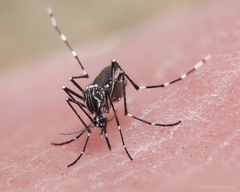 Yellow Fever MosquitoAedes aegyptiCan spread germs or disease
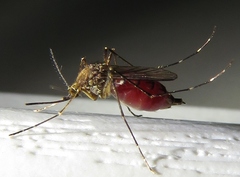 Inland Floodwater MosquitoAedes vexansCan spread germs or disease
 Asian Bush MosquitoAedes japonicusCan bite
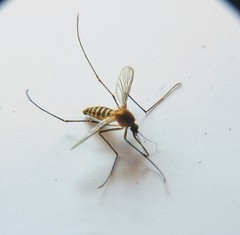 Southern House MosquitoCulex quinquefasciatusCan spread germs or disease
Sources
- Wikipedia: https://en.wikipedia.org/wiki/Culiseta_alaskaensis
Look it up elsewhere: GBIF · iNaturalist · BugGuide · ITIS · Wikipedia
Text written 2026-10-24 from the sources above and checked sentence by sentence against them. Data fetched 2026-10-24.