 Bug FAQ
African Giant Centipede
Ethmostigmus trigonopodus · Order: Scolopendromorpha · Family: Scolopendridae
Also called: Blue Ring Centipede
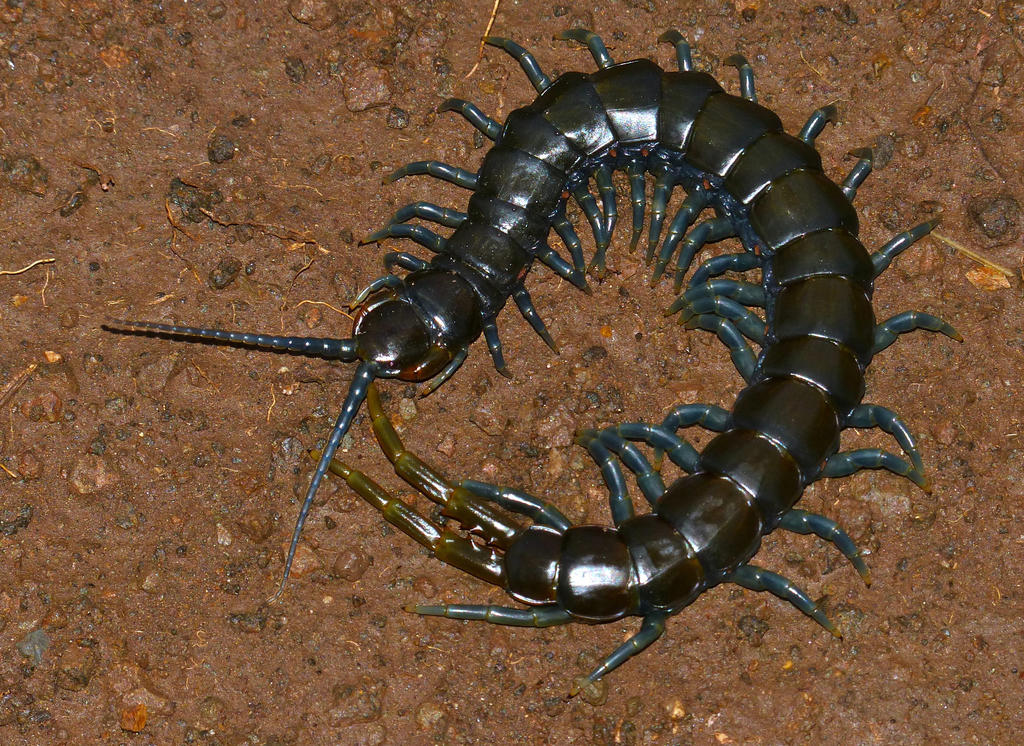
It is known by several common names, including African giant centipede and Tanzanian blue ring centipede. In northern Nigeria it reaches sexual maturity within a year, which is unusually fast for centipedes.
Source: Wikipedia
Life cycle
In northern Nigeria it can become sexually mature within one year, which is uncommon for centipedes.
Source: Wikipedia
Where it comes from
It occurs in the northern part of Nigeria.
Source: Wikipedia
Lookalikes
Two valid subspecies exist: E. trigonopodus trigonopodus and E. trigonopodus pygmenasoides.
Source: Wikipedia
Where it is found in the US
Recorded in 1 of 51 states and DC. Most records: Florida.
Darker = more records. Counts are museum and citizen-science records, not population size.
Source: GBIF
Same family (Scolopendridae)
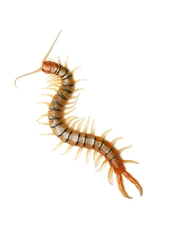 Common Desert CentipedeScolopendra polymorphaCan bite
 Giant Desert CentipedeScolopendra herosCan bite
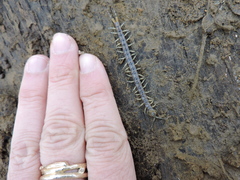 Eastern Bark CentipedeHemiscolopendra marginata
 Mediterranean Banded CentipedeScolopendra cingulataCan bite
 Chinese Red-headed CentipedeScolopendra mutilansCan bite
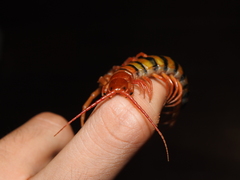 Red-headed CentipedeScolopendra morsitansCan bite
Sources
- Wikipedia: https://en.wikipedia.org/wiki/Ethmostigmus_trigonopodus
Look it up elsewhere: GBIF · iNaturalist · BugGuide · ITIS · Wikipedia
Text written 2026-10-23 from the sources above and checked sentence by sentence against them. Data fetched 2026-10-23.