 Bug FAQ
Aedes scapularis
Aedes scapularis · Order: Diptera · Family: Culicidae
Source: Wikipedia
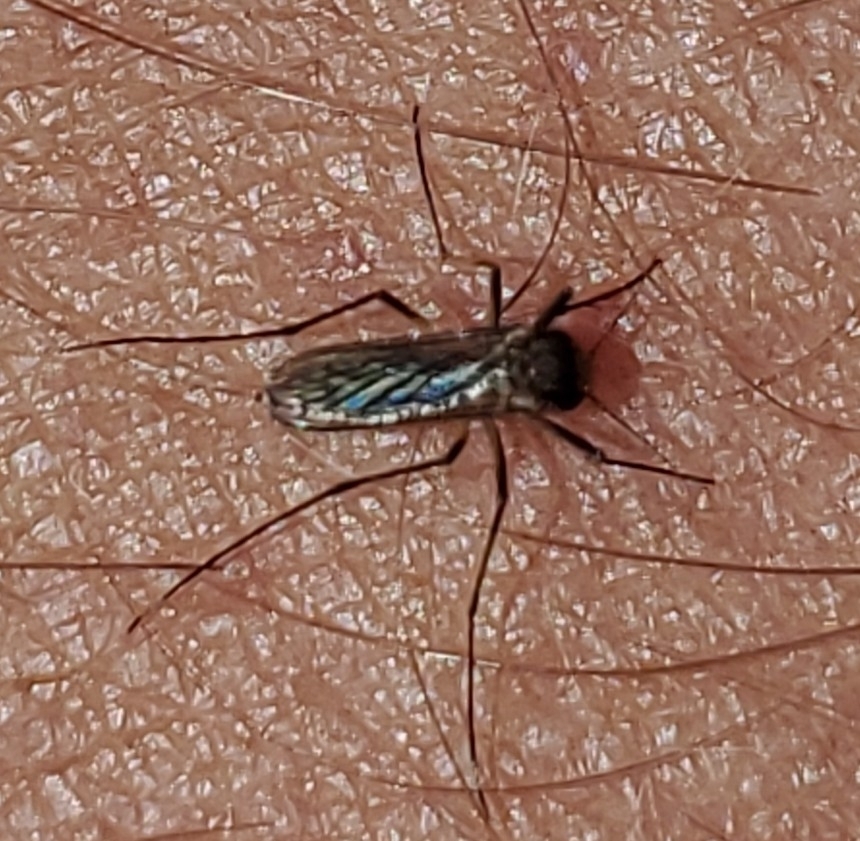
Aedes scapularis originally lived in forest habitats but now breeds in artificial water containers in urban areas. It is most active during the evening twilight, though it can be active both day and night. The mosquito bites humans and can carry yellow fever, Venezuelan equine encephalitis, and other pathogens.
Source: Wikipedia
Where it lives
Originally associated with forest habitats, it now also breeds in artificial water containers in cities.
Source: Wikipedia
When you see it
It shows both diurnal and nocturnal activity, with peak activity in the evening crepuscular period.
Source: Wikipedia
Where it comes from
It is found mainly in the neotropical regions of the Americas.
Source: Wikipedia
Lookalikes
Some Aedes species, including Aedes scapularis, have been reclassified under the genus Ochlerotatus.
Source: Wikipedia
Where it is found in the US
Recorded in 2 of 51 states and DC. Most records: Texas, Florida.
Darker = more records. Counts are museum and citizen-science records, not population size.
Source: GBIF
Months it is reported in the US
Source: GBIF
Questions people ask
What diseases can Aedes scapularis transmit?
It can carry yellow fever and Venezuelan equine encephalitis virus, among other pathogens.
Source: Wikipedia
Where is Aedes scapularis found?
It is primarily found in neotropical regions of the Americas.
Source: Wikipedia
When is Aedes scapularis most active?
It is most active during the evening crepuscular period, though it can be active day and night.
Source: Wikipedia
Same family (Culicidae)
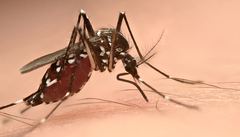 Asian Tiger MosquitoAedes albopictusCan spread germs or disease
 House Mosquito ComplexCulex pipiensCan spread germs or disease
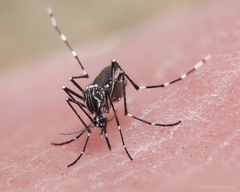 Yellow Fever MosquitoAedes aegyptiCan spread germs or disease
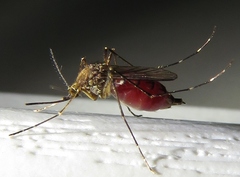 Inland Floodwater MosquitoAedes vexansCan spread germs or disease
 Asian Bush MosquitoAedes japonicusCan bite
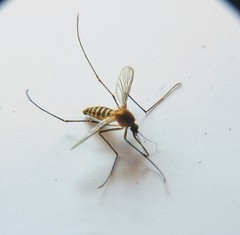 Southern House MosquitoCulex quinquefasciatusCan spread germs or disease
Sources
- Wikipedia: https://en.wikipedia.org/wiki/Aedes_scapularis
Look it up elsewhere: GBIF · iNaturalist · BugGuide · ITIS · Wikipedia
Text written 2026-10-23 from the sources above and checked sentence by sentence against them. Data fetched 2026-10-23.