 Bug FAQ
Aedes melanimon
Aedes melanimon · Order: Diptera · Family: Culicidae
Source: Wikipedia
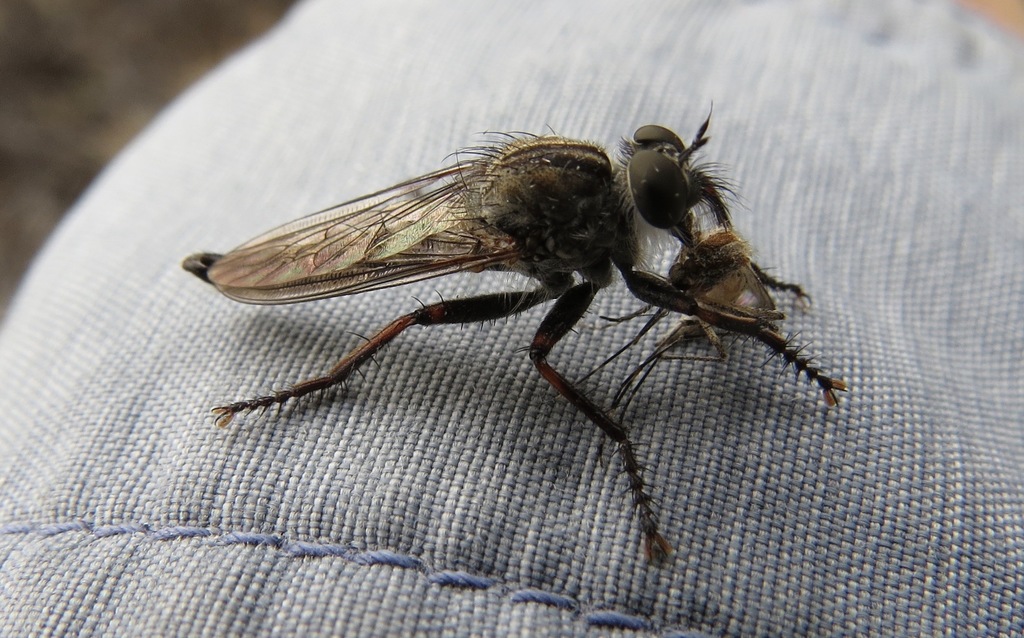
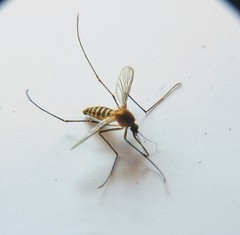
Adults are medium-sized, dark-bodied mosquitoes with pale bands on the legs and distinctive wing and abdomen scaling. Females bite aggressively and can transmit western equine encephalitis and California group encephalitis viruses. Larvae develop in sunlit, temporary pools that form after seasonal flooding; the species has one generation per year.
Source: Wikipedia
How to recognize it
Adults have pale bands on the tarsi and unique scaling on the wings and abdomen. The species can be distinguished by male genitalia and a short mesothoracic hair in larvae.
Source: Wikipedia
Size
They are medium-sized mosquitoes with a dark body.
Source: Wikipedia
Is it a pest in the house?
Large emergences can be a serious pest in agricultural and rural areas, affecting animal and human health.
Source: Wikipedia
Does it bite or sting?
Females bite aggressively and can transmit western equine encephalitis, California group encephalitis, and can serve as a laboratory vector for West Nile virus.
Source: Wikipedia
What it eats
Both males and females feed on nectar, while females also need blood meals to develop eggs. Hosts for blood meals include livestock, wildlife, and humans.
Source: Wikipedia
Life cycle
The species has one generation per year; eggs survive the winter and hatch when seasonal flooding creates pools. Adults can emerge as soon as five days after the larvae hatch.
Source: Wikipedia
When you see it
The life cycle is synchronized with seasonal flooding, with eggs overwintering and hatching in late winter or spring.
Source: Wikipedia
Lookalikes
It can be separated from similar mosquitoes by examining male genitalia and the short mesothoracic hair of larvae.
Source: Wikipedia
Where it is found in the US
Recorded in 10 of 51 states and DC. Most records: Montana, Colorado, Utah, California, Idaho, Nevada, North Dakota, Florida.
Darker = more records. Counts are museum and citizen-science records, not population size.
Source: GBIF
Status: native in North America; native in Canada. Source: iNaturalist
Months it is reported in the US
Source: GBIF
Questions people ask
What diseases can they spread?
They are known vectors of western equine encephalitis and California group encephalitis viruses.
Source: Wikipedia
Where are they found?
They are native to western and central North America, including the western and central United States, southwest Canada, and northern Mexico.
Source: Wikipedia
Same family (Culicidae)
 Asian Tiger MosquitoAedes albopictusCan spread germs or disease
 House Mosquito ComplexCulex pipiensCan spread germs or disease
 Yellow Fever MosquitoAedes aegyptiCan spread germs or disease
 Inland Floodwater MosquitoAedes vexansCan spread germs or disease
 Asian Bush MosquitoAedes japonicusCan bite
 Southern House MosquitoCulex quinquefasciatusCan spread germs or disease
Sources
- Wikipedia: https://en.wikipedia.org/wiki/Aedes_melanimon
Look it up elsewhere: GBIF · iNaturalist · BugGuide · ITIS · Wikipedia
Text written 2026-10-23 from the sources above and checked sentence by sentence against them. Data fetched 2026-10-23.