 Bug FAQ
Cockroach vs cricket: how to tell them apart
Side by side. Every line is quoted from each bug's page and its sources.
 American CockroachPeriplaneta americanaCan spread germs or disease
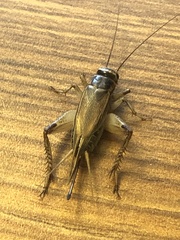 House CricketAcheta domesticusCan damage your home
Is it dangerous?
American Cockroach
American cockroaches can spread disease-causing bacteria to food and surfaces.
Source: Wikipedia, Penn State Extension
House Cricket
House crickets can chew and damage fabrics, paper, rubber and stored food in homes.
Source: extension.umd.edu, pestsense.cahnrs.wsu.edu, UF/IFAS
How to recognize it
American Cockroach
Adults are about 1½ inches long, reddish-brown with yellow-edged thorax and full-length wings. Egg cases are brown, purse-shaped, and about 0.9 cm long.
Source: Penn State Extension, Oklahoma State Extension, Wikipedia
House Cricket
Adults are light yellowish-brown or straw-colored with three dark head bands; females have a needle-like ovipositor at the rear. Antennae are thin and longer than the body.
Source: extension.umd.edu, pestsense.cahnrs.wsu.edu, Wikipedia, UF/IFAS
Size
Does it bite or sting?
American Cockroach
At least 22 pathogenic microbes and five helminth species have been isolated from them.
Source: Wikipedia
House Cricket
No sourced line yet.
Is it a pest in the house?
American Cockroach
They are common in restaurants, grocery stores, bakeries, and other food-handling areas, and can infest yards and alleys in summer. They enter homes via wastewater pipes, door gaps, air ducts, or other openings.
Source: Oklahoma State Extension, Wikipedia
House Cricket
They are attracted to light and can survive long periods indoors. They may chew fabrics (wool, silk, nylon, cotton, linen), paper, rubber and stored pantry foods.
Source: extension.umd.edu, pestsense.cahnrs.wsu.edu, UF/IFAS
Where it lives
American Cockroach
They prefer warm, moist environments but can survive in dry areas if water is available.
Source: Wikipedia
House Cricket
They are attracted to warm indoor areas and can live in buildings year-round. Life cycle from egg to adult takes two to three months at 26 to 32 °C (79 to 90 °F).
Source: extension.umd.edu, Wikipedia
Full pages: American Cockroach · House Cricket · More comparisons · Questions