 Bug FAQ
Brown recluse vs wolf spider: how to tell them apart
Side by side. Every line is quoted from each bug's page and its sources.
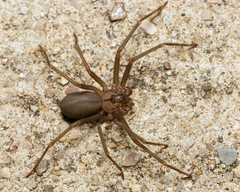
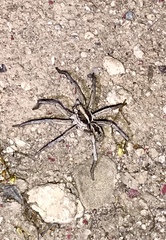
Is it dangerous?
Brown Recluse
Most bites are minor, but a small number cause the skin around the bite to die. Less than 1 percent cause illness through the body, such as anemia or kidney injury.
Source: Wikipedia, Penn State Extension
Carolina Wolf Spider
It can bite if handled, causing mild pain and temporary redness.
Source: Penn State Extension
How to recognize it
Brown Recluse
They have a dark violin-shaped marking on the cephalothorax with the neck pointing toward the rear. The abdomen and legs are uniformly colored without stripes or mottling.
Carolina Wolf Spider
Size
Brown Recluse
Adults range from about 6 mm to 20 mm in length, though some may grow larger.
Source: Wikipedia
Carolina Wolf Spider
Females grow 22 to 35 mm long, while males are smaller at 18 to 20 mm.
Source: Wikipedia, Penn State Extension
Does it bite or sting?
Brown Recluse
Their venom contains sphingomyelinase D, which can destroy tissue around the bite. Most bites are minor, but about 37 % cause skin necrosis and 14 % cause systemic illness; less than 1 % lead to severe symptoms like hemolytic anemia or kidney injury.
Source: Wikipedia, Penn State Extension
Carolina Wolf Spider
They will bite if mishandled or trapped against skin, causing brief pain, redness, and possible swelling that usually fades within a day. Spiders seen out in daylight are unlikely to bite. Bites that happen when the spider is caught in clothing are usually no worse than a mild itch or a bee sting.
Source: Penn State Extension, UC IPM
Is it a pest in the house?
Brown Recluse
They are established in sixteen states, including Alabama, Texas, and Ohio, and often hide in stored clothes, shoes, and other items.
Source: Penn State Extension
Carolina Wolf Spider
They sometimes enter homes, especially where insects are abundant, and build retreats under siding, boards, or in soil pockets. In Pennsylvania, they are among the larger hunting spiders occasionally found indoors.
Source: Wikipedia, Penn State Extension, UC IPM
Where it lives
Brown Recluse
They hide in cracks, under stored items, and in clothing, shoes, or bedding, biting only when pressed against skin.
Source: Wikipedia, Penn State Extension
Carolina Wolf Spider
They live in self-made burrows or in burrows they find, often under stones, boards, or firewood.
Source: Wikipedia, Penn State Extension
Full pages: Brown Recluse · Carolina Wolf Spider · More comparisons · Questions