 Bug FAQ
Yosemite Millipede
Californiulus yosemitensis · Order: Julida · Family: Paeromopodidae
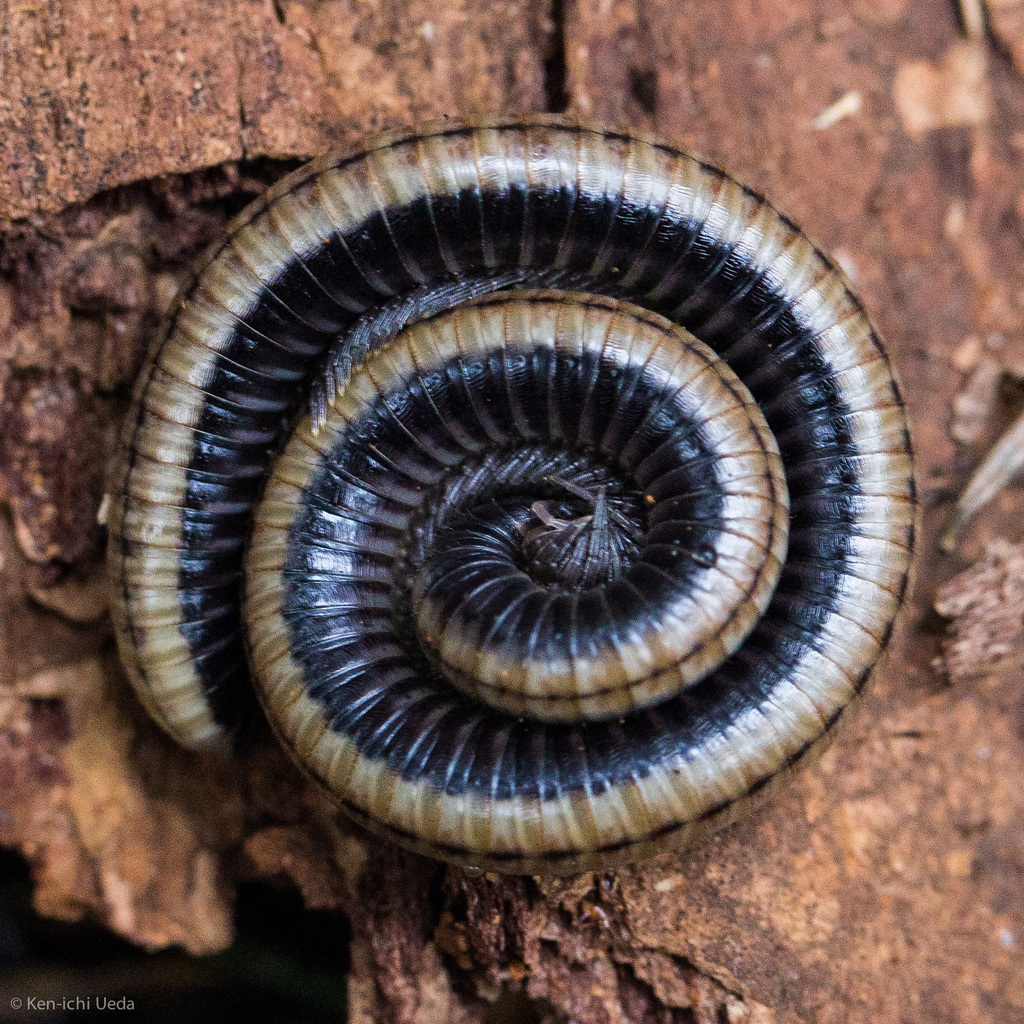
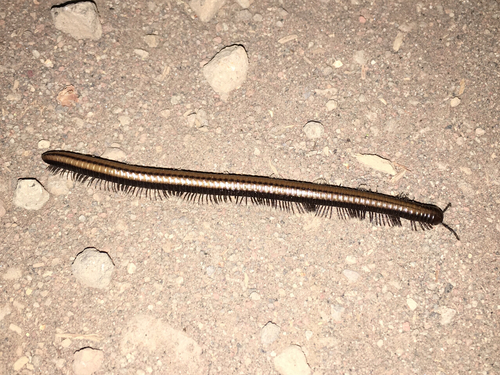
Adults can grow up to about 11 cm long and have as many as 80 body segments. Their backs are black with a wide yellow-orange stripe that runs the length of the body, split by a bold black line in the middle. They are typically found under logs in dry areas, but may also appear in moist spots.
Source: Wikipedia
How to recognize it
The dorsal side is black with a broad yellow or orange band from the first segment to the tail, marked by a central black stripe.
Source: Wikipedia
Size
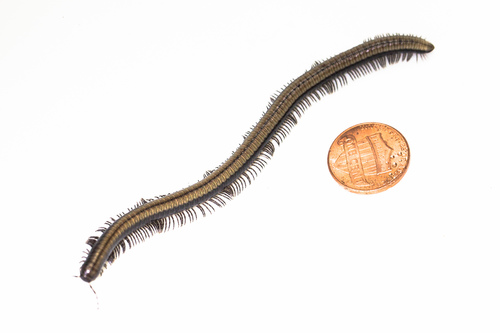
Mature individuals can reach lengths of up to 11 cm (about 4.3 in) and may have up to 80 segments.
Source: Wikipedia
Where it lives
They live under logs in relatively dry habitats and are sometimes found in moist environments.
Source: Wikipedia
Where it is found in the US
Recorded in 3 of 51 states and DC. Most records: California, Oregon, Nevada.
Darker = more records. Counts are museum and citizen-science records, not population size.
Source: GBIF
Status: native in North America; native in United States. Source: iNaturalist
Months it is reported in the US
Source: GBIF
More photos
Same family (Paeromopodidae)

Sources
- Wikipedia: https://en.wikipedia.org/wiki/Californiulus_yosemitensis
Look it up elsewhere: GBIF · iNaturalist · BugGuide · ITIS · Wikipedia
Text written 2026-10-26 from the sources above and checked sentence by sentence against them. Data fetched 2026-10-26.