 Bug FAQ
Paeromopus angusticeps
Paeromopus angusticeps · Order: Julida · Family: Paeromopodidae

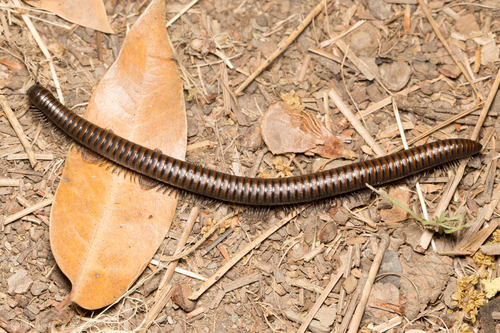
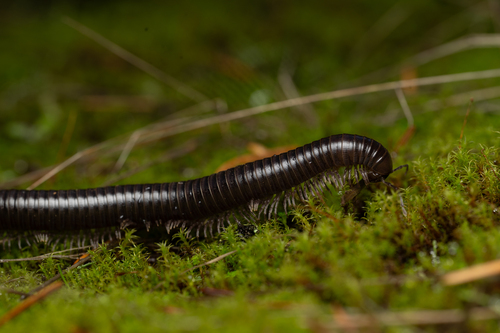
Adult Paeromopus angusticeps are long, thin millipedes with up to 80 body segments, measuring about 100 to 150 mm in length and 5 to 7 mm wide. Their bodies show alternating brown bands on a black or blue-black background, and the exoskeleton bears fine parallel grooves. They are found throughout northern California, from the coast near Monterey up through the Coast Ranges to Humboldt and down the Cascades and Sierra Nevada, but are largely absent from the Central Valley.
Source: Wikipedia
How to recognize it
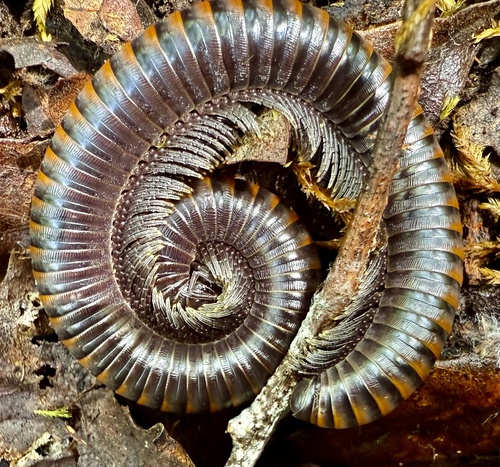
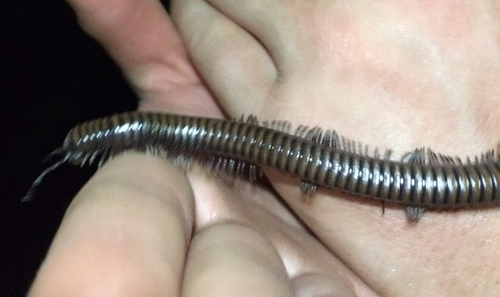
The millipede has alternating brown bands on a black or blue-black base, though some individuals have faint banding. Its exoskeleton is marked with small parallel grooves.
Source: Wikipedia
Size
Adults have up to 80 body segments and are 100 to 150 mm long and 5 to 7 mm wide.
Source: Wikipedia
Where it comes from
Paeromopus angusticeps is native to the U.S. state of California.
Source: Wikipedia
Where it is found in the US
Recorded in 1 of 51 states and DC. Most records: California.
Darker = more records. Counts are museum and citizen-science records, not population size.
Source: GBIF
Status: native in North America; native in United States. Source: iNaturalist
Months it is reported in the US
Source: GBIF
More photos
Sources
- Wikipedia: https://en.wikipedia.org/wiki/Paeromopus_angusticeps
Look it up elsewhere: GBIF · iNaturalist · BugGuide · ITIS · Wikipedia
Text written 2026-10-24 from the sources above and checked sentence by sentence against them. Data fetched 2026-10-24.