 Bug FAQ
Yellow-striped Armyworm Moth
Spodoptera ornithogalli · Order: Lepidoptera · Family: Noctuidae
Also called: Cotton Cutworm, Yellowstriped Armyworm, yellow-striped armyworm
Source: Wikipedia
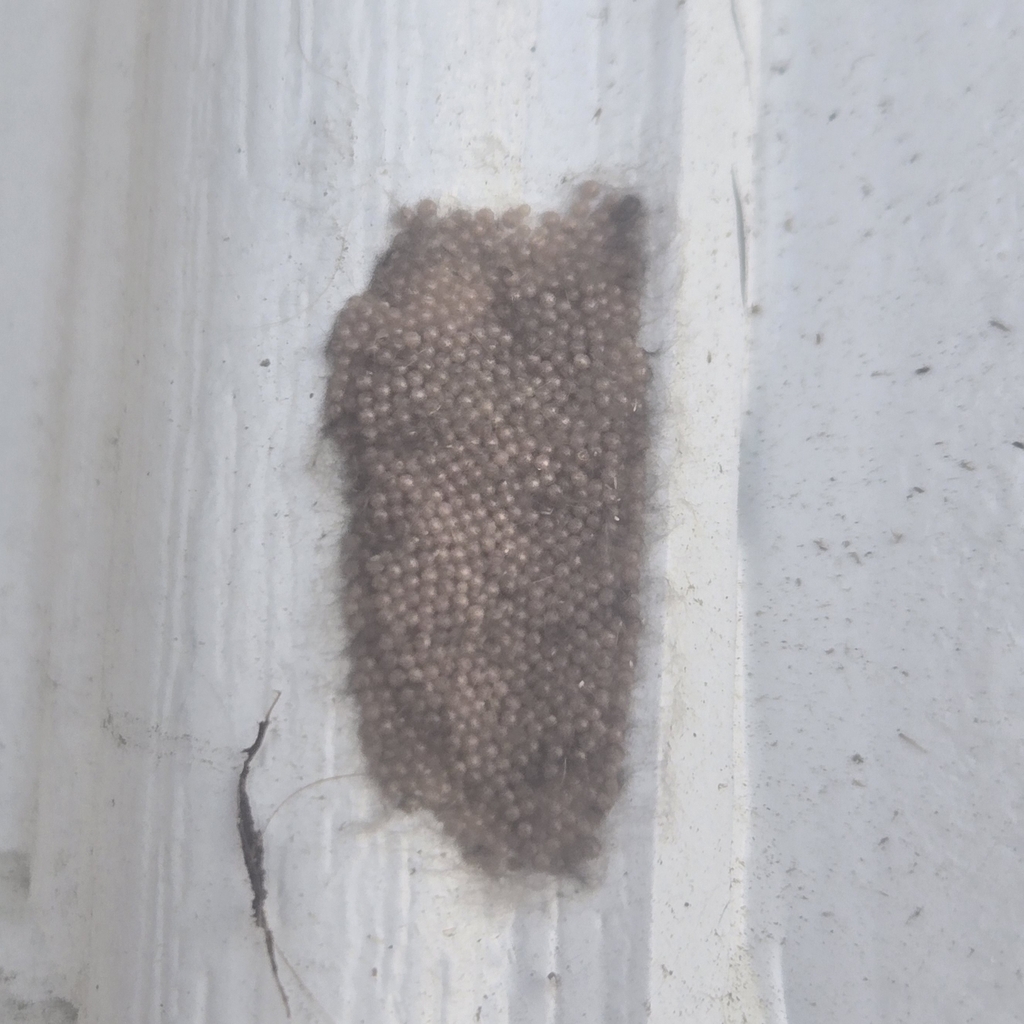
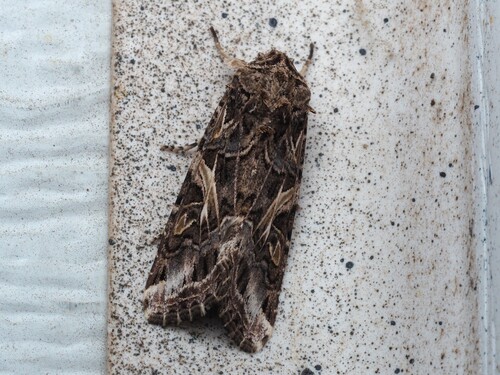
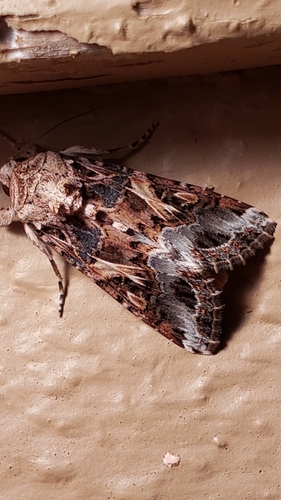
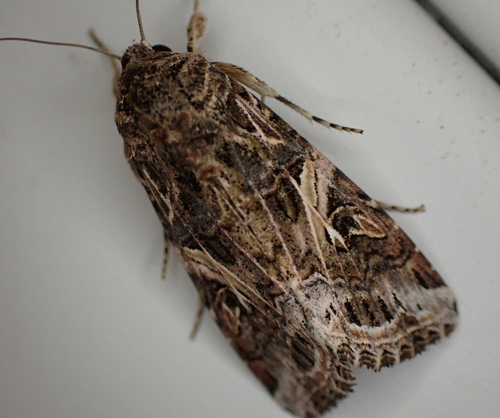
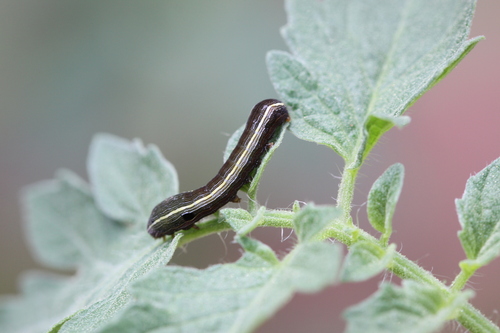
Adults have a wingspan of about 3.2 to 4.4 cm and show brown forewings with tan markings and a faint white streak, while the hindwings are white with a thin brown edge. The caterpillars are black with thin yellow side stripes and feed on many vegetables, grains, fruits, and ornamental plants. They are found across most of the United States, parts of Canada, the Caribbean, and Brazil, and have been intercepted in Denmark and Japan.
Source: Wikipedia
How to recognize it
Hindwings are white with a thin brown margin. Larvae are black with thin yellow side stripes.
Source: Wikipedia
Size
Adult wingspan ranges from 32 to 44 mm (about 1¼ to 1¾ in).
Source: Wikipedia
What it eats
Larvae feed on a long list of crops such as alfalfa, corn, cotton, tomato, wheat, and many others, plus ornamental plants like roses and chrysanthemums.
Source: Wikipedia
Life cycle
Adults are active from April through November, depending on location.
Source: Wikipedia
When you see it
Flight period spans April to November, varying with region.
Source: Wikipedia
Where it comes from
In Canada it occurs in Ontario and Quebec. In the United States it is recorded in many states from Alabama to Wisconsin. It is also found in several Caribbean nations and Central America. In Brazil it occurs in numerous states including Bahia and Rio Grande do Sul. Only phytosanitary interceptions have been reported from Denmark and Japan.
Source: Wikipedia
Lookalikes
It was once mistaken for the American form of Spodoptera littoralis, but it has a darker body and sharper markings.
Source: Wikipedia
Where it is found in the US
Recorded in 45 of 51 states and DC. Most records: Texas, Alabama, Maryland, North Carolina, Oklahoma, Pennsylvania, Illinois, Ohio.
Darker = more records. Counts are museum and citizen-science records, not population size.
Source: GBIF
Status: native in North America; native in United States; native in Canada. Source: iNaturalist
Months it is reported in the US
Source: GBIF
More photos
Questions people ask
Does the yellow-striped armyworm damage crops?
Yes, its larvae eat many vegetable, grain, and ornamental crops, causing noticeable damage.
Source: Wikipedia
When can I see adult moths?
Adults are on the wing from spring through late fall, roughly April to November.
Source: Wikipedia
How big are the adult moths?
They have a wingspan of about 32 to 44 mm (1¼ to 1¾ in).
Source: Wikipedia
Where is this species native to?
It is native to much of the United States, parts of Canada, the Caribbean, Central America, and Brazil, with occasional interceptions in Europe and Asia.
Source: Wikipedia
Same family (Noctuidae)
 Ipsilon Dart MothAgrotis ipsilonDamages trees, gardens or crops
 Fall Armyworm MothSpodoptera frugiperdaDamages trees, gardens or crops
 Army Cutworm MothEuxoa auxiliarisDamages trees, gardens or crops
 Large Yellow UnderwingNoctua pronubaDamages trees, gardens or crops
 Silver ΥAutographa gamma
 American DaggerAcronicta americanaCan irritate skin
Sources
- Wikipedia: https://en.wikipedia.org/wiki/Spodoptera_ornithogalli
Look it up elsewhere: GBIF · iNaturalist · BugGuide · ITIS · Wikipedia
Text written 2026-10-22 from the sources above and checked sentence by sentence against them. Data fetched 2026-10-22.