 Bug FAQ
Yellow Shadow Ant
Lasius umbratus · Order: Hymenoptera · Family: Formicidae
Also called: Yellow Lawn Ant
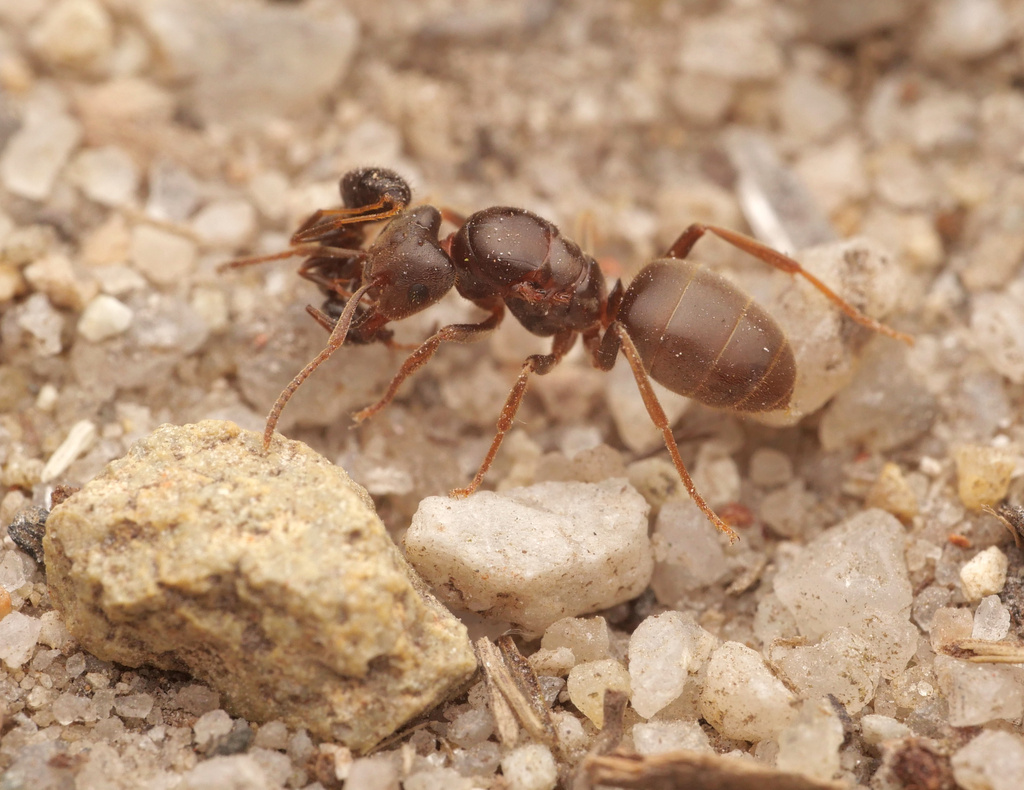
The yellow shadow ant (Lasius umbratus) is also known as the yellow lawn ant. Queens infiltrate a Lasius niger nest by killing a worker to steal its scent, after which the colony is gradually taken over by L. umbratus workers.
Source: Wikipedia
How to recognize it
The yellow shadow ant is scientifically named Lasius umbratus and is also called the yellow lawn ant.
Source: Wikipedia
Where it lives
These ants search for food on the ground surface.
Source: Wikipedia
What it eats
They forage for food on the surface.
Source: Wikipedia
Life cycle
A queen seeks out a Lasius niger worker, kills it to acquire its scent, and then slips into the L. niger nest. The L. niger workers raise the queen’s larvae, and over time the colony becomes composed only of L. umbratus ants.
Source: Wikipedia
Lookalikes
They are often confused with the yellow meadow ant, Lasius flavus.
Source: Wikipedia
Where it is found in the US
Recorded in 40 of 51 states and DC. Most records: New York, Illinois, Colorado, Massachusetts, Arizona, New Mexico, Ohio, Pennsylvania.
Darker = more records. Counts are museum and citizen-science records, not population size.
Source: GBIF
Status: native in United States; native in Canada. Source: iNaturalist
Months it is reported in the US
Source: GBIF
Same family (Formicidae)
 Eastern Black Carpenter AntCamponotus pennsylvanicusCan damage your home
 Red Imported Fire AntSolenopsis invictaCan sting
 American Winter AntPrenolepis imparis
 Argentine AntLinepithema humileNuisance, not dangerous
 Immigrant Pavement AntTetramorium immigransCan sting
 Odorous House AntTapinoma sessileCan damage your home
Sources
- Wikipedia: https://en.wikipedia.org/wiki/Lasius_umbratus
Look it up elsewhere: GBIF · iNaturalist · BugGuide · ITIS · Wikipedia
Text written 2026-10-23 from the sources above and checked sentence by sentence against them. Data fetched 2026-10-23.