 Bug FAQ
Red Imported Fire Ant
Solenopsis invicta · Order: Hymenoptera · Family: Formicidae
Also called: Argentinian Fire Ant, Red Fire Ant, Red Invasive Fire Ant, South American Fire Ant

Red imported fire ants build large colonies that can damage crops, lawns, structures and equipment. Their stings deliver venom that burns the skin, creates pustules and can trigger anaphylaxis in a small percentage of victims.
How to recognize it
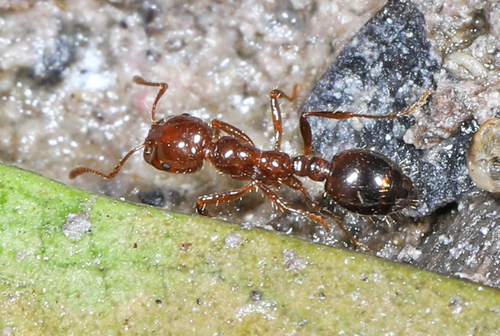
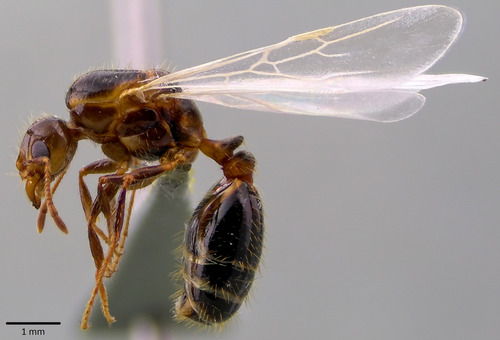
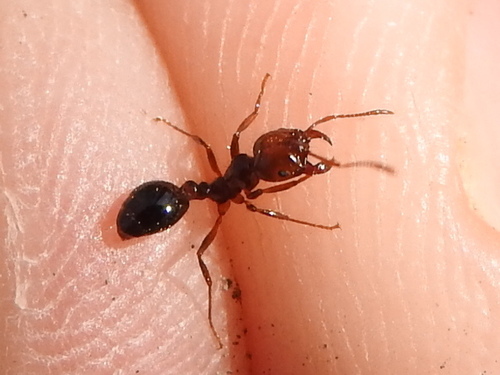
Workers are dark reddish-brown, sometimes with yellowish tones, and have a red to brown head with a brown or black abdomen; males are entirely black.
Size
Workers vary from about 1/16 to 1/5 inch long.
Source: UC IPM
Is it a pest in the house?
They cause billions of dollars in damage each year, harming wildlife and property. Mounds in fields can block harvest equipment and they invade many crops. Nests are built around trees, garden plants, pipes and inside walls, damaging both vegetation and structures.
Does it bite or sting?
Their venom is used to capture prey and defend the colony. The sting feels like a burning heat, which is why they are called fire ants. More than 14 million people are stung each year in the U.S., and many develop allergies. Stings cause intense burning, swelling and sterile pustules that can last several days. A small fraction of stung individuals (0.6 % to 6 %) may suffer anaphylaxis, a potentially fatal reaction. A single ant can bite and sting repeatedly, increasing the amount of venom delivered.
How to get rid of it
Baiting and fumigation are common control methods. Local vector control districts in Orange County and the Coachella Valley run active fire-ant programs and help residents treat infestations. Hiring a licensed pest-control professional is advised because they have access to the most effective products and expertise.
Where it lives
They thrive in disturbed areas and can live in rainforests, deserts, grasslands, along roads, near buildings and even inside electrical gear.
Source: Wikipedia
What it eats
They eat dead animals, other insects, seeds and sweet honeydew from sap-feeding insects.
Source: Wikipedia
Life cycle
Workers live for several months while queens may survive for years. A mature colony can contain from half a million to two million ants. Winged males and females take to the air in warm weather and may mate for up to half an hour.
Source: Wikipedia
When you see it
Mating flights happen in the warm months. Foraging is most active on warm or hot days, though ants may stay outside at night.
Source: Wikipedia
Where it comes from
The species originates from South America.
Source: Wikipedia
Lookalikes
The native southern fire ant looks similar in size and color. California harvester ants are uniformly about 1/5 inch long and red, often called red ants.
Source: UC IPM
Where it is found in the US
Recorded in 22 of 51 states and DC. Most records: Texas, Florida, North Carolina, Georgia, Louisiana, South Carolina, Alabama, Mississippi.
Darker = more records. Counts are museum and citizen-science records, not population size.
Source: GBIF
Status: introduced in Canada; introduced in United States. Source: iNaturalist
Months it is reported in the US
Source: GBIF
More photos

Questions people ask
How do red imported fire ants sting?
They inject venom that burns the skin, causes swelling and pustules, and can trigger severe allergic reactions in a small percentage of people.
Source: Wikipedia
What can I do to get rid of them?
Professional pest control using baiting or fumigation is the most reliable way, and local vector control districts can assist with treatment.
Same family (Formicidae)
 Eastern Black Carpenter AntCamponotus pennsylvanicusCan damage your home
 American Winter AntPrenolepis imparis
 Argentine AntLinepithema humileNuisance, not dangerous
 Immigrant Pavement AntTetramorium immigransCan sting
 Odorous House AntTapinoma sessileCan damage your home
 Red Harvester AntPogonomyrmex barbatusVenomous
Sources
- Wikipedia: https://en.wikipedia.org/wiki/Red_imported_fire_ant
- UC IPM: https://ipm.ucanr.edu/PMG/PESTNOTES/pn7487.html
Look it up elsewhere: GBIF · iNaturalist · BugGuide · ITIS · Wikipedia
Text written 2026-10-23 from the sources above and checked sentence by sentence against them. Data fetched 2026-10-23.