 Bug FAQ
Yellow-headed Looper Moth
Lambdina pellucidaria · Order: Lepidoptera · Family: Geometridae
Also called: Pitch Pine Looper Moth, Eastern Pinelooper, Pitch Pine Looper, Yellow-headed Looper
Source: Wikipedia
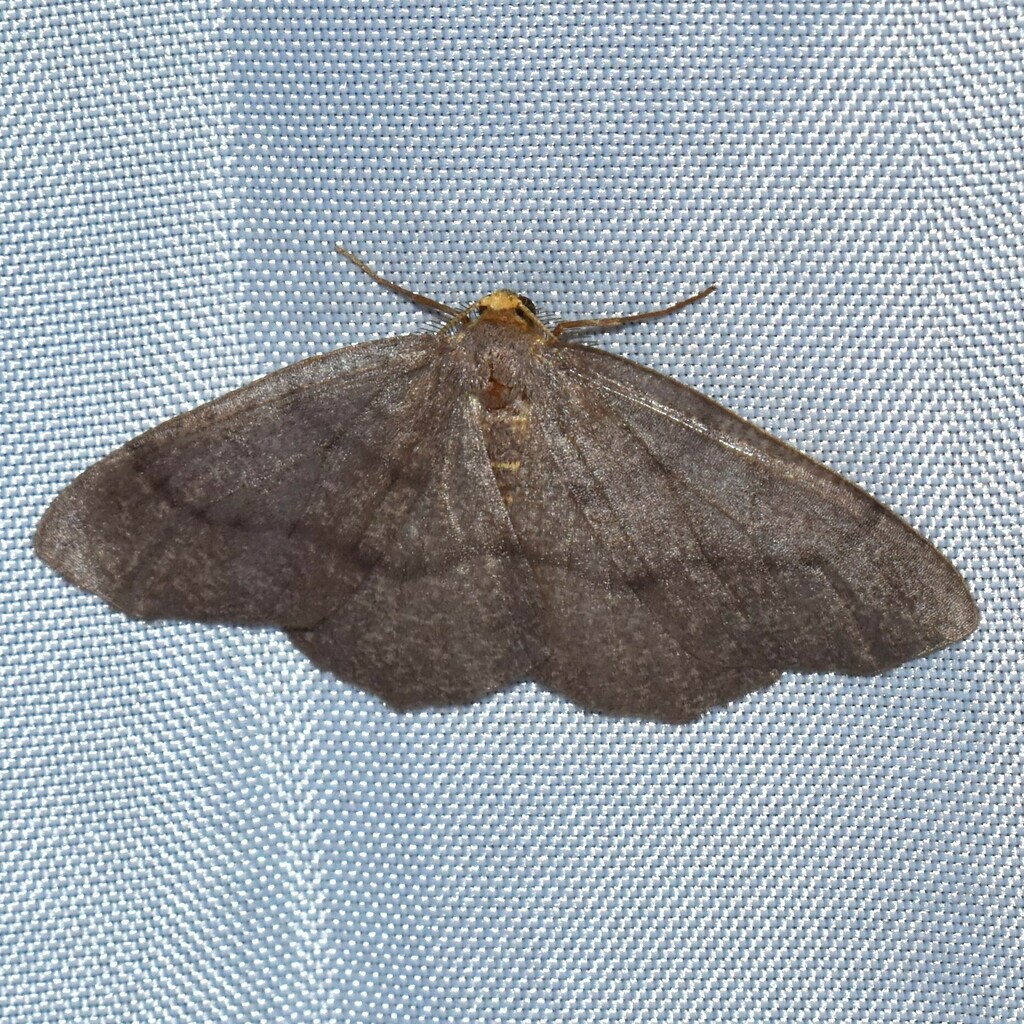
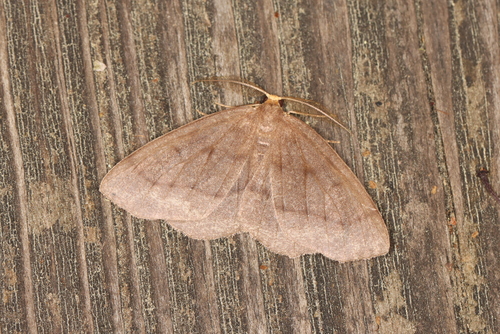
The yellow-headed looper moth has a wingspan of about 33 mm and its caterpillars grow to 1 to 1.5 inches long. Adults fly from March to June, lay eggs on both sides of pine and oak needles, and the larvae feed on those needles before dropping to the forest floor to overwinter and pupate.
Source: Wikipedia
How to recognize it
The caterpillars are 1 to 1.5 inches long, pale brown to greenish-gray with a lighter back, darker striped sides, yellow legs, a spotted head and black spiracles. They vary a lot in colour, but you can tell them apart from other loopers because they mine the needles instead of eating them whole.
Source: Wikipedia
Size
The adult moth’s wingspan is about 33 mm. The larvae grow to about 1 to 1.5 inches in length.
Source: Wikipedia
What it eats
The caterpillars feed on hard pines such as pitch and red pine, as well as on oak trees.
Source: Wikipedia
Life cycle
Adults lay eggs on both sides of pine and oak needles.
Source: Wikipedia
When you see it
Adults are active from March through June, depending on the location.
Source: Wikipedia
Where it comes from
Its native range is the eastern United States, spanning from New York to Illinois and down to Georgia.
Source: Wikipedia
Lookalikes
They are often confused with other looper moths, but their habit of mining needles rather than eating them whole sets them apart.
Source: Wikipedia
Where it is found in the US
Recorded in 25 of 51 states and DC. Most records: New Jersey, Massachusetts, North Carolina, Georgia, South Carolina, Maryland, Virginia, Pennsylvania.
Darker = more records. Counts are museum and citizen-science records, not population size.
Source: GBIF
Status: native in North America; native in United States. Source: iNaturalist
Months it is reported in the US
Source: GBIF
More photos
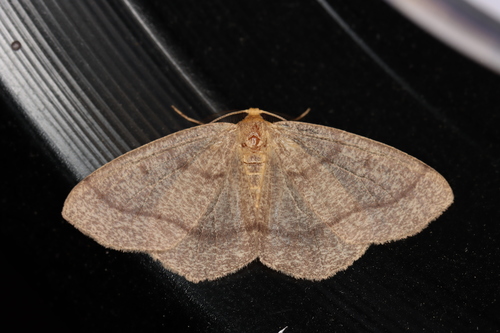
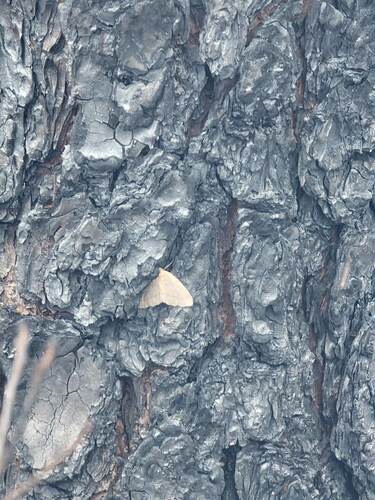
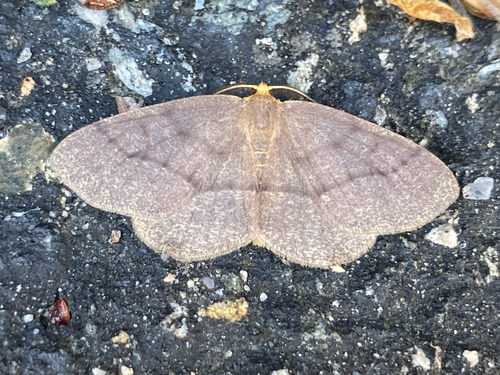
Questions people ask
How can I tell the yellow-headed looper caterpillar apart from other loopers?
Look for the mined needles instead of completely eaten ones and note the caterpillar’s pale brown to greenish-gray body with yellow legs and a spotted head.
Source: Wikipedia
When are the caterpillars active?
They feed on needles until late September, then drop to the ground to overwinter.
Source: Wikipedia
What trees do they damage?
They feed on hard pines such as pitch and red pine and also on oak trees.
Source: Wikipedia
When do the adult moths appear?
Adults are on the wing from March to June, varying by location.
Source: Wikipedia
Same family (Geometridae)




Sources
- Wikipedia: https://en.wikipedia.org/wiki/Lambdina_pellucidaria
Look it up elsewhere: GBIF · iNaturalist · BugGuide · ITIS · Wikipedia
Text written 2026-10-25 from the sources above and checked sentence by sentence against them. Data fetched 2026-10-25.