 Bug FAQ
Willow Beauty
Peribatodes rhomboidaria · Order: Lepidoptera · Family: Geometridae
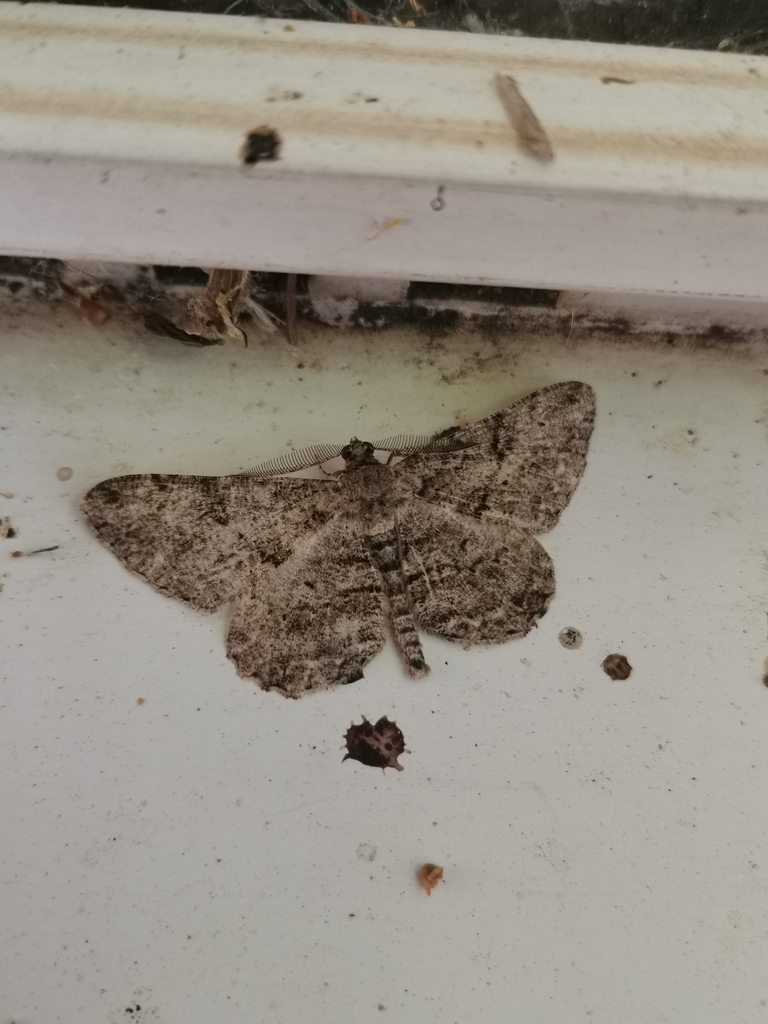
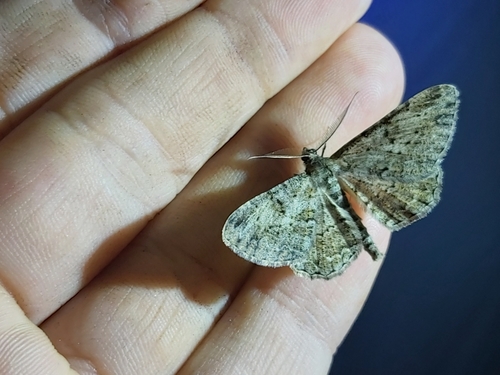
The Willow Beauty moth has a wingspan of about 40 to 48 mm and its wings appear whitish-grey or yellowish, heavily speckled with brown or black dots. It lives in woodlands and gardens across Europe, the Near East and the Maghreb, flying from June to September depending on the region.
Source: Wikipedia
How to recognize it
The fore- and hindwings show two faint, broken blackish bands that form a semicircle, but these markings are indistinct in this species. Overall the wings look buff or grey from a distance because of the dense speckling.
Source: Wikipedia
Size
Adults have a wingspan ranging from 40 to 48 mm.
Source: Wikipedia
Where it lives
It inhabits woodland, gardens and similar habitats.
Source: Wikipedia
Life cycle
One or two generations may occur each year, depending on the locality. The species overwinters as a small larva.
Source: Wikipedia
When you see it
Adults are on the wing in summer, typically June to September in the British Isles and up to late August in more continental areas like Austria.
Source: Wikipedia
Where it comes from
It is common throughout Europe and adjacent regions such as the Near East and the Maghreb.
Source: Wikipedia
Lookalikes
It is difficult to separate this species from its close relatives without close examination. For detailed comparison see Townsend et al.
Source: Wikipedia
More photos
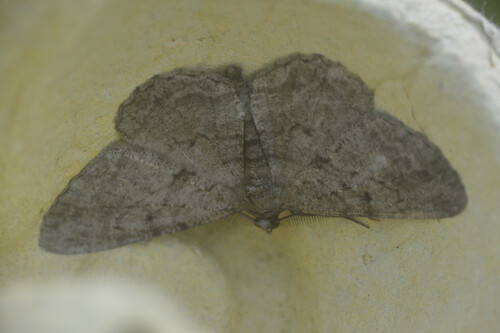
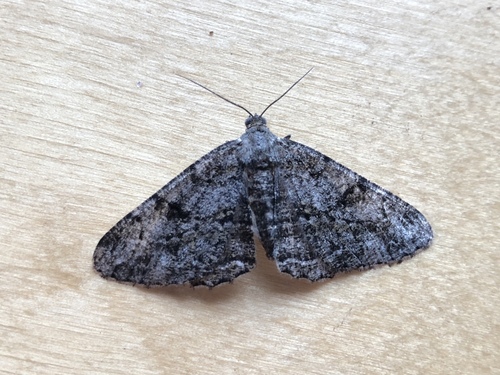
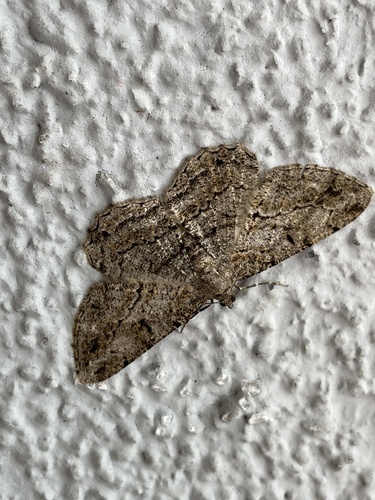
Questions people ask
How can I identify a Willow Beauty moth?
Look for a 40 to 48 mm wingspan, whitish-grey or yellowish wings heavily speckled with brown or black dots, and two faint, broken blackish semicircular bands on the fore- and hindwings.
Source: Wikipedia
When are Willow Beauty moths active?
Adults fly during the summer months, from June through September in the British Isles and up to late August in continental Europe.
Source: Wikipedia
What do Willow Beauty caterpillars eat?
The larvae feed on a range of trees and shrubs, though they rarely feed on willows.
Source: Wikipedia
Same family (Geometridae)
 Pale BeautyCampaea perlataDamages trees, gardens or crops
 Large Lace-border MothScopula limboundataDamages trees, gardens or crops
 Riband WaveIdaea aversata
 Yellow Shell MothCamptogramma bilineata
 Large Maple Spanworm MothProchoerodes lineolaDamages trees, gardens or crops
 Common Carpet MothEpirrhoe alternata
Sources
- Wikipedia: https://en.wikipedia.org/wiki/Willow_beauty
Look it up elsewhere: GBIF · iNaturalist · BugGuide · Wikipedia
Text written 2026-10-22 from the sources above and checked sentence by sentence against them. Data fetched 2026-10-22.