 Bug FAQ
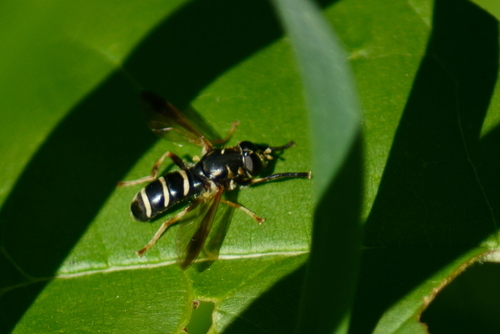
Yellow-haired Falsehorn
Temnostoma balyras · Order: Diptera · Family: Syrphidae
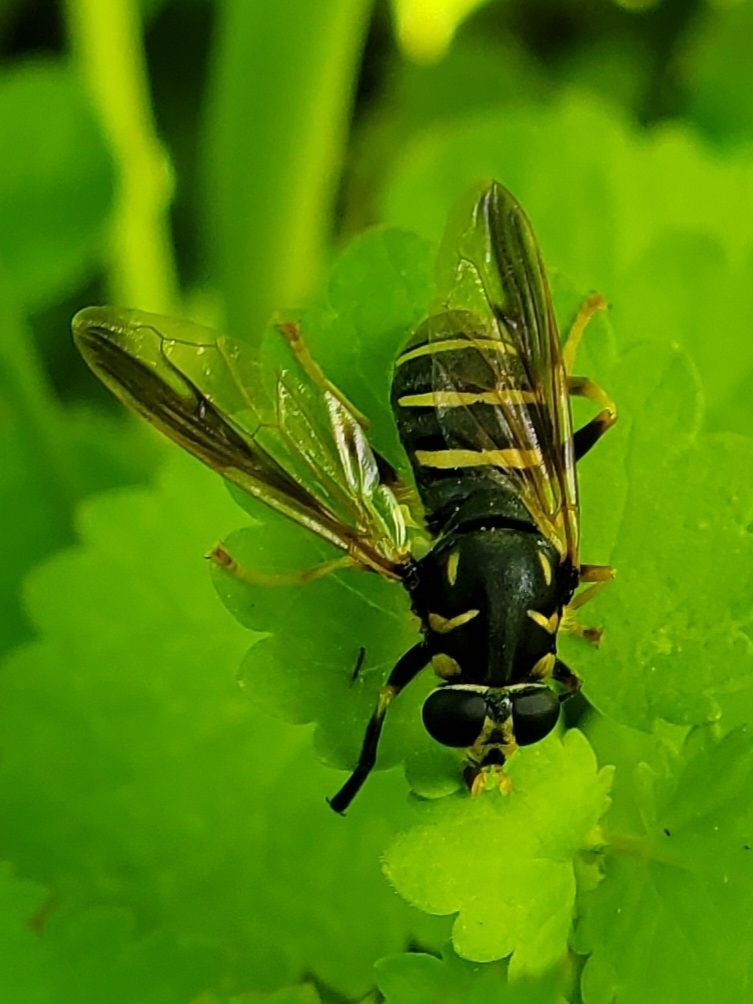
The Yellow-haired Falsehorn is a common syrphid fly in the eastern United States and nearby parts of Canada. Adults visit flowers to sip nectar and collect pollen for protein. Its larvae live in moist, decaying wood, burrowing with hook-like organs driven by strong thoracic muscles.
Source: Wikipedia
How to recognize it
Adults are called flower flies because they are often seen on flowers.
Source: Wikipedia
Where it lives
These flies are commonly found on flowers where they feed.
Source: Wikipedia
What it eats
Adults obtain energy from nectar and protein from pollen on flowers.
Source: Wikipedia
Life cycle
Larvae burrow in moist, decayed wood using hook-like organs moved by large muscles in the mesothorax and metathorax.
Source: Wikipedia
Where it is found in the US
Recorded in 22 of 51 states and DC. Most records: Illinois, Pennsylvania, Michigan, Ohio, Georgia, Alabama, Minnesota, New York.
Darker = more records. Counts are museum and citizen-science records, not population size.
Source: GBIF
Status: native in North America; native in Canada. Source: iNaturalist
Months it is reported in the US
Source: GBIF
More photos
Questions people ask
Where is the Yellow-haired Falsehorn found?
It is common in the eastern United States and nearby parts of Canada.
Source: Wikipedia
What do adult Yellow-haired Falsehorns eat?
They feed on nectar for energy and pollen for protein from flowers.
Source: Wikipedia
Where do the larvae develop?
The larvae live in moist, decaying wood, burrowing with hook-like organs powered by strong thoracic muscles.
Source: Wikipedia
Why are they called flower flies?
Because the adults are frequently seen on flowers.
Source: Wikipedia
Same family (Syrphidae)






Sources
- Wikipedia: https://en.wikipedia.org/wiki/Temnostoma_balyras
Look it up elsewhere: GBIF · iNaturalist · BugGuide · ITIS · Wikipedia
Text written 2026-10-26 from the sources above and checked sentence by sentence against them. Data fetched 2026-10-26.