 Bug FAQ
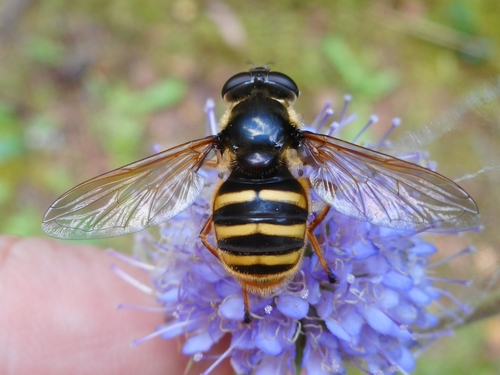
Yellow-barred Peat Hover Fly
Sericomyia silentis · Order: Diptera · Family: Syrphidae
Also called: Bog Hoverfly
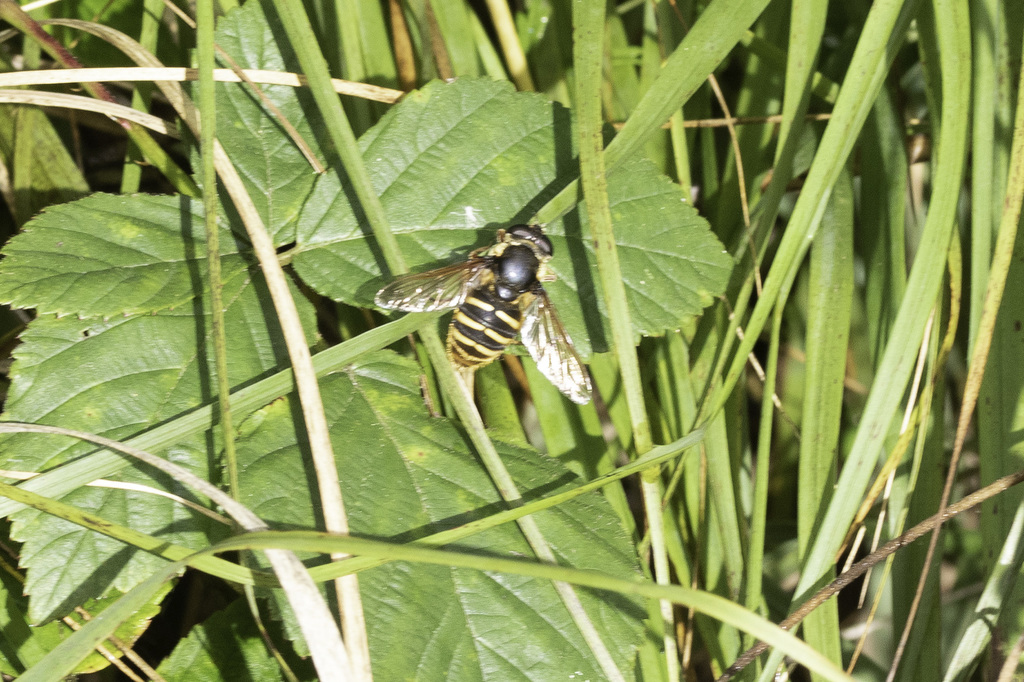
The yellow-barred peat hoverfly has a wing length between about 9.5 and 14 mm. It lives in wet moorland, valley bogs, fens and wet carr with alder and willow. Adults are on the wing from May through October across a wide Palearctic range.
Source: Wikipedia
How to recognize it
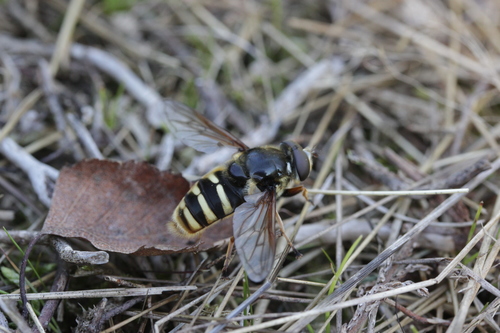
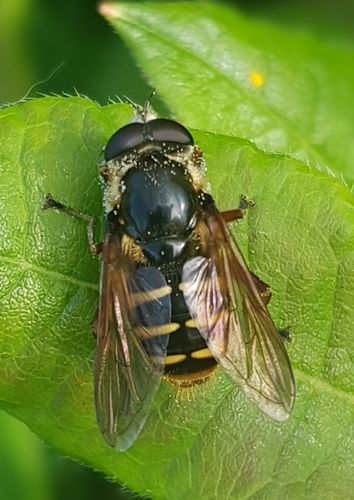
The pre-genital segment is yellow, the legs are yellowish with black bases on the femora, and the second to fourth tergites have dark yellow side-stripes that widen toward the edges.
Source: Wikipedia
Size
Wing length ranges from 9.5 to 14 mm.
Source: Wikipedia
Where it lives
Found in wet moorland, valley bogs, fens and alder- or willow-dominated carr.
Source: Wikipedia
When you see it
Adults fly from May to October.
Source: Wikipedia
Where it comes from
Its Palearctic distribution extends from Fennoscandia south to the Pyrenees, across northern and central Europe into Russia, the Caucasus, Siberia, the Russian Far East and Japan.
Source: Wikipedia
More photos
Questions people ask
When can I see yellow-barred peat hoverflies?
They are active from May through October.
Source: Wikipedia
What kind of places do they live in?
They prefer wet moorland, valley bogs, fens and wet carr with alder or willow.
Source: Wikipedia
Where are they found geographically?
Their range covers much of the Palearctic, from northern Europe to Japan.
Source: Wikipedia
Same family (Syrphidae)






Sources
- Wikipedia: https://en.wikipedia.org/wiki/Sericomyia_silentis
Look it up elsewhere: GBIF · iNaturalist · BugGuide · Wikipedia
Text written 2026-10-22 from the sources above and checked sentence by sentence against them. Data fetched 2026-10-22.