 Bug FAQ
Yellow-barred Longhorn
Nemophora degeerella · Order: Lepidoptera · Family: Adelidae
Also called: Yellow-barred Long-horn
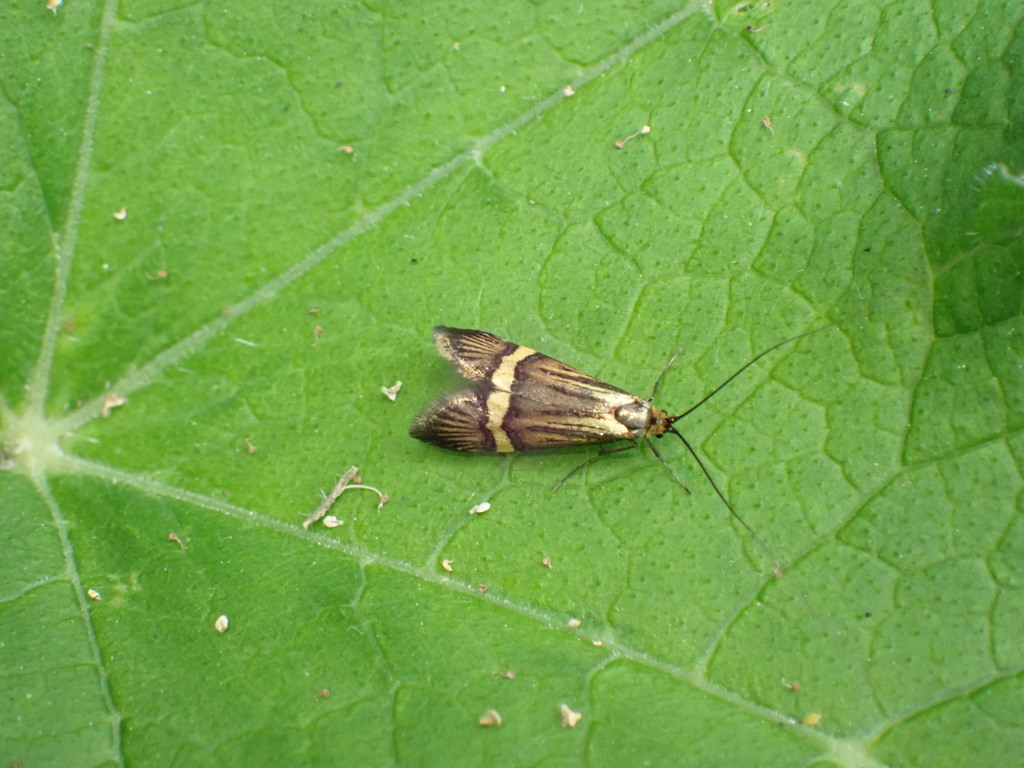
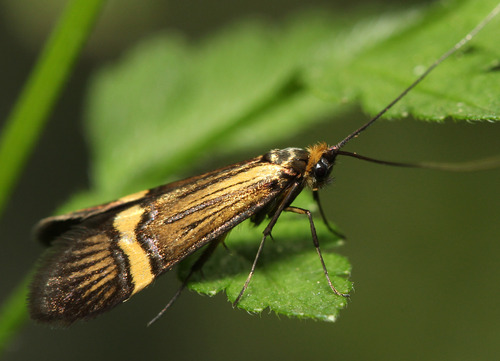
The yellow-barred longhorn moth has a wingspan of 18 to 20 mm in males and 15 to 18 mm in females. Its forewings are shiny golden-yellow with a transverse yellow band framed by dark and bluish-violet streaks.
Source: Wikipedia
How to recognize it
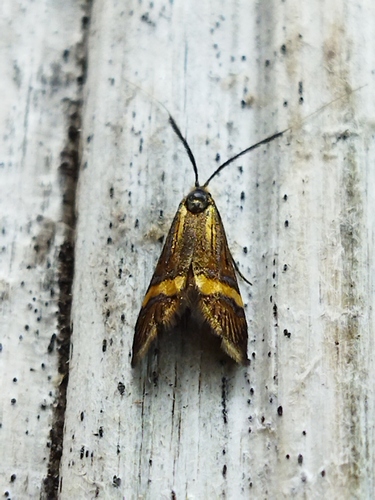
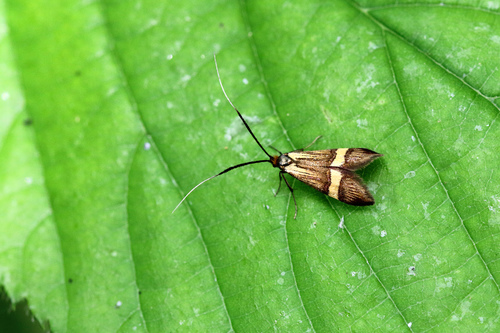
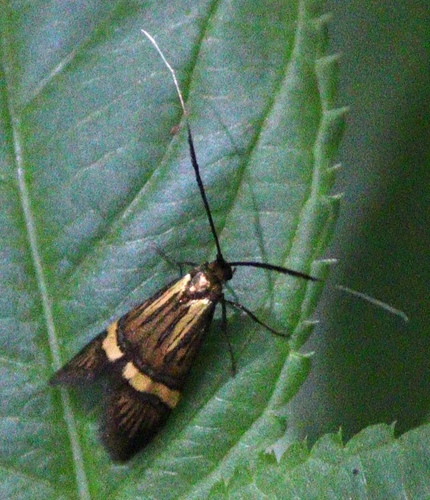
Forewings are shiny bronzy golden yellow or ochreous with dark brown and lead-gray bluish-violet streaks, plus a yellow band across the wing framed by two bluish-violet stripes with a dark brown border.
Source: Wikipedia
Size
Males have a wingspan of 18 to 20 mm; females are slightly smaller at 15 to 18 mm.
Source: Wikipedia
Where it lives
Found in damp deciduous forests, especially in wooded lanes and hedgerows.
Source: Wikipedia
What it eats
Caterpillars feed on birch leaf litter; adults feed on Persicaria bistorta, Leucanthemum vulgare and nettles.
Source: Wikipedia
Life cycle
It has one generation per year and overwinters as larvae in a leaf cocoon.
Source: Wikipedia
When you see it
Adults are on the wing from May through July.
Source: Wikipedia
Where it comes from
Present across most of Europe and fairly common in north-west Europe.
Source: Wikipedia
Lookalikes
Similar species include Nemophora congruella (smaller, brighter yellow markings, band nearer the base, females lack beard-like antenna scales) and Adela croesella (much smaller and more colorful).
Source: Wikipedia
More photos
Questions people ask
What plants do the adult moths visit?
Adults feed on Persicaria bistorta, common daisy (Leucanthemum vulgare) and nettles.
Source: Wikipedia
How can I tell this moth apart from similar species?
It is larger than Nemophora congruella, has a yellow transverse band farther from the wing base, and females have beard-like scales on the antennae; it is also bigger and less colorful than Adela croesella.
Source: Wikipedia
Same family (Adelidae)
Sources
- Wikipedia: https://en.wikipedia.org/wiki/Longhorn_moth
Look it up elsewhere: GBIF · iNaturalist · BugGuide · Wikipedia
Text written 2026-10-22 from the sources above and checked sentence by sentence against them. Data fetched 2026-10-22.